|
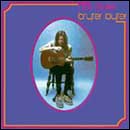
“ ฟังและล่องลอยไปกับบรรยากาศเรื่อยๆ เคลิ้มๆ ของบรรยาศโล่งๆ ของทุ่งหญ้า , หมู่บ้าน และกลิ่นอายต่างจังหวัด เสียงของอะคูสติกร์ต้า ผสมรวมเข้ากับเปียโน และเครื่องสายที่เสริมประกอบเบาๆด้านหลัง ยิ่งทำให้เมโลดี้ที่สวยงามของ Nick Drake พาท่านที่เผลอเข้าเฝ้าพระอินทร์ได้อย่างมิทันรู้ตัว ดนตรีหลักจะเป็นป๊อปแต่จะออกเป็นแจ๊สกลายๆ ในบางเพลง เสน่ห์ของเสียงร้องในคีย์ต่ำๆ และเมโลดี้ในแบบที่คุณไม่เคยมีประสบการณ์มาก่อน ฟังดูมันเพี้ยนๆ แปล่งๆ ทะแม่งๆ แต่มีเสน่ห์จริงๆ นี่คือสุดยอดของเพลงที่มีสาระทางดนตรีครบถ้วน แต่ก็ฟังได้อย่างสบายๆ ไม่จำเป็นต้องปีนกระไดเพื่อสัมผัสกับบรรยากาศทางดนตรี"
1. Introduction
2. Hazey Jane Ii
3. At The Chime Of A City Clock
4. One Of These Things First
5. Hazey Jane I
6. Bryter Layter
7. Fly
8. Poor Boy
9. Northern Sky
10. Sunday
All Music
With even more of the Fairport Convention crew helping him out — including bassist Dave Pegg and drummer Dave Mattacks along with, again, a bit of help from Richard Thompson — as well as John Cale and a variety of others, Drake tackled another excellent selection of songs on his second album. Demonstrating the abilities shown on Five Leaves Left didn't consist of a fluke, Bryter Layter featured another set of exquisitely arranged and performed tunes, with producer Joe Boyd and orchestrator Robert Kirby reprising their roles from the earlier release. Starting with the elegant instrumental "Introduction," as lovely a mood-setting piece as one would want, Bryter Layter indulges in a more playful sound at many points, showing that Drake was far from being a constant king of depression. While his performances remain generally low-key and his voice quietly passionate, the arrangements and surrounding musicians add a considerable amount of pep, as on the jazzy groove of the lengthy "Poor Boy." The argument could be made that this contravenes the spirit of Drake's work, but it feels more like a calmer equivalent to the genre-sliding experiments of Van Morrison at around the same time. Numbers that retain a softer approach, like "At the Chime of a City Clock," still possess a gentle drive to them. Cale's additions unsurprisingly favor the classically trained side of his personality, with particularly brilliant results on "Northern Sky." As his performances on keyboards and celeste help set the atmosphere, Drake reaches for a perfectly artful reflection on loss and loneliness and succeeds wonderfully.
Adrian’s Album Reviews
A long time was spent recording both this, and Nicks debut. John Wood and Joe Boyd made for a production team appearing on a number of Island Records releases and were almost a recommendation of quality in themselves. That production team helps Nick Drake with this record, as they had with 'Five Leaves Left'. John Wood was especially talented at recording acoustic and folk based material. Joe Boyd had taken Nick under his wing and doted on him somewhat. Richard Thompson was jealous! Yeah, Nick is backed here by Dave Mattacks, Dave Pegg and Richard Thompson, as well the undoubted talents of John Cale. After the sessions for 'Bryter Layter' were complete, everyone at Island Records, the musicians who had participated, and it seems Nick himself, were more than happy with the record. But in quite likely the only interview to the music press Nick ever gave he did express an intention to record the follow-up to 'Bryter Layter' with just engineer John Wood. The idea that his stark 'Pink Moon' record was purely a result of Nicks deepening depression is not exactly true. It seems he'd planned something along those lines two years prior to its release. There was optimism 'Bryter Layter' would build upon the very modest sales 'Five Leaves Left' had achieved. Ultimately though, promoting a new artist who didn't tour, so therefore had virtually nil public profile was never going to be easy. But, the production here does lend itself to the idea 'breaking' Nick was always a prime motivation behind this records creation. The sound and instrumentation is lush - Nick backed by guest musicians on every song. The rhythm section of Dave Pegg and Dave Mattacks provided a solid musical backing to surround Nicks voice and guitar. String arrangements provided by Robert Kirby and the beautiful contributions of John Cale complete the line-up.
We open with one of three instrumentals. 'Introduction' is a beautiful 93 seconds of guitar and strings but ultimately inconsequential. The flow into 'Hazey Jane II' seems slightly odd as well. It renders the inclusion of 'Introduction' questionable when it doesn't even work to lead into the following song. Thankfully though, 'Hazey Jane II' itself is rather fine, even if the musical track displays little of Nicks own talents - the lead guitar duties being taken by Richard Thompson. The vocals are of the same nature that marked out 'Five Leaves Left' as a special record. 'At The Chime Of A City Clock' is the first song where Nicks guitar playing is highlighted. The rhythm section does a fine job - this is almost groovy! And, when the chorus comes in, and the strings, 'at the chime of a city clock, put up your roadblock, hang on, to your ground' - an urban environment is created. 'Five Leaves Left' had been very concerned with nature and seasons. Nick had been living in London and that environment seems to have influenced the lyrical nature of some of the songs here. It doesn't sound urban or ugly musically though, of course. 'At The Chime Of A City Clock' with it's propelling rhythm section lines would almost make a great driving song! Which isn't very 'Nick Drake' but there you go. The vocals are beautiful - romantic sounding, as always. 'One Of These Things First' opens with lovely Piano and such an up-close and wonderfully captured Nick Drake vocal. It's a stunning song, ah! It brings a little smile to my face, sends a chill up my spine. It makes me happy. 'Hazey Jane I' introduces itself with a very distinctive guitar introduction, the strings compliment Nicks playing perfectly. It progresses and becomes another happy song. The music is happy, the vocals pulling at your heartstrings, twisting them and making your facial muscles move in an upwards direction!
The title song is the second of the three instrumentals here. Nick himself was apparently very proud of these instrumentals, so much so - he was reluctant to bring in any additional material whatsoever to the recording sessions in case a new vocal tune was included in the place of any of these instrumentals. 'Bryter Layter' is fairly breezy, the flute work is a nice touch. It sounds nice, and does break up the record well. John Cale makes his first contribution next. He plays Viola and Harpsichord, Dave Pegg plays bass and Nick sings. His vocal is truly otherworldly here, in a high register for the first verse, dipping into a very quiet and personal mode for the second. The harpsichord and viola create a wonderful sound. A fabulous, beautifully haunting song. The closing Sunday 'reprises' the title song in a sense and is the last of the three instrumentals. Again, it's pretty enough - but like 'Introduction' seemingly doesn't connect with the rest of the record. 'Bryter Layter' itself did serve a purpose, 'splitting' the album in two, so to speak. Like a little interlude. 'Sunday', like 'Introduction', is nice but inconsequential. Add in the six minute long lyrical self parody that is 'Poor Boy' and perhaps this 'Bryter Layter' album isn't quite the masterpiece Nick Drake fans often hold it up to be. 'Poor Boy' is very well played of course, as everything here is. When the female vocals come in singing 'he's just a poor boy...' you do start to wonder. Nick himself sings well. It's not a bad song, don't get me wrong. It doesn't warrant being six minutes long!
Oh, did I forget? No, I didn't forget. There is a reason this album still gets a grade of '9' from me, and still manages to be a recommendable classic. Well, we've already had a handful of truly great songs. 'Fly', 'One Of These Things First', 'Hazey Jane I'. We've also got 'Northern Sky'. John Cale returns to play Piano and Celeste. The Piano is especially beautiful. The rhythm section ( someone called Mike Kowalski on drums this time round ) is faultless and Nick himself turns in his most romantic performance over the top of one of his finest melodies. There is a particular section I love 'would you love me for my money, would you love me for my head, would you love me through the winter and would you love me till I'm dead.....' - I find it swoon-some :) It's a perfectly structured song, everything in the right place. 'Sunday' of course follows, something of an anti-climax. What's gone before is still enough to leave you wondering just how the hell Nick Drake managed to write such songs though. How the hell he got such a voice. Where did it come from? Just one of those things, I suppose. A happy blessing for all of those who have loved and enjoyed his music.
|