



|
|
Maledpun Music ทางเลือกประสบการณ์ฟังเพลงคุณภาพ | ||||||
|
|
|
|
|||||
CD |
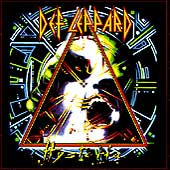
Hysteria Def Leppard - 1987
|
||||||||
| อัลบั้มที่ใครฟังก็ต้องชอบ | |||||||||
| อัลบั้มแยกตามแนวดนตรี | |||||||||
| MP3 | |||||||||
| เพื่อนักดนตรี | |||||||||
| DVD & VCD | |||||||||
| คอนเสิร์ตและ MV คุณภาพ | |||||||||
Rolling Stone Metal is by now a kind of folk music, as familiar in its forms as bluegrass or Appalachian balladry. Like folk (and especially like the blues, from which it is distantly derived), metal endlessly reshuffles a legacy of lyrical and instrumental phrases to create a music distinguished, when at all, by the particulars of individual performance – a killer guitar solo, a cleverly rejuvenated riff, some singer's new twist on the traditional banshee wail. And nowadays, there's also the possibility of an occasional great song cropping up. For this latter development, we can largely thank such second-generation metal bands as Def Leppard, Iron Maiden and Saxon, which erupted out of England at the dawn of the Eighties, determined to resuscitate the lumbering heavy-metal ethos of the Seventies with massive injections of punk velocity, pop tune-craft and – particularly in the Leppards' case – a very marketable cuteness factor. Def Leppard was the breakout act of this bunch, connecting in the States with its 1980 debut LP, On Through the Night, going platinum with 1981's High 'n' Dry and hitting the jackpot in 1983 with Pyromania, an album that has sold 6.7 million copies. But then, having laid the groundwork for metal-pop chart ascendancy, Def Leppard disappeared from the field. In 1984, the band began recording a fourth LP – and was immediately sandbagged by a catastrophic run of bad breaks, including a car crash in which drummer Rick Allen lost his left arm. Meanwhile, the metal pop that Def Leppard had championed fell into the hands of Bon Jovi and its marketing-oriented ilk – groups that happily turned it into mere pop metal (all glossy surfaces and predictable dynamics – riff ditties that your parents could hum along with). Those with a hankering for stronger stuff turned to such hardcore holdouts as Motorhead and the ferocious Metallica or to such quasi-metal acts as Hüsker Dü and the Replacements. Now, after three years in and out of studios and hospitals, the Leppards are back with that long-delayed fourth LP. Can they restake their chart claim? The answer, on all available evidence, would seem to be an emphatic yes. Can they actually enlarge their audience beyond the testosterone-addled male adolescents who are its traditional core? Can they, in short, grow as a group? That is the Great Metal Question – and Hysteria leaves it, alas, unanswered. This album sounds terrific. Every track sparkles and burns. There is no filler. That is not to say, however, that the Leppards are actually great songwriters (as opposed to consummate riff-smiths). Because here, as on Pyromania, producer Mutt Lange gets full credit as a cocomposer. He is, in fact, the sixth Leppard – the one who takes their riffs and choruses and assembles them into spectacular tracks. A veteran producer of such metal superstars as AC/DC and Foreigner, Lange is a genre master, and this LP is thick with his trademarks: the deep, meaty bass sound; the fat, relentless drums; the dazzling guitar montages; the impeccable sense of structure and separation; the preternatural clarity. Lange also brings a certain ironic wit to the record: one suspects it was he who dreamed up the whispered intro to "Excitable" – an aural pun on an old Mothers of Invention track – although no doubt the band had a hand in fashioning the rap-chant vocals that turn "Pour Some Sugar on Me" from a good-natured Aerosmith salute into a more complexly admiring tribute to Aerosmith and Run-D.M.C. None of which is to suggest that Lange could have made this album on his own. Def Leppard is a sharp, hot and dedicated stage band that really delivers live. Steve Clark and Phil Collen are a two-man guitar firestorm in the best metal – or any kind of rock – tradition (note the pulsing slabs of sound they pump into "Rocket" and the keening leads on "Don't Shoot Shotgun" and "Love and Affection"). Drummer Allen (despite his accident) and bassist Rick Savage remain a formidable rhythm section, and singer Joe Elliott, this time out, has convincingly deepened his range (avoiding the castrato effect that so amuses most nonmetalheads). So what's wrong – or should we say, not quite right – with this picture? Def Leppard seems primed to burst out of the metal ghetto. The band has shed most of the genre's more irritating stylistic tics, and it can rock with the best of today's young bands, categories be damned. But in terms of songwriting – which is the key to any future growth – the Leppards remain trapped within metal's tired old socio-sexual paradigm. It's not simply that women are portrayed here as mere lifestyle accessories ("One part love, one part wild/One part lady, one part child" – or, as Elliott bluntly sings, "You got the peaches, I got the cream"). What's most dismaying is that when the Leppards attempt to communicate more subtle emotion, as in "Love and Affection" or the title track, they inevitably fumble it. (The former tune actually boils down to " Don't give me love and affection," and "Hysteria" – a near ballad, despite its title – reduces love to mere carnal hysteria, then shrugs it off, lamely, as "such a magical mysteria.") Is this all they want to say? Or is it, more sadly, all they're capable of saying? The lyrics throughout Hysteria are undistinguished at best. But nobody in his right mind ever assessed a metal album on the basis of its poetic integrity – it's not the point. This is head-banging music of a very high sonic order, executed with great élan by what remains the most exciting metal-pop band on the scene. Where they'll be able to go from here remains anybody's guess. For now, here is a pretty impressive place to be.
All Music Where Pyromania had set the standard for polished, catchy pop-metal, Hysteria only upped the ante. Pyromania's slick, layered Mutt Lange production turned into a painstaking obsession with dense sonic detail on Hysteria, with the result that some critics dismissed the record as a stiff, mechanized, pop sell-out (perhaps due in part to Rick Allen's new, partially electronic drum kit). But Leppard's music had always employed big, anthemic hooks, and few of the pop-metal bands who had hit the charts in the wake of Pyromania could compete with Leppard's sense of craft; certainly none had the pop songwriting savvy to produce seven chart singles from the same album, as the stunningly consistent Hysteria did. Joe Elliott's lyrics owe an obvious debt to his obsession with T. Rex, particularly on the playfully silly anthem "Pour Some Sugar On Me," and the British glam rock tribute "Rocket," while power ballads like "Love Bites" and the title track lack the histrionics or gooey sentimentality of many similar offerings. The strong pop hooks and "perfect"-sounding production of Hysteria may not appeal to diehard heavy metal fans, but it isn't heavy metal — it's pop-metal, and arguably the best pop-metal ever recorded. Its blockbuster success helped pave the way for a whole new second wave of hair metal bands, while proving that the late-'80s musical climate could also be very friendly to veteran hard rock acts, a lead many would follow in the next few years. |
http://www.geocities.com/maledpunmusic/
Updated October 2004