|
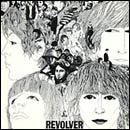
“I don’t see too much difference between Revolver and Rubber Soul.” George Harison
“ ผมเห็นด้วยกับมือแฉ่งของ The Beatles ในแง่ความเจ๋งไม่ได้แพ้กันเลย แต่เพลงที่สุดยอดก็ต้องลองฟัง Eleanor Rigby เพลงที่ฟังดูง่ายๆ แต่ช่างสวยงามจริงๆเลย Paul ฝีมือการเรียบเรียงเครื่องสายช่างสุดตีนจริงๆ เมโลดี้ก็แบบว่า …”
1. Taxman
2. Eleanor Rigby
3. I'm Only Sleeping
4. Love You To
5. Here, There And Everywhere
6. Yellow Submarine
7. She Said She Said
8. Good Day Sunshine
9. And YOur Bird Can Sing
10. For No One
11. Docter Robert
12. I Want To Tell You
13. Got To Get You Into My Life
14. Tomorrow Never Knows
Amazon
Revolver wouldn't remain the Beatles' most ambitious LP for long, but many fans--including this one--remember it as their best. An object lesson in fitting great songwriting into experimental production and genre play, this is also a record whose influence extends far beyond mere they-was-the-greatest cheerleading. Putting McCartney's more traditionally melodic "Here, There and Everywhere" and "For No One" alongside Lennon's direct-hit sneering ("Dr. Robert") and dreamscapes ("I'm Only Sleeping," "Tomorrow Never Knows") and Harrison's peaking wit ("Taxman") was as conceptually brilliant as anything Sgt. Pepper attempted, and more subtly fulfilling. A must. --Rickey Wright
CD-Universe
The Beatles: George Harrison (vocals, guitar, sitar); Paul McCartney (vocals, guitar, piano, keyboards, bass); John Lennon (vocals, guitar); Ringo Starr (vocals, drums).
Additional personnel includes: Alan Civil (French horn); Anil Bhagwat (tabla); Brian Jones (background vocals).
REVOLVER was praised for its musical experimentation: the Indian sounds of "Love You To," the Motown-inspired "Got To Get You Into My Life," the backward-recorded guitar in "I'm Only Sleeping." "Tomorrow Never Knows" was the most radical departure from previous Beatles' recordings: skeletal bass/drums propulsion enhanced only with tape loops (contributed by all four Beatles and added in the mix-down process), more backward-recorded guitar and an eerie vocal by Lennon.
The Beatles' experimentation grew out of their songwriting, which had matured beyond formula pop. "Tomorrow Never Knows" borrowed from the Tibetan Book of the Dead, Harrison's "Taxman" was a bitter diatribe, while McCartney's "Eleanor Rigby" was a bleak portrait of loneliness. Balanced with upbeat songs like "Good Day Sunshine" and "Yellow Submarine," REVOLVER proved The Beatles were no simple teen idols, they were musical artists in search of new sounds and ideas.
Inkblot
It is nearly impossible to overestimate this record. Revolver straddles with steady legs the divide between the exuberant pop of the '60s beat boom and the experimental outlands that followed. And then pisses over it all.
Revolver stands at the summit of western pop music, partly by virtue of its centrality to the musical revolution of the '60s, and partly because its songs have endured as well as any ever written. On cuts like "Taxman" (featuring a fantastically ferocious guitar solo from, of all people, Paul McCartney) and "Doctor Robert," The Beatles' harmony-rich R&B is on such masterful form, the only question remaining is what they would do for act two. The answer: Change Everything.
Imagine the impact of "Eleanor Rigby," a lyric that must have stopped Dylan in his tracks, emerging from the voice that had sung "Can't Buy Me Love" just two years earlier. Imagine the sophisticated, elegant balladry of "Here, There and Everywhere" and "For No One" colliding with the tape-loop-and-fractured drum collage of "Tomorrow Never Knows," a song so far ahead of its time that The Chemical Brothers play it in their DJ set. Imagine George's backward guitar solo on "I'm Only Sleeping," recorded when Hendrix was just a gleam in Chas Chandler's eye.
You don't have to imagine. It's all right here, sounding as fresh and exciting today as it must have then.
Q
Reviewed with Help! (***) and Rubber Soul (****) These discs represent the second instalment of the extravagantly fanfared Beatles-on-CD releases. Unlike the previous four, these three LPs are in stereo; this time around the producer George Martin has opted for a spot of re-mixing-and just a little polishing, apparently - to compensate for the unsophisticated four-track technology of the time. Rather like cleaning up a car engine, as he puts it. Here, then, in crystalline precision, is the noise the boys made in the years '65 and '66 - a period of transition that saw their moptops getting shaggier, their music growing stranger, and their outlooks overhauled by the parallel adoptions of Eastern religion and psychedelic chemicals. It's a matter of debate how much they gained in wisdom by either of those discoveries, but the effect on their songs is just as fascinating today as it was startling at the time. Help! was of course the movie score, and a bit more; it's the last entirely straightforward album they ever made. There are minutes of brilliance, like the radiant Ticket To Ride, but also hints of writing on auto-pilot, such as the standard fabbery of I've Just Seen A Face and The Night Before. The title track has John Lennon edging up to the soul baring angst he'd later revel in; Yesterday displays Paul McCartney perfecting his own trademark of wide-eyed wistfulness. The set would be transcendent by anyone else's standards, but in strictly The Beatles terms the LP is just a holding operation. Rubber Soul, however, is almost always gorgeous, and all the more intriguing in the way its pop simplicity is turning weird around the edges. Norwegian Wood has sitar, and lyrics of Bob Dylan-derived vagueness: John Lennon wanted them that way so his wife wouldn't know it was about a one-night stand. The song called Girl was franky lustful, heavy breathing and all (the backing vocal was, in fact, "tit tit tit tit tit"). John Lennon's nostalgic In My Life is a ballad of aching tenderness - to hear it, and Paul McCartney's pulsating Drive My Car, is to see the flaw in that conventional view that only John Lennon was the rocker and Paul McCartney the romantic. Revolver, which followed, is often said (by rock critics at least) to be the best of The Beatles. Certainly almost all its 14 tracks are extraordinary: Paul McCartney never wrote two more affecting ballads than Here There And Everywhere and For No One; George Harrison's mystic raga Love You To is admittedly dated, but his more earthly diatribe Taxman bears up well. And if Ringo Starr has to get one song it may as well be Yellow Submarine. Other inclusions: Dr Robert, She Said She Said, And Your Bird Can Sing, John Lennon's trance-like closer, Tomorrow Never Knows, served notice that the dancing years were dead and gone. Many fans were mystified, even appalled. Revolver liberated pop from the limitations of commercial beat music; at the same time it inspired a deluge of indulgent tripe and bad poetry that rock has never quite recovered from. Whatever, The Beatles had freed their creativity and for a few heady years, from '66 to '67, it seemed as if literally anything was possible. The group sat back, grew some moustaches, and began to dream of Sgt. Pepper's Lonely Hearts Club Band.
|