



|
|
Maledpun Music ทางเลือกประสบการณ์ฟังเพลงคุณภาพ | ||||||
|
|
|
|
|||||
CD |
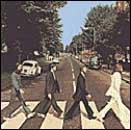
Abbey Road The Beatles - 1969
|
||||||||
| อัลบั้มที่ใครฟังก็ต้องชอบ | |||||||||
| อัลบั้มแยกตามแนวดนตรี | |||||||||
| MP3 | |||||||||
| เพื่อนักดนตรี | |||||||||
| DVD & VCD | |||||||||
| คอนเสิร์ตและ MV คุณภาพ | |||||||||
|
“ อัลบั้มของ The Beatles ที่หน้าปกโดนเอาไปล้อเลียนมากที่สุด และเป็นอัลบั้มที่แสดงให้เห็นความสามารถในการแต่งเพลงของ George Harrison ซึ่งโดนบดบังโดย John Lennon และ Paul McCartney มาโดยตลอด Something และ Here Comes The Sun เป็นบทพิสูจน์ที่ไม่สามารถปฏิเสธได้ แค่สองเพลงนี้ก็คุ้มค่ากับการซื้ออัลบั้มนี้แล้ว ”
Rolling Stone
Simply, side two does more for me than the whole of Sgt. Pepper, and I'll trade you The Beatles and Magical Mystery Tour and a Keith Moon drumstick for side one. So much for the prelims. "Come Together" is John Lennon very nearly at the peak of his form; twisted, freely-associative, punful lyrically, pinched and somehow a little smug vocally. Breathtakingly recorded (as is the whole album), with a perfect little high-hat-tom-tom run by Ringo providing a clever semi-colon to those eerie shooo-ta's, Timothy Leary's campaign song opens up things in grand fashion indeed. George's vocal, containing less adenoids and more grainy Paul tunefulness than ever before, is one of many highlights on his "Something," some of the others being more excellent drum work, a dead catchy guitar line, perfectly subdued strings, and an unusually nice melody. Both his and Joe Cocker's version will suffice nicely until Ray Charles gets around to it. Paul McCartney and Ray Davies are the only two writers in rock and roll who could have written "Maxwell's Silver Hammer," a jaunty vaudevillian/music-hallish celebration wherein Paul, in a rare naughty mood, celebrates the joys of being able to bash in the heads of anyone threatening to bring you down. Paul puts it across perfectly with the coyest imaginable choir-boy innocence. Someday, just for fun, Capitol/Apple's going to have to compile a Paul McCartney Sings Rock And Roll album, with "Long Tall Sally," "I'm Down," "Helter Skelter," and, most definitely, "Oh! Darling," in which, fronting a great "ouch!"-yelling guitar and wonderful background harmonies, he delivers an induplicably strong, throat-ripping vocal of sufficient power to knock out even those skeptics who would otherwise have complained about yet another Beatle tribute to the golden groovies' era. That the Beatles can unify seemingly countless musical fragments and lyrical doodlings into a uniformly wonderful suite, as they've done on side two, seems potent testimony that no, they've far from lost it, and no, they haven't stopped trying. No, on the contrary, they've achieved here the closest thing yet to Beatles freeform, fusing more diverse intriguing musical and lyrical ideas into a piece that amounts to far more than the sum of those ideas. "Here Comes the Sun," for example, would come off as quite mediocre on its own, but just watch how John and especially Paul build on its mood of perky childlike wonder. Like here, in "Because," is this child, or someone with a child's innocence, having his mind blown by the most obvious natural phenomena, like the blueness of the sky. Amidst, mind you, beautiful and intricate harmonies, the like of which the Beatles have not attempted since "Dr. Robert." Then, just for a moment, we're into Paul's "You Never Give Me Your Money," which seems more a daydream than an actual address to the girl he's thinking about. Allowed to remain pensive only for an instant, we're next transported, via Paul's "Lady Madonna" voice and boogie-woogie piano in the bridge, to this happy thought: "Oh, that magic feelin'/Nowhere to go." Crickets' chirping and a kid's nursery rhyme ("1-2-3-4-5-6-7/All good children go to heaven") lead us from there into a dreamy John number, "Sun King," in which we find him singing for the Italian market, words like amore and felice giving us some clue as to the feel of this reminiscent-of-"In My Room" ballad. And then, before we know what's happened, we're out in John Lennon's England meeting these two human oddities, Mean Mr. Mustard and Polythene Pam. From there it's off to watch a surreal afternoon telly programme, Paul's "She Came In Through the Bathroom Window." Pensive and a touch melancholy again a moment later, we're into "Golden Slumbers," from which we wake to the resounding thousands of voices on "Carry That Weight," a rollicking little commentary of life's labours if ever there was one, and hence to a reprise of the "Money" theme (the most addicting melody and unforgettable words on the album). Finally, a perfect epitaph for our visit to the world of Beatle daydreams: "The love you take is equal to the love you make ..." And, just for the record, Paul's gonna make Her Majesty his. I'd hesitate to say anything's impossible for him after listening to Abbey Road the first thousand times, and the others aren't far behind. To my mind, they're equatable, but still unsurpassed. (RS 46) Amazon The Beatles' last days as a band were as productive as any major pop phenomenon that was about to split. After recording the ragged-but-right Let It Be, the group held on for this ambitious effort, an album that was to become their best-selling. Though all four contribute to the first side's writing, John Lennon's hard-rocking, "Come Together" and "I Want You (She's So Heavy)" make the strongest impression. A series of song fragments edited together in suite form dominates side two; its portentous, touching, official close ("Golden Slumbers" / "Carry That Weight" / "The End") is nicely undercut, in typical Beatles fashion, by Paul McCartney's cheeky "Her Majesty", which follows. --Rickey Wright CDNow Infighting, rancorous business dealings, and John Lennon's and Yoko Ono's very public displays of affection may have defined the Beatles' final years as a band (and a good portion of their post-Beatles existence) -- but if you looked beyond the bed-ins and the bickering, there was still classic music being made. Their penultimate studio release (though final recording sessions as a band), Abbey Road hammers this point home with giddy pop songs, classic love ballads, blistering rock and roll, one sweeping suite of songs, and their trademark sense of humor -- a little piece of each Beatle, to be sure. The Abbey Road sessions unofficially began as the slapdash recordings for the Get Back album (eventually released as Let It Be) were winding down with no release date in sight. Paul McCartney had contacted producer George Martin -- who had grown frustrated with his diminished role in the band's studio output -- about returning as full-time, hands-on producer for the sessions. Martin agreed, under the condition that the band would make a record like it used to. Over 30 years later, the results sound timeless -- a hybrid of the band's post-Rubber Soul creative maturation, with the urgency of their early years. With the songwriting team of Lennon/McCartney now a union in name only, Lennon's "Come Together" kicked off the album with a smoldering groove and hazy lyrical sketches of the times ("hair down to his knees," "he shoot Coca-Cola") coupled with his knack for poetic gibberish ("juju eyeball," "walrus gumboot"). McCartney took the proverbial piss out of the band's crumbling Apple empire for the gorgeous "You Never Give Me Your Money," and sang his voice to shreds on the '50s rock send-up "Oh! Darling." The suite of songs which dominated side two (back in those vinyl days) saw Lennon inventing dirty old sods such as "Mean Mr. Mustard," while Paul reprised "Money," and Ringo took a memorable drum solo in the "Golden Slumbers/Carry That Weight/The End" medley. For his part, George Harrison exercised his underrated genius by contributing two of the band's most memorable singles in "Here Comes the Sun" and "Something." With a sound that didn't rely upon the studio as much as Sgt. Pepper's or the White Album, the Beatles probably could have toured behind Abbey Road, were they interested in taking their act back out on the road. One can't help but wonder if that would have re-ignited their muse, prompting them to put aside the sour business relations and the meddlesome significant others -- just so they could be Beatles for a little while longer. Pat Berkery CDNOW Contributing Writer Inkblot Abbey Road was going to be called "Mt. Everest," and was meant to feature a cover photo of The Beatles in the Himalayas. By the time such concerns were addressed in 1969, the squabbling fabs could barely get it together for a shoot outside their Abbey Road studio. Hell, Paul didn't even bother to put shoes on. Considering the deep fissures in the band, Abbey Road is an achievement of Himalayan proportions. Side one stands tall thanks largely to George Harrison, whose "Something" and "Here Comes the Sun" remain two of the most beloved Beatles tunes. Ringo, too, chips in with the jaunty "Octopus's Garden," a countrified childhood singalong lent a somewhat illusory dignity by George's elegant guitar work. And of course the whole thing kicks off with "Come Together," Lennon's magnificent last hurrah as a Beatle, a slice of surrealist jive wonderfully typical of the '60s greatest icon. If Paul soils the A-side with the goofy "Maxwell's Silver Hammer" he more than redeems himself with "You Never Give Me Your Money" and the ensuing Long Medley. The former is a pocket symphony that warmly remembers The Beatles' time together before boldly strutting off into the future. If only his solo career had lived up to this song's promise - or to the ambition of Paul's medley, which stitches unfinished songs (both his and John's) into a gleeful goodbye. It's 20 of the finest minutes of their career, and a noble finish to the greatest story in pop. Keno Perhaps the greatest concept album ever made. It might not be my favorite Beatles album, but it gets my highest rating compared to any of their others. Other than the closing, short and isolated track "Her Majesty", every song on this album is great. Lennon's "Come Together" opens the album and you just know your ears are in for something good as soon as it starts to play. That is followed by Harrison's "Something", a brilliant song, yet not even his best one on the album. That honor goes to the positive thinking number , "Here Comes the Sun", which might even be better than his "While My Guitar Gently Weeps". There's no better tune to listen to on a cold, late winter morning, than this one. It's the best song on the whole album. McCartney also adds some dandies to Abbey Road. My favorite is "Maxwell's Silver Hammer", which has to be one of the most upbeat and humorous songs ever written about a mass murderer. The tune was actually started during the Let It Be sessions, in fact you can see the band 's first take of it in the Let It Be movie. Paul also adds some of his best bass playing on this album too, especially on the songs "Oh! Darling", "You Never Give Me Your Money" and "Sun King". Even Ringo's "Octopus's Garden", another song started during the Let It Be sessions, isn't bad ,even if it does remind you a bit of the earlier tune "Yellow Submarine". In all, Abbey Road, the last recorded album by the Beatles (Let It Be was recorded before, but released after it), just makes you wonder just where the Beatles might have gone if they hadn't broke up. They just seemed to top themselves with each new recording and if you consider that no other band or artist did it better than them, it really was a blow to rock music the day they went their separate ways. wed by Paul Du Noyer |
http://www.geocities.com/maledpunmusic/
Updated October 2004