



|
|
Maledpun Music ทางเลือกประสบการณ์ฟังเพลงคุณภาพ | ||||||
|
|
|
|
|||||
CD |
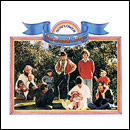
Sunflower The Beach Boys - 1970
|
||||||||
| อัลบั้มที่ใครฟังก็ต้องชอบ | |||||||||
| อัลบั้มแยกตามแนวดนตรี | |||||||||
| MP3 | |||||||||
| เพื่อนักดนตรี | |||||||||
| DVD & VCD | |||||||||
| คอนเสิร์ตและ MV คุณภาพ | |||||||||
Rolling Stone The Beach Boys have been at least three bands: crafty chroniclers of pre-freakout mid-Sixties Southern California , audacious cult oddballs and shameless nostalgia merchants. The first incarnation created pop art of the highest order from 1962 to 1969; the third still rides on the original's coattails for empty entertainment and profit. But their complex middle era -- plagued by commercial failure, interpersonal warfare and the psychological roller coaster of leader Brian Wilson -- is always up for reinterpretation, particularly because it's the least known. The Beach Boys' Seventies output has gone in and out of print with more fluctuation than any other major catalog has had, and its only Top Twenty hits were sentimental remakes aimed at a summer-concert crowd more interested in fun fun fun classics than creative maturation. Yet for a new generation of harmony-friendly alternative popsters, Seventies Beach Boys albums like Surf's Up and Love You are becoming sonic blueprints, akin to what early Velvet Underground LPs meant to the previous indie peer group. The High Llamas, Eric Matthews and Saint Etienne are but three alt heroes touched by those largely ignored platters' production eccentricities, wandering melodies and resigned sense of suffering. They and twenty-one other winsome acts bypass big hits in favor of unreleased, overlooked or underappreciated Wilson/Beach Boys obscurities on Caroline Now!, a well-researched tribute that serves as a good starting point for adventurous listeners to hang ten beyond the Beach Boys' familiar shallows into deeper waters. Tracks like the Pearlfishers' moody "Go Away Boy" (a 1962 composition first released twenty years later by Brian's girl group, the Honeys) and Kle's "Rainbow Eyes" (a sugary kiss from Sweet Insanity, the aborted follow-up to Brian's soon-to-be-reissued 1988 solo album) are both affectionately academic and mighty swell. Another place to start is Sunflower/Surf's Up, the first of Capitol Record's reborn two-for-one series. Whereas Brian's songwriting and production skills dominated previous long-players, the other members democratized the band with on-par tunes and productions for 1970's strikingly unified Sunflower. Once dismissed as a mere pretty boy, drummer Dennis Wilson starts flashing unsuspected melodic gifts, particularly on "Forever," a fragile, tear-stained ballad that ranks among the band's most heartfelt achievements. Brother Carl continues to nurture his supernaturally soulful tenor on Brian's bouncy "This Whole World," while "All I Wanna Do" presages the bittersweet delights of Alex Chilton's Big Star. Spotlighting Bruce Johnston elegiac career highlight "Disney Girls (1957)," 1971's Surf's Up is nearly as consistent. And its peaks -- Carl's dynamic solo debut, "Long Promised Road," Brian's wide-eyed " 'Til I Die" and a masterful title track rescued from the famously abandoned 1966-67 Smile sessions -- are even loftier. Now packaged together as a double-disc set, the next two albums -- 1972's Carl and the Passions: So Tough and 1973's Holland -- reflect the band's attempt to remain contemporary in light of Brian's declining involvement. Ironically, his backward-looking rocker "Marcella" is the highlight of So Tough's pseudo-Southern-fried boogie. Despite some overly ambitious poetics, Holland 's homesick ruminations are far more convincing. Another Brian composition, "Sail On Sailor," buoys rollicking temp vocalist Blondie Chaplin, while Carl's "The Trader" shifts between chugging stoner groove and choirboy bliss. During the same year, In Concert captured the expanded, FM-friendly lineup while hinting at the methodical oldies factory lurking 'round the corner. Like Brian's recently recorded Live at the Roxy Theatre (available only via brianwilson.com), its simplified live arrangements can only hint at the original's studio splendors. When Capitol's mid-decade best-ofs, Endless Summer and Spirit of America, scored runaway sales, pressure suddenly escalated to recapture that old surfer magic. Brian returned with 1976's 15 Big Ones, a slapdash combination of rock remakes, retro newies and a 1970 B side, Alan Jardine's playful "Susie Cincinnati." Except for Carl and Brian's appropriately painful rendition of the Righteous Brothers' "Just Once in My Life," the cover versions are oppressively cheesy, and the only original that clicks is Mike Love's "It's OK," a swinging collaboration with simpatico former ELO/Move leader Roy Wood. The next year, Love You merged goofy tunes with wacky synth science to achieve what Big Ones failed to create -- a joyously weird mix of past and present that only Brian could mastermind. "Honkin' Down the Highway" encapsulates everything right about this mischievous milestone: Phil Spector-ian drums thump against gurgling keyboards as Carl yells, near the bottom of his register, an insanely catchy driving tune. He's still a Boy, yet he so clearly sings like a man -- but when he reaches for the bridge's conclusion, "I guess I got a way with (gasp) girls!," his enthusiasm charms like crazy. The band nearly split in the wake of Love You's commercial flop, and the cobbled-together return, 1978's M.I.U. Album, reflects a retreat into slick ballads and safe remakes. Half of 1979's L.A. (Light Album) mimics M.I.U.'s bland filler, yet Dennis' gentle "Baby Blue," Carl's harmony-drenched "Good Timin'," Love's Japan-kitschy "Sumahama" and a demented eleven-minute disco reconstruction of Wild Honey's "Here Comes the Night" can now be heard as the band's final risky strokes. 1980's Keepin' the Summer Alive and '85's post-Dennis effort The Beach Boys feature somnambulistic performances of substandard songs set to trite arrangements. Don't go there. Despite what followed, much of the Beach Boys' Seventies output is a tender place to linger and reconsider. The Sixties belonged to Brian and Love, but the Seventies were when Carl, Dennis and friends created their sweetest sounds, refusing the slightest hint of adult aggression. Adrift in an era marked by social and personal turbulence, they instead offered light, introspection and generous gifts of tranquillity. Wouldn't it be nice if we had them today.
All Music After Reprise rejected what was to be their debut album for the label, the Beach Boys re-entered the studio to begin work on what would become a largely different set of songs. The results signaled a creative rebirth for the band, a return to the beautiful harmonies and orchestral productions of their classic mid-'60s material. Though the songwriting didn't quite reach the high quality of "California Girls" or "God Only Knows," Sunflower showed the Beach Boys truly working as a band, and doing so better than they ever had in the past (or would in the future). Many of the songs were co-compositions, and the undeniable songwriting and performance talents of Dennis Wilson and Bruce Johnston were finally allowed to flourish: Dennis contributed "Slip On Through," "Forever," and "Got to Know the Woman," while Bruce wrote "Deirdre" and "Tears in the Morning." After a succession of spare, unadorned lead vocals on rock-oriented albums like Wild Honey and 20/20, Sunflower returned the Beach Boys to gorgeous vocal harmonies on the tracks "Add Some Music to Your Day," "Cool, Cool Water," and "This Whole World." And the arrangements, tight and inventive, showed Brian Wilson once again back near the top of his game (though the production is credited to the entire band). Sunflower is also a remarkably cohesive album, something not seen from the Beach Boys since Pet Sounds. As with that album, Sunflower earned critical raves in Britain but was virtually ignored in America.
Adrian’s Album Reviews We open with the Dennis Wilson song 'Slip On Through'. You notice straight away the rich production and backing track. A convincing rocker, it leads into the Brian Wilson song 'This Whole World'. If the whole concept of the singles charts hadn't been undergoing a process of change at this point in time it would have made a great Beach Boys single. Wonderful group harmonies, twinkling bell effects, good lead vocals. Brilliant melodies. 'Add Some Music' was the lead single, failed to chart, although the vocals are again wonderful. 'Got To Know The Woman' is Dennis's attempt at producing a funky sexy rock n roll number and he does pretty well all told! Bruce's pretty ballad 'Deirdre' together with the furious Dennis Wilson song 'Its About Time' wraps up the first side of the record - and it's a pretty strong first side too. The second side is even better, and where the real genius of 'Sunflower' resides. Bruce kicks things off with one of his finest ever contributions to a Beach Boys album. 'Tears In The Morning' has good lyrics, swooning vocals and is really rather fine. 'All I Wanna Do' is Mike Love on absolute top vocal form. Such a warm, tender vocal - one of his best ever leads. A ghostly atmosphere runs through a song that really is a underrated masterpiece and unjustly neglected. The lyric here is about Mike's meditation techniques, but doesn't really obviously display that. Unless someone told you, or you knew about Mike's preoccupation with Transcendental Meditation, you wouldn't guess it's about that at all. Whatever, it's a stunning wonderful song. Such good vocals towards the end it really is life-affirming. Dennis Wilson's best ever song is right here on 'Sunflower', and it's also one of The Beach Boys finest moments, too. It's so good it really does rival anything Brian has ever written. 'Forever' is a stunningly beautiful ballad with intense vocals in the middle section and I simply adore the 'na na na' vocal parts that end the song. The next couple of songs are sweet, 'At My Window' by Al is just damn strange, a slight song although with totally beautiful harmonic parts, it must be said. All three songs are very enjoyable, work in the context of the record, and prepare you for 'Cool Cool Water'. When trying to explain to people there is more to The Beach Boys than 'Surfin USA' I always point to songs like 'Cool Cool Water'. Why? The vocals. These are heavenly and truly unsurpassed vocals. Carl's vocal parts are most noticeable, Mike does comes in with a slightly corny bit near the end, but in context it works. The music is full of relaxing rhythms and intriguing patterns. 'Cool Cool Water' was based on a fragment of a Brian Wilson 'Smile' melody. The little keyboard parts in 'Cool Cool Water' were unique, and way ahead of their time. I don't even know what I can say. I'm always rendered speechless by this one song. It's just so very beautiful, it brings up the standard of an already wonderful album to that of an absolute masterpiece. |
http://www.geocities.com/maledpunmusic/
Updated October 2004