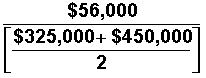
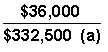
= 2.8:1.
SOLUTIONS TO ASSIGNMENTS
EXRCISE 19-1
MERLYNN INC.
Condensed Balance Sheet
December 31
|
|
|
|
|
|
|
Increase or (Decrease) |
||
|
|
|
|
|
|
|
|
|
|
|
|
|
2003 |
|
2002 |
|
Amount |
|
Percentage |
|
|
|
|
|
|
|
|
|
|
|
Assets |
|
|
|
|
|
|
|
|
|
|
|
|
|
|
|
|
|
|
|
Current assets Plant assets (net) Total assets |
|
$125,000 400,000 $525,000 |
|
$100,000 330,000 $430,000 |
|
($25,000) ( 70,000) ($95,000) |
|
(25.0%) (21.2%) (22.1%) |
|
|
|
|
|
|
|
|
|
|
|
Liabilities |
|
|
|
|
|
|
|
|
|
|
|
|
|
|
|
|
|
|
|
Current liabilities Long-term liabilities Total liabilities |
|
$ 91,000 144,000 235,000 |
|
$ 70,000 95,000 165,000 |
|
($21,000) ( 49,000) ( 70,000) |
|
(30.0%) (51.6%) (42.4%) |
|
|
|
|
|
|
|
|
|
|
|
Stockholders’ Equity |
|
|
|
|
|
|
|
|
|
|
|
|
|
|
|
|
|
|
|
Common stock, $1 par Retained earnings Total stockholders’ equity Total liabilities and stockholders’ equity |
|
155,000 135,000 290,000 $525,000 |
|
115,000 150,000 265,000 $430,000 |
|
( 40,000)
(15,000 ) (15,000 ) ( 25,000) ($95,000) |
|
(34.8%) (10.0%) ( 9.4%) (22.1%) |
EXERCISE 19-2
ENID CORPORATION
Condensed Income Statement
For the Years Ended December 31
|
|
|
2003 |
|
2002 |
||||||
|
|
|
|
|
|
|
|
|
|
|
|
|
|
|
Amount |
|
Percent |
|
Amount |
|
Percent |
|
|
|
|
|
|
|
|
|
|
|
|
|
|
|
Sales Cost of goods sold Gross profit Selling expenses Administrative expenses Total operating expenses Income before income taxes Income tax expense Net income |
|
$800,000 472,000 328,000 120,000 80,000 200,000 128,000 38,400 $ 89,600 |
|
100.0% 59.0% 41.0% 15.0% 10.0% 25.0% 16.0% 4.8% 11.2% |
|
$600,000 390,000 210,000 72,000 54,000 126,000 84,000 25,200 $ 58,800 |
|
100.0% 65.0% 35.0% 12.0% 9.0% 21.0% 14.0% 4.2% 9.8% |
|
|
EXERCISE 19-7
(a)
= 2.8:1.
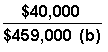
(b)
 = 1.6:1.
(c)
 = 6.4 times.
(d)
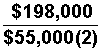 = 3.6 times.
|
|
(1) |
|
|
|
|
|
|
|
|
|
|
|
|
|
(2) |
|
|
|
|
(e)
 = 8.25%.
(f)
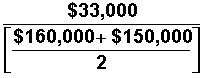 = .21 times.
(g)
 = .6:1.
EXERCISE 19-8
(a)
Profit margin
 = 7%.
= 7%.
(b)
Asset turnover
 = 1.45 times.
(c)
Return on assets
 = 10.2%.
|
(d) |
Return
on common stockholders’ |
|
|
EXERCISE 19-9
(a)
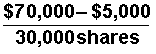 = $2.17.
(b)
 = 6.9 times.
(c)
 = 30%.
(d)
 =
=
 = 5.7 times.
(e)
 = 23%.
|
PROBLEM 19-2 |
(a)
Earnings per share =
 = $3.44.
(1) [60,000 – (4,000 X 3/4)]
(b)
Return on stockholders’ equity =
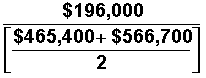
=

= 38.0%.
(c)
Return on assets =
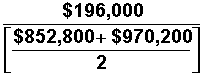 =
=
 = 21.5%.
(d)
Current ratio =
 = 1.7:1.
(e)
Acid-test ratio =
 = 1.1:1.
(f)
Receivables turnover =
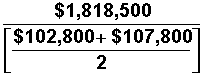
=
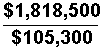
= 17.3 times.
PROBLEM 19-2 (Continued)
(g)
Inventory turnover =
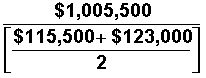 =
=
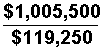 = 8.4 times.
(h)
Times interest earned =
 = 11.4 times.
(i)
Asset turnover =
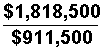 = 2.0 times.
(j)
Debt to total assets =
 = 41.6%.
(k)
Current cash debt coverage ratio =
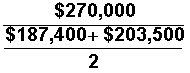 = 1.38:1.
(l)
Cash return on sales =
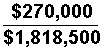 = 14.8%.
(m)
Cash debt coverage =
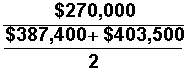 = .68 times.
|
PROBLEM 19-3 |
|
(a) |
|
2002 |
|
2003 |
|
|
|
|
|
|
|
|
(1) |
Profit
margin.
|
|
|
|
|
|
|
|
|
|
|
(2) |
Asset
turnover.
|
|
|
|
|
|
|
|
|
|
|
(3) |
Earnings
per share.
|
|
|
|
|
|
|
|
|
|
|
(4) |
Price-earnings
ratio.
|
|
|
|
|
|
|
|
|
|
|
(5) |
Payout
ratio.
*($113,000 +
$32,000 – $125,000) |
|
**($125,000
+ $44,000 – $145,000) |
|
|
|
|
|
|
|
|
(6) |
Debt
to total assets.
|
|
|
PROBLEM 19-3 (Continued)
(b) The underlying profitability of the corporation appears to have improved. For example, profit margin and earnings per share have both increased. In addition, the corporation’s price-earnings ratio has increased, which suggests that investors may be looking more favorably at the corporation. Also, the corporation appears to be involved in attempting to reduce its debt burden as its debt to total assets has decreased. Similarly, its payout ratio has decreased, which should help its overall solvency.
|
PROBLEM 19-4 |
(a) LIQUIDITY
|
|
|
|
2002 |
|
2003 |
|
Change |
|
|
|
|
|
|
|
|
|
|
|
Current |
|
|
|
|
|
Increase |
|
|
|
|
|
|
|
|
|
|
|
Acid-test |
|
|
|
|
|
No change |
|
|
|
|
|
|
|
|
|
|
|
Receivables turnover |
|
|
|
|
|
Increase |
|
|
|
|
|
|
|
|
|
|
|
Inventory turnover |
|
|
|
|
|
Increase |
An overall increase in short-term liquidity has occurred.
PROFITABILITY
|
|
Profit margin |
|
|
|
|
|
Decrease |
|
|
|
|
|
|
|
|
|
|
|
Asset turnover |
|
|
|
|
|
Increase |
|
|
|
|
|
|
|
|
|
|
|
Return on assets |
|
|
|
|
|
Decrease |
|
|
|
|
|
|
|
|
|
|
|
Earnings per share |
|
|
|
|
|
Increase |
Profitability has remained relatively the same.
PROBLEM 19-4 (Continued)
|
(b) |
|
|
|
2003 |
|
2004 |
|
Change |
|
|
|
|
|
|
|
|
|
|
|
|
1. |
Return
on common stockhold- ers’
equity |
|
|
|
|
|
Decrease |
|
|
|
|
|
|
|
|
|
|
|
|
2. |
Debt to
total assets |
|
|
|
|
|
Decrease |
|
|
|
|
|
|
|
|
|
|
|
|
3. |
Price- earnings ratio |
|
|
|
|
|
Increase |
(a) ($200,000 + $149,000 + $200,000 + $116,000) ÷ 2.
(b) ($380,000 +
$189,000 + $200,000 + $149,000) ÷ 2.
(c) $40,000 ÷
20,000.