
Finland

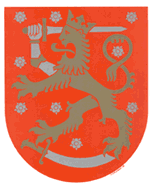
Finland is located in northern Europe, bordering the Baltic Sea, Gulf of Bothnia, and Gulf of Finland, between Sweden and Russia. A quarter of its total area lies north of the Arctic Circle. The mean annual temperature in Helsinki, the capital, is 41.5 degrees Fahrenheit or 3.5 C. The highest summer temperatures reach approximately 30 degrees Celsius or 86 degrees F. Forests cover approximately three quarters of the country and there are about 190,000 lakes in Finland.
According to the Chronology of Finland History compiled by Joe Brady for Virtual Finland, Archaeological finds indicate there was probably human settlement in Finland more than 100,000 years ago. For more information about archaeology and prehistoric Finland, please visit the National Board of Antiquities of Finland or Virtual Finland.
One of the great undertakings of Finnish history is when a couple thousand young Finns, including my grandfather Toivo Erland Mäkelä, volunteered to receive military training at Locksted military camp in Germany. These young men became known as the Royal Prussian Jäeger Battalion No.27. They returned to Finland in 1918 and were instrumental in securing victory. In September 2002 a Museum in their honor was opened in Germany. In Finland, the Finnish Military Museum contains many artifacts and much information concerning the Finnish Military. The Genealogical Society of Finland and many websites contain information about Finland's military. For information about Finland during the Second World War .
Finland was ruled by Sweden from the 12th to the 19th centuries and by Russia from 1809, Finland finally won its independence in 1917. During World War II, it was able to successfully defend its freedom and fend off invasions by the Soviet Union and Germany. In the subsequent half century, the Finns have made a remarkable transformation from a farm/forest economy to a diversified modern industrial economy; per capita income is now on par with Western Europe. As a member of the European Union, Finland was the only Nordic state to join the euro system at its initiation in January 1999. (World Fact Book, 2002)
During 1865-1914, more than 320,00 Finns emigrated to the United States and Canada. According to the U.S. Bureau of Census, in 1990 there were 465,070 people of Finnish Ancestry living in the United States. The 1986 Canadian Census found 40,565 Finnish people living in Canada. The current population of Finland is approximately 5,200,000 people, making it the sixth largest country in Europe. For information concerning important people of Finland, please visit the National Biography of Finland website.
In 2002, Tarja Kaarina Halonen became the first woman President of the Republic of Finland. You will find a listing of rulers of the Republic on another page: Monarchs, Magnates, Grand Dukes and Presidents. Finland was the first country in Europe and second, New Zealand was the first, in the world to grant women an equal right to vote in elections. Women in Finland first received the right to vote and to run for parliament in 1906 when the Finnish Diet, made up of four estates (nobility, clergy, merchantry and peasantry), became a national parliament. In an attempt to place this in context, 1906 was the year of the Great San Francisco Earthquake.
In 1995 Finland became a member of the European Union and in 2002, the Euro became the official currency of Finland, replacing the mark.
Below is brief information about cities in Finland from where my family history began: (for other cities try the Surf Finland interactive map)
Hausjärvi

Hausjärvi, founded in 1868, is about 25 kilometers from Riihimäki, 85 km from Helsinki and 125 km from Tampere. The population is approximately 8000 people and the main focus of the community is education.
Karelia
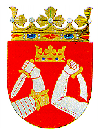
Karelia,more specifically Viipuri, is of interest to me as my mother and her family fled from their farm during the Second World War when Russia took the land. Viipuri was Finlands largest port for the export of wood products. Before the War the city was Finland's most cosmopolitan city. The library building in the city was designed by Alvar Aalto, one of Finland's premier architects, known internationally for his designs of not only buildings, but furniture and glass as well. I have listed here two links for more information on this area of Finland. History of Karelia and The Many Faces of Karelia.
Lempäälä
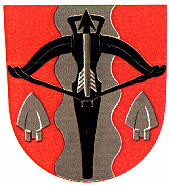
First signs of human activity in Lempäälä date back to 6000-9500 years ago indicating that hunting people stayed in Lempäälä occasionally during their hunting trips. The parish celebrated its 560th anniversary in 1999. Written administrative parish documents date to approximately 1439. The vicar of Lempäälä, Eric Edner was the first one to propose the building of a town by the Tammerkoski falls in the parliament of Stockholm in 1771-72. That town became Tampere, which is about 23 kilometers from Lempäälä. The municipality of about 17,000 people is on an island, surrounded by water.
Pirkkala
The municipality of Pirkkala is situated in the province of Western Finland by Lake Pyhäjärvi. Its neighbouring municipalities are the cities of Tampere and Nokia and the municipalities of Lempäälä and Vesilahti. Pirkkala forms a uniform economic area together with the city of Tampere and its other neighbouring municipalities.
Tampere
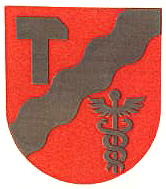
Tampere was founded in 1779 and built on the western bank of the rapids, which became an important factor in the cities growth. The first main street was Kauppakatu, or store street. Trading took place in the Central Square until the end of the nineteenth century when the city began industrialization. Today, the Tampere University of Technology has three centers of excellence in technology research and partners with 170 research universities internationally. Tampere has become a center of industry, culture, research and education and an international conference city that hosts many top level researchers and forums and has managed to maintain its small town atmosphere with a population of about 198,400 people.
Vesilahti
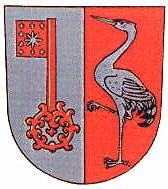
Founded in 1869, the municipality of Vesilahti is situated in the region of Pirkanmaa in the Province of West Finland. It belongs to the economic region of Tampere, one of the largest cities in Finland. Bordering on the municipalities of Lempäälä, Pirkkala, Nokia, Vammala, Urjala, Kylmäkoski and Viiala, Vesilahti is situated 30 kilometres from Tampere and Nokia, 160 kilometres from Helsinki, and 130 kilometres from Turku.