| What Is Eventing? |
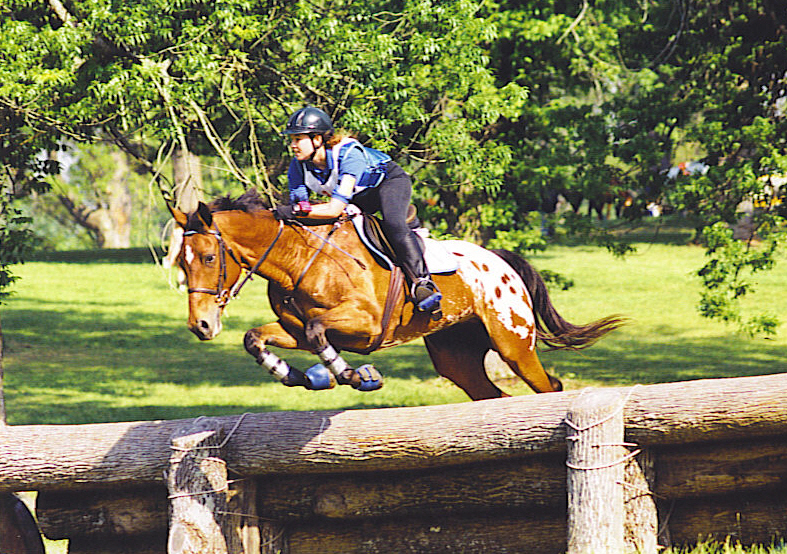 |
| Eventing is sometimes known as the equestrian �triathlon�. It involves the horse and rider working on the flat and over fences. It has developed over the centuries as a test for the cavalry to determine the bravery, strength, and obedience of each horse for military use. The three phases are dressage, cross-country, and show jumping. The same horse and rider combination must remain the same throughout the competition. Dressage is always the first phase, which is the French term for �training�. It tests the horse�s willingness and obedience, along with suppleness, impulsion, and precision. Ideally it should look as if the horse is carrying itself of its own accord, moving in harmony with the rider. The second and most exciting phase is the endurance phase, which includes cross-country jumping. The object of the endurance test is to prove the speed, endurance, bravery, and jumping ability of the true cross-country horse when he is well trained and brought to the peak of condition. At the same time, it demonstrates the rider's knowledge of pace and the use of this horse across country. The horse and rider proceed over natural terrain, jumping obstacles such as logs, ditches, and into and through water. In true �three-day events�, the endurance phase is over several miles and includes a warm-up section, an individual steeplechase section, a cool-down and vet check, and finally the cross-country section. In �horse trials�, the endurance phase is shortened to only the cross-country test. The third and final test takes place in the jumping arena. After the demands of the speed and endurance phases, horses undergo a thorough veterinary examination for soundness before they proceed to the show jumping phase. A series of colored fences in an enclosed ring have to be negotiated before the full three days of competition are finally over. The final phase tests the stamina and recovery of the horse after the endurance phase and shows that it is fit enough to continue work. It also tests the rider�s ability to negotiate the horse around the turns with control while maintaining the correct speed. All three phases are judged using penalty points. A pair finishing on their dressage score would indicate that they did not incur any faults during either jumping phase. Faults during cross-country include jump faults, such as stopping or running out at a fence, and speed faults, which include going too fast or too slow. Show jumping faults also include speed faults and jump faults, and knocking down a pole will also incur penalties. The lowest score wins the competition. |
| For more information about Eventing, visit the United States Eventing Association website. |