Buffalo (NY)
 |
Few cities can
claim such as brilliant past and development as
the great city of Buffalo (NY). At the
shores of Lake Erie, the commerce and
transportation led from "a collection of
four or five houses a quarter of a mile from the
lake", as Buffalo was described in 1795,
to a great city of 500.000 inhabitants by the
1900. In between, the development of a great
commercial port (grain, lumber, iron ore, coal)
and a great network of railroads that linked
Buffalo with New York and the Atlantic Coast. New
York Central, Erie Railroad, Lackawanna Railroad,
Lehigh Valley Railroad to name a few of the
main trunk lines. Buffalo was also a manufacturing center (steel, automotive, oil). From Niagara Falls and Tonawanda to the new "steel city" of Lackawanna (established in 1902 by Bethlehem Steel), the metropolitan area of Buffalo overpass the 2 millions by 1920. |
Buffalo was a "rail city". The railroads entered the city between Buffalo river and Broadway Ave.
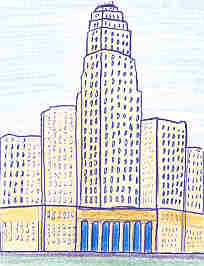
Niagara Square, the "heart" of the city. You can see in the immage the impressive new City Hall (1931), a masterpiece of the "Art-Deco" style. To the north from here run the elegant avenues of Delaware Ave, Elmwood Ave, with the homes and mansions of the prominent citizens of Buffalo, and the Delaware Park (the seat of the 1901 Pan-American Exposition).
Main Street, the "cultural row" of Buffalo, with Lafayette Sq. (The Library), the Theatre District and Chippewa St.
Buffalo, the "Queen City" at the shores of Lake Erie. Take Genesee Ave. and you will leave the city towards the rich farmlands of Western New York.
© TEXT and Draw: Juan Vicente Santamaría Gil. 2004
