| Andover Natural Phenomena As a early naturalist, Bailey was exposed to several very interesting natural history phenomena which certainly excited his inquiring mind. In 1882, there were two interesting astronomical events which undoubtedly were the talk of intellecturally aware adults in his area. The first was reported December 12 (Oxford Democrat): "North Rumford The transit of venus was observed by some of our people today." while on December 26, the same source reported a more spectacular occurrance: "A meteor of great brilliancy, apparently but a few hundred feet from the earth, was seen here; Wednesday evening, about 5 P. M." Bailey undoubtedly saw this meteor or at least talked about it, if on the odd chance he was not looking up when he was performing his chores. (Meteors do make a reasonably loud sound when they travel close to the surface.) Sixteen years later, another meteorite was reported in Andover and that time it was recovered. Ed Bailey had a piece of it, but most was recovered by Henry V. Poor. The meteorite fell August 5, 1898 on the land of Lincoln Dresser. Dresser said that he believed the meteor must have come from the constellation Persius (undoubtedly he was familiar with the Perseid metor shows of that time of year). (see http://www.rasny.org/andover.htm). Natural phenomena are very frequently noticed and appreciated by farmers and those whose occupations are primarily focused on the out-of-doors. The almanac was an essential reference for people of the time period and would have announced the transit of Venus as well as all of the other predictable astronomical events. Full moon nights could be utilized for public meetings, so that attendees could easily find their way home, and the phase of the moon was used as a predictor of weather conditions, quality fishing days, etc. Andover is far enough North that it frequently is well-positioned for the unpredictable displays of Northern Lights. Additionally, the spectacular Great September Comet of 1882, also called Comet "Tewfik", would have been an occurrence frequently discussed. The comet extended over 10% of the sky as measured from horizon to horizon! The comet was visible to the naked eye, worldwide, from about September 7, 1882 until mid-1883 (Bortle, 1998). The eruption of Krakatoa Volcano on August 26, 1883, resulted in amazingly colorful dazzling sunrises and sunsets, after the eruption through most of l884. Unbeknownst to the people in Maine, the dust from the eruption, not only was the cause of the colorful edges of night, but was probably a contributor to the bitter and long winter of 1883-1884. |
| Edmund Morris Bailey - by Van King (Biography in preparation. Re-check for an extended discussion of mineralogical activities, including transcriptions of Bailey's articles. Additional information and photographs welcomed. Please contact me with additional data.) Ed Bailey of South Andover lived with his sisters, Lavinia Elsie Bailey (b. January 26, 1856 d. January 14, 1959), and Sadie J. Bailey (b. April, 1862 d. xx), all of whom remained single. The "single estate" of the Baileys was a not uncommon occurrance of the time period: "The 'South Andover Bachelors' are begining to surrender to matrimony. Holton, 'the youngest and the fairest and most bashful of all,' is the first to go over; apparently 'there are more to follow' soon." (January 13, 1885, Oxford Democrat). In the time period, Edmund would have been included among the "South Andover Bachelors". Together, Edmund and his sisters raised a number of "foster" children including: Dick Nevel (b. June, 1887), Nora E. Paine (b. April 1892), a "Bixby" girl, and later, a daughter of Nora Paine's. It is open to question whether the Baileys were formal foster parents or if they took in young boarders or were kindly providers of care. In the 1900 Federal census, Nora Paine is the only listed boarder in the Bailey home. Edmund was listed as a farmer, Sadie was listed as a cook, while Lavinia was not assigned an occupation. Edmund Bailey was largely self-educated. He was born on a farm of farming parents. Typical of his day, people devised entertainments and educational experiences for themselves, especially when they lived in areas where those experiences were not available unless manufactured by themselves. We might imagine that timely natural phenomena had much to do with Bailey's becoming a naturalist. In his young life, there was much in the natural world to excite a young mind in Andover. By 1878, at age 20, Bailey was also interested in mineralogy. |
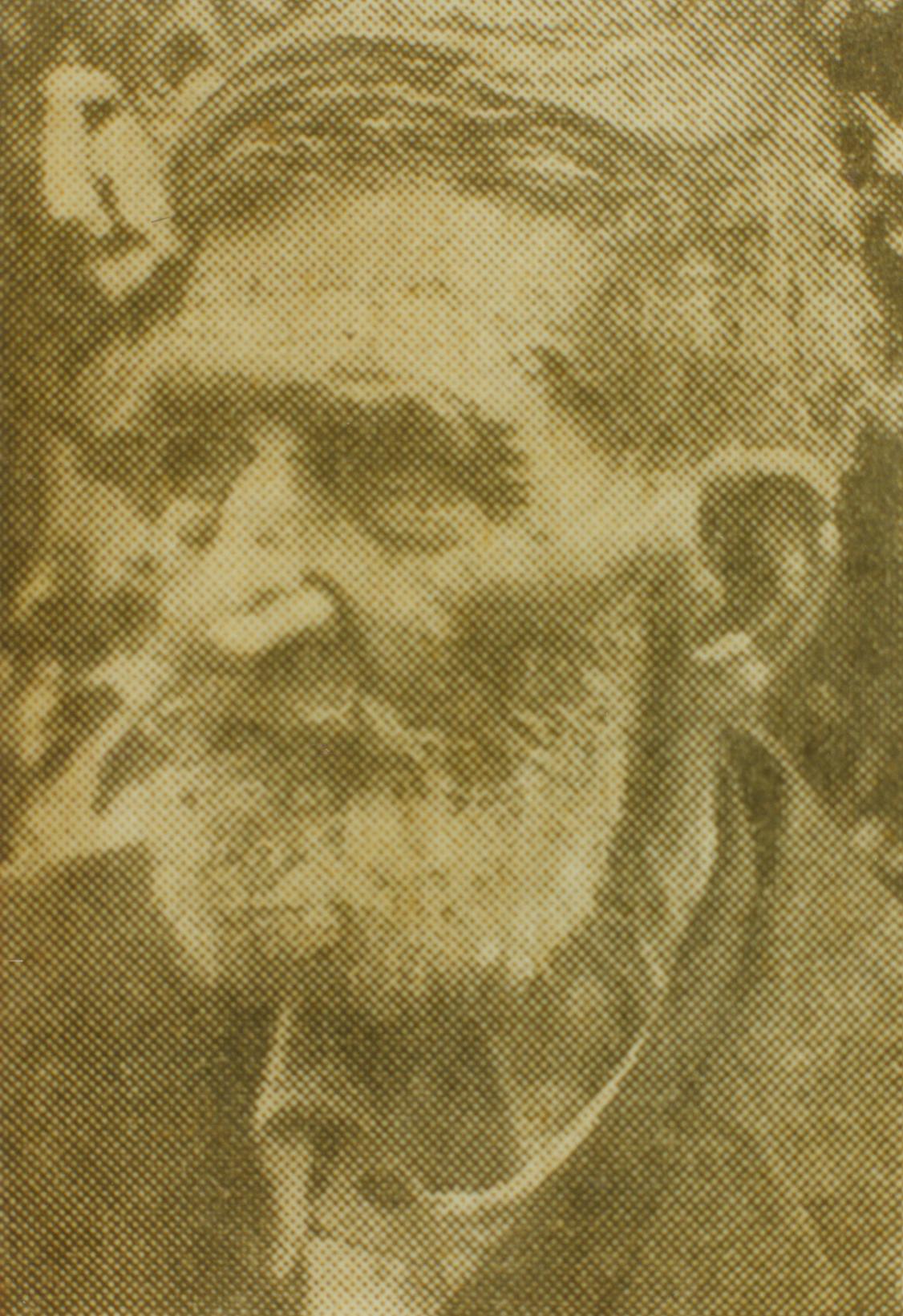
Edmund Morris Bailey (November 28, 1858 - April 1, 1943) |
| Ed Bailey, c. 1930's |
 |
| Gem tourmaline crystal from Dunton Gem Quarry, Newry, Maine Found 1972 size: 5 x 7 cm |
 |

|