 |
 |
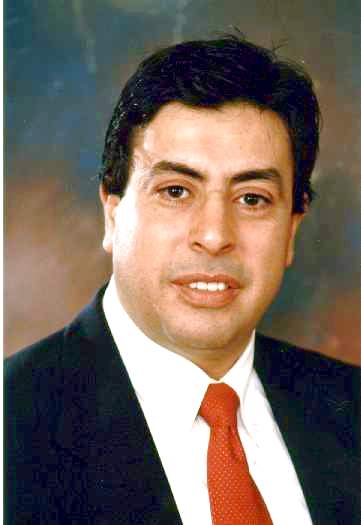
| Mahmoud BUAZZI REBYANA FOOD TECHNOLOGY P. O. BOX 41160 KHOMS, L I B Y A Phone/Fax: +(218) (21) 334 - 3451 E-mail: [email protected] Profile: www.geocities.com/mahmoud_mb E D U C A T I O N Ph.D. in Food Science (Major Filed: Food Microbiology), May 1992. Department of Food Science, University of Wisconsin-Madison, USA. Research Adviser: Elmer H. Marth. Dissertation Committee: Elmer H. Marth, Dean O. Cliver, Norman F. Olson, Robert L. Bradley, Joachim H. von Elbe. Thesis Title: Impact of Preservatives and Food Processing on Listeria monocytogenes. M.Sc. in Bacteriology (Major Filed: Food Bacteriology), May 1983. Department of Bacteriology, University of Wisconsin-Madison, USA. Adviser: Robert H. Deibel. B.Sc. in Biolog, June 1978 Faculty of Science, University of Al Fateh, Tripoli, Libya. Adviser: Ahmed A. Zahir. Computer Skills: Professional expertise in Microsoft Word, MS Excel, Delta Point's DeltaGraph, Claris FileMaker Pro (visual programming), Adobe PageMaker, MS Windows, MOS, Internet and HTML. R E S E A R C H E X P E R I E N C E Graduate Research Adviser. Dept. of Food Science, University of Al Fateh, Tripoli, Libya. April 1996 - April 1999. Supervised graduate research in Food Microbiology leading to M.Sc. degree in Food Science. Designed problem solving approaches improving food quality and safety. Developed research methods for HACCP and microbiological analyses in food research. Doctoral Research: Department of Food Science, University of Wisconsin-Madison. 1986-1992. Research Adviser: Elmer H. Marth. Dissertation Committee: Elmer H. Marth, Dean O. Cliver, Norman F. Olson, Robert L. Bradley, Joachim H. von Elbe. Title: Impact of Preservatives and Food Processing on Listeria monocytogenes. Work: Investigated Mode of Action of Sorbic, Benzoic, and Propionic acids on Listeria monocytogenes. Employ ed methods of metabolic inhibitors, spectrophotometric analysis, and enzyme assays to examine injured cellular structures and functions and mechanisms of inhibition. Rationale: An understanding of these mechanisms would provide knowledge about why some microorganisms are sensitive and others resistant to the preservatives. Such knowledge can be applied to advance our ability to land alternative preservation and design a preservation system that potentially is safer, and more economic, effective, and appealing to consumers than currently used preservatives. Furthermore, an understanding of the mechanisms of microbial injury might be used to develop better methods for rapid enrichment and detection of foodborne pathogens. Title: Behavior of Listeria monocytogenes During the Manufacture and Ripening of Swiss and Mozzarella Cheeses. Work: Inoculated milk in pilot-plant-sized vats with the pathogen and follow the rate of inhibition, killing, injury, and recovery of Listeria during and after processing as affected by parameters of food manufacturing. Rationale: To determine food manufacturing aspects that contribute to the arrest or destruction of the pathogen. Research Specialist. Center for Dairy Research, University of Wisconsin, Madison, USA. June 1990 - December 1991. Principal Investigator: Mark E. Johnson. Screened, identified, and manipulated physiology characteristics for strain development of dairy bacterial starter cultures, through a battery of culture treatment and biochemical testing for selected traits. Laboratory Administrator. Department of Food Science, University of Wisconsin-Madison, USA. June 1990 - June 1991. Managed routine preparations and activities in the Laboratory of Food Microbiology, trained and supervised new student workers. Research Specialist. Department of Bacteriology, University of Wisconsin-Madison, USA. January - May 1983. Principal Investigator: Robert H. Deibel. Investigated growth kinetics and properties of Salmonella typhimurium in watermelon. T E A C H I N G E X P E R I E N C E Chairman of Biotechnology Department. Faculty of Science, University of Nasser, Khoms, Libya. October 1992 - May 1994. Planned microbiology curriculum as a new division of specialty at the university. Lectured biology students in general and food microbiology, and administered laboratory sessions. Department gained the highest student recruitment. Generated 15% of department budget through scientific consulting and training to local food manufacturing plants in Good Manufacturing Practices and HACCP programs. Teaching Assistant. Department of Food Science, University of Wisconsin-Madison, USA. Januray 89 - June 91. Taught advanced laboratory courses in food microbiology, analysis, chemistry, and processing to undergraduate and graduate students. Held discussion sessions, office hours, graded papers and exams. Achieved excellent performance and won an exceptional extension to a second year assignment. Food Processing Lab. FS 532, Springs 1990, 1991. Instructor: Mark R. Etzel. Conducted experiment preparations, procedure instructions and discussion of significance of diverse food processing techniques used to process and preserve food on a commercial basis. Led student groups discussing approaches to new product development. Wisconsin Cheese Technology Short Course, March 18-22, 1991. Instructor: Norman F. Olson, Mark E. Johnson. Taught principles and practices of cheesemaking, and guided industry student squads manufacturing cheese in a pilot instruction plant. Food Analysis FS 310, Falls 1990, 1991. Instructor: Robert L. Bradley, Jr. Conducted laboratory experiment preparation, taught laboratory sessions in the application of quantitative techniques to the determination of composition and quality of food products, and evaluated students . Achieved satisfactory results that led to my appointment as a teaching assistant for a second year in the department. Food Science 120, Spring 1990. Instructor: Ken Lee. Held weekly office hours and proctored in the Science of Food, a large enrollment course broadcast on public TV. Helped students of diverse backgrounds discuss and comprehend lecture materials. Food Fermentations Lab. FS 431, Spring 1989. Instructor: Norman F. Olson. Taught and demonstrated chemical and microbiological characteristics of selected fermented foods. Discussed and graded lab. reports. Department of Bacteriology, University of Wisconsin-Madison, USA. General Bacteriology BACT 101, Spring 1983. Instructor: Kenneth Todar. Participated in teaching the basic principles of General Bacteriology Laboratory. Academic Courses Attended: Introduction to College Teaching, Teaching Methods CAVE 741, Grade (A). Practicum in Food Science Teaching, Practical training in instruction FS 799, Grade (A). P R O F E S S I O N A L E X P E R I E N C E Technical Manager. Rebyana Food Technology, Ltd., Tripoli, Libya. January 1995 - present. Provide continuous technical council and problem solving to local food industry, government authorities, and media on HACCP, food preservation, auditing, and food safety. Repeated business from satisfied customers in food plants led to their expansion and increased sales. Managed the design, equipment selection, purchasing from US/European sources, installation, thorough employee training, start-up, running, and continuous scientific and technical support to Fituri Food and Rebyana Cheese, the first plants to manufacture Mozzarella and Gouda cheese respectively in Libya, with milk consumption of 5000 liters per day. Projects completed on time within a tight budget of $220,000.00. Achieved product qualities comparable to imported grades. Yearly sales: $1,080.000.00. Turn over achieved: 80%. Founded and managing the first dairy starter culture production facility on a commercial level in the Libyan market. Develop, maintain, enrich, and package custom starter cultures for customers at cheese and yoghurt plants. On-site training of employee on proper use of culture and conduct of HACCP programs. Increasingly positive yearly growth. Member of Food Control Board. Food Control & Inspection Center, Ministry of Control, Tripoli, Libya. June 2000 - December 2001. Defined rules and procedures for analyses and inspection of imported food at governmental laboratories. Developed awareness and recognition to food safety. Efforts resulted in drastic reduction of food-borne hazards to a nationally remarked level. Quality Control Manager. General Dairy Products Company, Ministry of Industry, Tripoli, Libya. March 1996 - March 1998. Outlined and Supervised laboratory analyses and production parameters which resulted in better quality and safety of dairy products manufactured in seven governmental plants making sterile milk, buttermilk, yoghurt, and soft cheese. Standardized process of manufacture which led to uniform end product characteristics. Extended shelf life and increased public confidence resulted in 18% increase in sales. Trained employees in production and analysis. Supervised and evaluated 12 employees in quality control divisions. Editor of "Publications in Food Microbiology." American Research & Publishing House, Madison, Wisconsin, USA. Fall 1991 - Spring 1992. Planned and produced this new serial publication, in the form of a monthly index newsletter, from hope to reality. Collected citations of all publications relevant to food microbiology from over 90 carefully searched international serial publications. Reviewed, edited, and managed desktop publishing of the newsletter, with happy subscribers in academic, industrial and governmental institutions. U N I V E R S I T Y S E R V I C E S Newsletter Editor. Department of Food Science, University of Wisconsin-Madison, USA. August 1990 - June 1992. Assumed responsibility of editing and electronic production of Babcock News, periodic publication of Food Science Club on campus. Committee Chairman. Chairman of the Computer Committee at the Food Science Club of the University of Wisconsin-Madison. (1991). Held biweekly meetings with interested member students exchanging help and ideas pertaining to academic desktop publishing. Committee Member. The Annual Food Science Symposium (1991). Symposium held by the School of Agricultural and Life Sciences at the University of Wisconsin. P h. D. C O U R S E W O R K Advanced Bacteriology. Advanced Biochemistry Food Chemistry. Microbial Physiology. Biochemical Techniques. Food Fermentations. Microbial Ecology. Membrane Biochemistry. Food Processing. Bacterial Genetics. Behavior-Simple Organisms. Food Sanitation. Bacterial Metabolism. Industrial Microbiology. Food Quality Control. Procaryotic Cell. Food Bacteriology. Dairy Foods. Medical Microbiology. Food Microbiology. Biotechnology. Host-Parasite Interactions. Food-Borne Diseases. College Teaching. Immunology. Microbial Metabolism in Foods. Food Science Teaching. Human Nutrition. Food Analysis. Technical Writing. P h .D. T H E S I S A B S T R A C T Listeria monocytogenes was injured with a solution of 8.5% sodium benzoate for 1 h, or 1% potassium sorbate for 30 min, or 8.0% sodium propionate for 1 h. Injury was manifested by inability of the bacterium to tolerate 6% NaCl in tryptose agar (TA) and ability to grow on TA with no added salt, while recovery was manifested by ability of the bacterium to grow with equal ease in the presence or absence of 6% NaCl in TA. Recovery of injured cells was studied after addition of sublethal amounts of metabolic or synthetic inhibitors to tryptose broth (TB). No changes which may have occurred in the cell membrane of injured cells allowed leakage of proteins or nucleotides into the medium. Inhibition of protein synthesis or repair of the cell wall did not suppress recovery of cells. Although 2,4-dinitrophenol did not inhibit recovery of benzoate- or propionate-treated cells, it did inhibit recovery of sorbate-injured cells. Inhibitors of DNA transcription effectively reduced salt tolerance of cells injured with sodium benzoate but not with propionate. The rate of recovery of propionate-injured cells was enhanced with exogenous cation salts. The specific activity of lactic dehydrogenase was reduced in propionate-injured cells. Rindless Swiss cheese was made from a mixture of pasteurized whole and skim milk which was inoculated to contain 104-105 CFU L. monocytogenes (strain Ohio, California, or V7)/ml. Cooking curd at 50°C (122°F) for 30-40 min. caused a decrease of 48% in the population of L. monocytogenes as compared to numbers of the pathogen in inoculated milk. The population of L. monocytogenes continued to decrease during cheese ripening. No viable L. monocytogenes was not detected (direct plating and cold enrichment) after 80, 77, and 66 d of ripening of Swiss cheese made from milk inoculated with strains California, Ohio, and V7, respectively. Mozzarella cheese was made from a mixture of pasteurized whole and skim milk which was inoculated to contain 104-105 CFU L. monocytogenes (strain Ohio, California, or V7)/ml. Placing of curd in hot water [76.6°C (170°F)], and stretching it for 3-4 min. caused complete demise of the pathogen. P U B L I C A T I O N S Buazzi, M. M., and E. H. Marth. 1992. Characteristics of Benzoate Injury in Listeria monocytogenes. Microbios 70: 199-208. ABSTRACT: Over 99% of viable cells of Listeria monocytogenes were injured after exposure to a solution of 8.5% sodium benzoate (pH 7.0) for 1 h. Injury was evident by the ability of the bacterium to tolerate 6% NaCl in tryptose agar (TA) and the ability to grow on TA with no added salt. The colony-forming ability of the injured cells was restored when they recovered in tryptose containing sublethal amounts of metabolic or synthetic inhibitors. Synthesis of mRNA was critical for restoration of salt tolerance. Inhibition of electron transport, protein synthesis, or repair of the cell wall did not suppress recovery of the cells. Changes in the cell membrane which may have occurred did not allow soluble proteins or nucleotides to leak during the course of benzoate injury. Buazzi, M. M., and E. H. Marth. 1991. Mechanisms in the Inhibition of Listeria monocytogenes by Potassium Sorbate. Food Microbiology 8: 249-256. ABSTRACT: Listeria monocytogenes was injured by treating the bacterium with a solution of 1% (w/v) potassium sorbate for 30 min. Injury was shown by inability of the bacterium to tolerate 6% NaC1 in tryptose agar (TA) and ability to grow on TA with no added salt. Colony-forming ability of injured cells was restored when they recovered in tryptose broth containing sub-lethal amounts of metabolic or synthetic inhibitors. 2,4-Dinitrophenol was the only inhibitor which effectively prevented recovery of injured cells. No changes occurred in the cell membrane that allowed soluble proteins or nucleotides to leak from cells during the course of sorbate injury. Buazzi, M. M., and E. H. Marth. 1992. Sites of Action by Propionates on Listeria monocytogenes. Int'l Journal of Food Microbiology 15: 249-256. ABSTRACT: Exposure of Listeria monocytogenes to a solution of sodium propionate (8% w/v) for 60 min caused 87% of the population to be injured. Injury was evidenced by inability of the bacterium to tolerate 6% sodium chloride in tryptose agar as compared to ability to grow on tryptose agar with no added salt. Injured cells were allowed to repair in tryptose broth and the repair process was studied by addition to tryptose broth of sublethal amounts of metabolic inhibitors. Repair of injured cells did not require electron transport or synthesis of cell wall components, mRNA or protein. No changes which may have occurred in the cell membrane of injured cells, allowed leakage of proteins or nucleotides into the medium. Exogenous cation salts enhanced the rate of recovery of injured cells. The specific activity of lactic dehydrogenase was reduced in propionate-injured L. monocytogenes. Buazzi, M. M., M. E. Johnson, and E. H. Marth. 1992. Survival of Listeria monocytogenes during the Manufacture and Ripening of Swiss Cheese. Journal of Dairy Science 75: 380-386. ABSTRACT: Rindless Swiss cheese was made from a mixture of pasteurized whole and skim milk that was inoculated to contain 10(4) to 10(5) cfu of Listeria monocytogenes (strain Ohio, California, or V7)/ml. During clotting of milk numbers of L. monocytogenes remained nearly unchanged. When the curd was heated gradually to attain the cooking temperature (50 degrees C), numbers of L. monocytogenes increased by approximately 40 to 45% over those in inoculated milk. Cooking curd at 50 degrees C (122 degrees F) for 30 to 40 min resulted in resilient curd having a pH of 6.40 to 6.45 and decreased L. monocytogenes by 48% compared with numbers of the pathogen in inoculated milk. After curd was pressed under whey, numbers of L. monocytogenes increased by approximately 52% over those in inoculated milk and reached their maxima at the end of this stage. A sharp decrease in numbers of L. monocytogenes occurred during brining of cheese blocks (7 degrees C for 30 h). The population of L. monocytogenes continued to decrease during cheese ripening. Average D values for sum California, Ohio, and V7 were 29.2, 24, and 22.5 d, respectively. Listeria was not detected (direct plating, and cold enrichment) after 80, 77, and 66 d of ripening of Swiss cheese made from milk inoculated with strains California Ohio, and V7, respectively. Thus, Swiss cheese made in this study did not permit extended survival of L. monocytogenes. Buazzi, M. M., M. E. Johnson, and E. H. Marth. 1992. Fate of Listeria monocytogenes during the Manufacture of Mozzarella Cheese. Journal of Food Protection 55: 80-83. ABSTRACT: Mozzarella cheese was made from a mixture of pasteurized whole and skim milk which was inoculated to contain 10(4)-10(5) CFU Listeria monocytogenes (strain Ohio, California, or V7) per ml. Temperature of milk was maintained at 40 degrees C (104 degrees F) for 30 min when curd became resilient and the pH reached 5.90-5.93. Populations of L. monocytogenes changed at different rates during the various phases of making Mozzarella cheese. During the early stages of curd formation, numbers of L. monocytogenes were ca. 4-fold greater in curd than in whey. Numbers of L. monocytogenes in freshly cut curd were 25 to 38% greater than in inoculated milk. Cooking curd at 40 degrees C for ca. 30 min caused a decrease of ca. 38% as compared to numbers of the pathogen in curd after cutting. During cheddaring of curd, numbers of L. monocytogenes increased by ca. 25%, over numbers at the end of cooking. Placing of curd in hot water [77 degrees C (170 degrees F)] and stretching for 3-4 min caused complete demise of the pathogen, as determined by our methods. The curd temperature during stretching was 58 to 65 degrees C (136 to 149 degrees F). Results of cold enrichments were all negative for stretched and brined curd. L. monocytogenes failed to survive during the making of Mozzarella cheese as done in this study. Buazzi, M. M. 1997. Susceptibility of Pediocin PA-1 for Proteolysis by Dairy Starter Cultures. A Guide for Writing Research Grant Proposal. Nasser University Publications. Tripoli, Libya. Executive Summary: The discovery of bacteriocins and their bactericidal activity against many cheeseborne pathogens and spoilage bacteria prompted researchers to recommend application of these bacteriocins to prevent proliferation of undesired microorganisms in food. Such prevention will insure improved safety and quality of dairy products, and other food products. Bacteriocins are polypeptides with bactericidal activity against species that are usually closely related to the producer bacterium. Pediocin AcH is a product of lactic acid bacteria which are Generally Regarded As Safe when present in foods. Pediocin AcH is a bacteriocin produced by Pediococcus acidilactici. It is resistant to heat [121°C/15 min], stable at pH levels between 2.5 and 9.0, and it does not impart antibiotic resistance to dairy starter cultures. Pediocin AcH prevented proliferation of many food spoilage and pathogenic bacteria including Listeria monocytogenes, Staphylococcus aureus, Clostridium perfringens, Bacillus cereus, Aeromonas hydrophilia, and Lactobacillus viridescens, over a wide range of temperature and pH. Pediocin AcH spectrum of inhibition does not include normal flora or starter cultures of dairy lactococci or lactobacilli needed for proper processing of fermented dairy products. Accordingly, allowing production of pediocin AcH in low-fat, high moisture cheeses may prove useful in improving quality and safety of the cheese by preventing growth of sensitive foodborne pathogens, and heterofermentative and spoilage bacteria. However, since pediocin AcH is a polypeptide, its bactericidal activity may be compromised upon hydrolysis with proteases and/or peptidases in cheese. Work prescribed hereafter will evaluate susceptibility of pediocin AcH to proteolysis by dairy starter cultures, accelerated ripening enzymes [accelase], or plasmin during the manufacture of washed-curd, non washed-curd Cheddar cheese, or surface-ripened Camembert cheese. L. plantarum, a pediocin-AcH sensitive indicator will be added to cheese milk with or without P. acidilactici strain H. The fate of L. plantarum will be determined in all cheese trials. Pediocin AcH will be partially purified from growth media and cheese samples by way of precipitation and dialysis, and added to sterile skim milk, pH 7.1, containing L. plantarum. Growth or inhibition of L. plantarum will be evaluated as a function of pediocin AcH activity. This study will test susceptibility of pediocin AcH for hydrolysis by proteases and peptidases of dairy starter cultures, and those used as accelerated ripening enzymes. |

|
 |
|
 |
