The Country’s Most Similar States
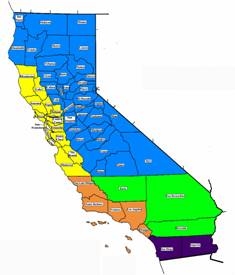
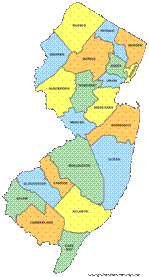
Despite
being on opposite coasts of the continental United
States, California and New Jersey have been widely noted to be the Union’s most similar states. Keeping residences in both,
I hope to explain to you in this webpage how they are not only similar
geographically and politically, but also socially, economically, and culturally.
- To start, California
and New Jersey are both known as political
hotspots in the United
States.
Although they are historically democratic, they are still have prominent importance in the political spectrum.


- They both have a 76% Christian
population.

- Three states and an ocean border
both New Jersey and California.

- They are the top two Olive
producers in the United
States.

- Coincidentally, they both have
equivalent land masses. This can be
proven by comparing the images on the top of this page.

- Both states have the tallest
recorded Redwood trees (Sequoia
sempervirens) in the country.

- The combined length of road in
each state is the same.
- They made number one and number
two in US News & World Report’s “Most Malls” category.

- They have the two largest
pornography industries in the country.

- The offices of the Senators’ from New Jersey and California
are adjacent to each other in Washington,
D.C.

In
Recent News:
The States of California and New
Jersey were both in the news in recent weeks with
state general fund budgets approved by the respective Legislatures.
Interestingly, the budgets have similarities despite the significant rating
differentials between NJ and CA. New Jerseyâs general
obligation bonds are rated Aa3/AA-/AA-, while Californiaâs
general obligation bonds are rated A3/BBB/BBB by Moodyâs,
S&P and Fitch, respectively. The key similarity in our view is lack of
structural balance in the 2004-2005 budgets. Both states have had several years
of budget problems, solved primarily through one-time revenue enhancements
including pension and deficit bonds. In the aftermath of NJâs
budget, the stateâs ratings were cut from Aa2/AA/AA
to Aa3/AA-/AA- by Moodyâs, S&P and Fitch,
respectively. Each of the agencies cited the lack of structural balance and the
usage of deficit bonding as credit concerns.
Importantly, New Jersey, while
experiencing operating deficits over the last several years,
did not have as large a drop in personal income taxes as California
nor did it have the ãliquidityä crisis associated
with the $14 billion in short term notes that the State of California repaid in June of 2004. In the
aftermath of the approval of the State of California budget, Fitch affirmed the
general obligation rating and removed it from Rating Watch negative.
Both these states have budgetary stability in place for the 2004-2005
budget year. It is generally built on deficit
financings and one time budgetary solutions. It is fair to note that in
addition to the deficit financings, the State of New Jersey also raised taxes in order to
fund spending growth. Regardless, the near term credit outlook for each of
these states is stable, in our view. However, each is likely to face
significant challenges in the 2005 and 2006 budget years especially if slow to
moderate economic growth occurs limiting revenue
growth.
So next time some asshole named Brian tells you
that they aren’t similar, tell him to FUCK OFF!