Eating in Ireland
Irish cooking is based on meat, potatoes, and vegetables. While a lot of Irish fare is still boiled to a pulp, stewed or covered in grease, the cuisine of Ireland has become Westernized and both US fast-food culture and mainland Europe's dishes have influenced the country. Also, international fare has established a presence and pizza, curry, Chinese food, and lately, some west African dishes have been making an appearance. Supermarket shelves now contain ingredients for traditional, European, American (Mexican/Tex-Mex), Indian, Chinese and other dishes
Where Would Ireland Be Without the Potato?
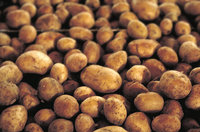
Potatoes are particularly important in the Irish diet, and they are used to make chips, potato bread, boxty (a type of potato pancake), colcannon (mash potatoes with kale or scallions), and poitín (an alcoholic drink made from distilled potatoes). When dining out, assume that every dish ranging from seafood, to steak, to pasta dishes will come with fries, or what the Irish call “chips.” In 1845, before the Potato Famine, more than a third of the population relied almost exclusively on potatoes for food. The average worker ate up to 6 kilograms of potatoes a day. As a food source, the potato is extremely valuable in terms of calories yielded per acre of crop. The potato is also a good source of many vitamins and minerals, particularly vitamin C (especially when fresh). As a result, the typical 18th and 19th century Irish diet of potatoes and buttermilk was a contributing factor in the population explosion that occurred in Ireland at that time. However, the damp Irish climate favours the spread of potato blightand this frequently led to shortages and famine. The most notable instance being the Irish potato famine of 1846 to 1849 which more or less undid all the growth in population of the previous century by a combination of starvation, disease and emigration. Even today, the Irish eat more potatoes per capita than the people of any other European country, so grab some ketchup and prepare to throw any carb-counting out the window!
Dine like the Irish Do
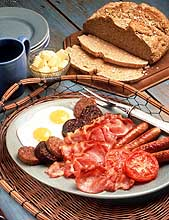
Breakfast: The Irish eat their meals much later in the day than is typical in the U.S. Since the working days starts predominantly at 9.00am, don’t expect to find breakfast offered much before this hour. However, breakfast is usually offered until at least noon, and the traditional Irish breakfast or “fry” is offered all day at a lot of places. The full Irish breakfast is often a good value and you get a whole lot of food for little money.
The Traditional Irish Breakfast: Health-nuts, or anyone who care about unclogged arteries beware, the traditional Irish breakfast has enough saturated fat and cholesterol to make your heart plead for mercy. Yet, no trip to Ireland would be complete without sampling the uber-filling national breakfast of Irish bacon (called “rashers,” a meatier version of our bacon, more like our Canadian bacon), Irish sausage (“bangers”), black pudding (as the name suggests, made w/blood!), white pudding (bloodless), greasy fried eggs, grilled tomatoes, and of course, soda farls, or soda bread. This serious meal often includes fried mushrooms and potato cakes, and sometimes is preceded by juice and cereal. Wash this gut-busting concoction down with Irish breakfast tea with lots of milk. Eat up, you will need the energy when battling the constant drizzle the Irish call rain!
Sunday Brunch: If you are not too hungover from the night before, why not try Sunday Brunch? This substantial meal incorporates the full Irish breakfast and is served typically from 12.00 to 2.00pm. Not only can you sleep in, this meal served at many cafes and pubs offers and ideal opportunity to socialize and reminisce about the events of the weekend!
Lunch: Lunch is typically served between 12.00 and 2.00 and is a light meal of rolls, sandwiches, soup, and salads. Note: Soup in Ireland is very good and is usually accompanied by a couple of slices of very tasty brown bread. It is also a wallet-friendly selection! However, the soup always has a pureed consistency, and thus, you won’t actually find whole vegetable pieces in your veggie soup.
Dinner: Dinner in Ireland, like in America, is the main meal of the day, and is typically served late, usually until 10 pm. Dinner prices in restaurants are high, but the quality is excellent and some dining establishment offer early bird specials.
For More Information about where to dine in Galway visit our:
The Best Irish Soda Bread!
What will I miss most about Ireland? Though I have enjoyed meeting the hospitable people, been awestruck by the beauty of the Dingle peninsula, and will miss the lively nights in Eyre Square, I must say, I damn will miss the bread! Irish brown bread is sometimes made with oatmeal, but its unique taste comes from using the finest milled wheat. In legend, this developed in the monasteries around the country, and each county developed a version of their own. Enjoy the soda bread during your travels! It will surely be in abundance and it proves a simple but satisfying edible pleasure! But, when you do have to leave and the few loafs you’ve smuggled back to the states run out, reproducing it at home proves the next best option. Here is a simple recipe to tide you over until your next visit:
Lip-Smacking Recipe
6 cups all purpose flour
2 teaspoons baking soda
2 teaspoons baking powder
3 tablespoons cornstarch
2 teaspoons sugar
1 teaspoon salt
2 1/2 cups buttermilk
- Highly traditional and recommended option: Two tablespoons caraway seeds. Add them to the dry ingredients and sprinkle some on the top when ready for oven
– Preheat oven to 375
- Add all the dry ingredients in a large bowl and mix very well Pour in all of the buttermilk into the bowl at once and stir. Stir only until the dough barely holds together. I mean barely! Do this quickly too!
-Divide the
dough into two portions. Shape each quickly into a round. Quickly!
Cut a cross 2/3 down into the top of each loaf so that you can see the cut.
The loaf should come apart about 1/2 inch. Paint the loaf over with buttermilk
being sure to get the bottom of the cross cut wet with it. Give the surface of
the loaf a bit of texture by cutting into it with a knife or fork if it is too
round and smooth. Let loafs rest for about ten minutes. Put into the oven- The
baking takes about 30-40 minutes.
The loaf is done when the buttermilk in the bottom of the cross is dry to the
touch. Do not handle or cut hot soda bread! Let it cool down on a rack if
possible. Wrap in newspaper to keep lightly warm.
The Student's Guide to Eating in Galway
by: Atiba Rougier
As a student living in Gort na Coiribe, I appreciated the apartments which came with fully equipped kitchens. In my apartment, I cooked many of my own meals (well, maybe not exactly cooked, but assembled my own meals). I ate a lot of salads, soups, and frozen meals from the supermarket right across the street called Dunnes.
My diet changed drastically while in Ireland in terms of what time I ate and how much I ate. For breakfast I usually had a banana or an apple, tea, and two slices of toasted bread before my 9:00 am class. I discovered breakfast is at a later time in Ireland than in the U.S., and the school canteen opened at 8:00 am rather than at 6:30 or 7:00 at many U.S. campuses. As a general note, you have no idea how much tea you’ll start drinking when you get here. Back in the states I never drank tea. In Ireland, I drank up to five cups of decaf tea per day. In my opinion, the basic diet for many Irish people consists of tea, cigarettes, frozen pizza, and pints of Guinness.

In the U.S., I’d usually be at school or at the gym by around noon, which back in the U.S. was my typical lunch time. In Ireland, I ate lunch between 2 and 4pm and dinner between 6-8pm. In Ireland, I found myself eating a lot more and also later at night because I had so much time on my hands. My Irish roommates had a similar schedule, however, they often went all-out and cooked full-fledged meals. They often cooked a meat such as chicken or steak, with sides of potatoes, beans, carrots, and rice. Sometimes they would make pasta dishes.
It is important to keep in mind that food is an expensive commodity while studying in Ireland. I went out with my friends approximately once a week to eat out. Make sure you spend your money wisely, because food rather than alcohol takes up more of your budget while staying in Ireland.
When students don’t feel like cooking, they occasionally order in.
A student could order Domino pizza or take-out Chinese from a plethora of Chinese restaurants. There is also Indian cuisines and the Irish version of American fare available for takeout as well.
For late night muchies after pubbing or clubbing, I frequented “Eddie Rockets,” the bootlegged version to the American “Johnny Rockets.” The milkshakes taste mighty good while under the influence and though pricey for such a franchise, the Caesar salad tastes pretty good. The fries are decent and come in huge portions. Although the food at Eddie Rockets is not as good as Johnny Rockets, it is nice to see a familiar place. Going into E.R beckons a sense of nostalgia for me, since back at home my friends and I usually crash J.R on west 8th street on the weekends, reenacting the opening scene from “Reservoir Dogs”.


Another fast food spot that is perfect for the late night munches is SuperMacs. With a selection of fries, burgers, and fried chicken, this place is a sure hit. Angela and I frequently enjoyed a drumstick, fries, and soda combo at 2am in the morning after coming from either G.P.O’S or Boo Radley’s.
Another great place to purchase food is the Saturday Market held in Eyre Square. There, you can buy organic fruits and veggies and other local Irish and Celtic artifacts. There you can also buy freshly baked donuts, bread, scones, and other pastries. The best curry veggie soup I ever had was at the Saturday market. The savor and dessert crepes are also delectable. The market is open from 9 till 5 every Saturday and also on Sunday. However, Saturday is the better day to attend and features more selection. If you’re earthy and love organic food, this is the place for you to get your groceries for the week. Though I definitely initially went through dining hall withdrawal, eating in Galway with little time and money to waste can certainly be the reality for the culinarily savvy student.