The Mini Computer
C. Gordon Bell invented the first mini computer in the early 1970s when computers were increasing in efficiency and computer chips were decreasing in size. Mini computers were invented with the anticipation to aide in public consuming of the computer instead of just for business. “Mini computers were smaller and less powerful than a mainframe, typically about the size and shape of a wardrobe, mounted in a single tall rack.”
The usual characteristics of mini computers were word lengths of 8 to 32 bits, their restricted hardware and software services, and small physical size. The inexpensiveness of these computers made them appropriate for various applications such as “industrial control, where a small, dedicated computer that is permanently assigned to one application is needed.” Mini computers were “sold to small and mid-size businesses for general business applications, and to large enterprises for department-level operations.”
There are many different kinds and series of mini computers such as the PDP-1, the PDP-11 series, the VAX, the LINC, the AS/400, the PRIME series, Olivetti’s Audit 7, and the Interdata 8/32. The three most prominent types of the minicomputer are the PDP-11, the VAX, and the AS/400. The PDP-11 was based on an "instruction set" designed by C. Gordon Bell at DEC in the earl y 1970's.The PDP-11 family was designed after this. The PDP-10 was the most successful computer of it's era until the VAX was invented. the PDP-11 series was based on 5 chipsets, MSI, SSI, the J11, and the T11 chip. Initially, B and C languages were used to implement Unix, an operating system, on the PDP-11. the blue print of the microprocessor, personal computer, is based on the PDP-11 instruction set.
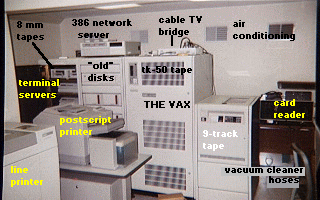
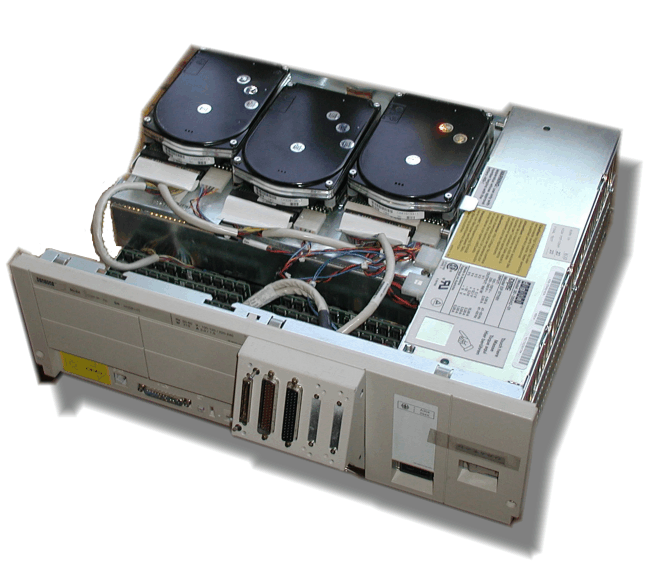
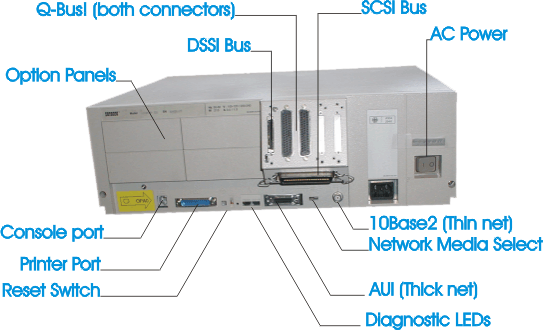
The VAX or Virtual Address eXtensio was the most successful mini computer in industry history. The VAX was definitely "noted for its large assembly code-programmer-friendly instruction set- an asset that became a liability after the RISC revolution.
The AS/400 was an IBM mini computer for small businesses. It was released in 1988 and also in October of 1998. Features consist of "a menu-driven interface, multi-user support, terminals that are (in the grand IBM tradition)." The AS/400 was incompatible with nothing else, it also included an "extensive library based operating system." Today the machine thrives because of its API layer which allows the operating system and application programs to use the advances in hardware without recompilation.
Today mini computers are not used much anymore. They have been succeeded by more powerful computers such as the mainframe and the Personal Computer.
Pictures and Sources
Bibliography
The Free Online Dictionary of Computing (http://foldoc.doc.ic.ac.uk/) edited by Denis Howe <[email protected]>