 |
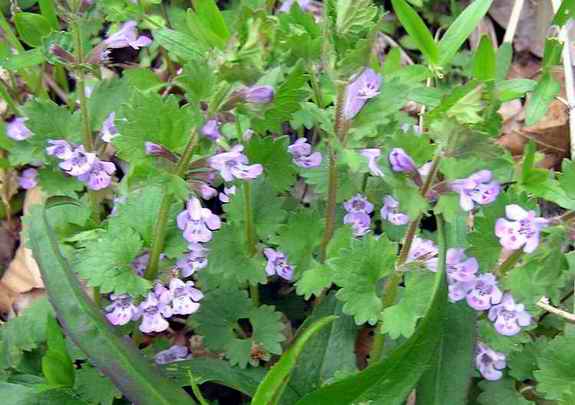
| GROUND IVY Glechoma hederacea |
| Ground Ivy, also known as Creeping Charlie and Gill-over-the-ground has a long history of use as a medicinal herb. It is a member of the mint family -- and just like other mints, it can be invasive. It is found growing in a large part of the United States, and is found in many lawns and along trails and roadways all over Wisconsin. However, it is NOT a native plant, and was introduced from Europe. USES: When powdered and taken as snuff, it was said to be able to cure a headache when all else has failed. The tea in an all-purpose drink. Herbalists believe it has a cleansing effect on lungs, kidneys, stomach, and bowels. The sap of ground ivy, applied externally, is reported to be good for a black eye. It was considered an excellent wash for "ulcers in the private parts" and is also used for healing of bruises, minor cuts and muscle pains. The flowers can be eaten or used as a lovely garnish for salads. Parts used: Stems, flowers, leaves. Ground Ivy Healing Oil: For external use on bruises, cuts, aches and pains. 1 cup ground ivy, freshly dried 4 cups base oil (olive, grape seed, sweet almond) Grind the ivy, preferably with a mortar and pestle. Add the oil and mix. Place in a cool, dark place for 1 month and carefully strain. Ground Ivy Infusion: Add 1 cup fresh, or 1/4 cup dried herb to 2 cups boiling water. Steep 15-20 minutes. Can be sweetened with honey or stevia to use a drink or left unsweeted to use as a wash or soak for injured areas. Ground Ivy Headache Snuff. Dry the fresh herb by hanging in a dark, dry area for 7-10 days. Grind very find using a mortar or a coffee grinder. Use as snuff for sinus and other stubborn headaches. |
| Please read warnings on main page before using any recipes on this webpage. Use at your own risk. Copyright Kay Steele 2006 |
 |
| Back |