 |
|
|
|
|
|
|
|
|
|
|
|
|
|
|
|
|
|
|
|
|
|
|
|
|
|
|
Meniscus |
|
|
|
Video of a meniscus repair |
|
|
|
|
|
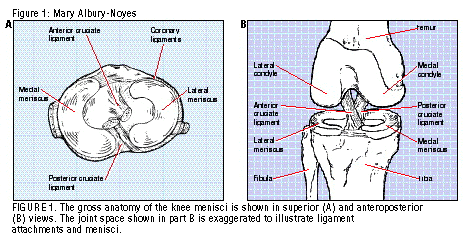
The meniscus,Greek word referringto a crescent-shaped structure, is a thickened cartilage pad between the two joints formed by the femur and tibia. The meniscus acts as a smooth surface for the joint to move on. The knee joint is surrounded by fluid-filled sacs called bursae, which serve as gliding surfaces that reduce friction of the tendons. Below the kneecap, there is a large tendon (patellar tendon) which attaches to the front of the tibia bone. There are large blood vessels passing through the area behind the knee (referred to as the popliteal space). Without the meniscus present, the weight of your body would be unevenly applied to the bones in your legs (femur and tibia). This uneven weight distribution would cause excessive forces in specific areas of the bon leading to damage of these areas. Therefore, the function of the menisci is critical to the health of your knees. |
|
|
|
 |
|
|
|
|
|
Signs of a Problematic Meniscus
*Suffered a significant twisting injury
*Heard a 'POP' on first injury
*Knee filled with blood on first injury
*Knee somtimes locks up
*Distressing painful point on pressing joint line
*Knee clicks or snaps
*Knee swells after exercise
*Knee gives way
*Knee hurts on twisting while standing on bad leg
*Play a lot of sports with twisting action
*note these are all extreme cases, any onset of these symptoms or doubt in your physical condition should be evaluated by a certified Orthopedic Surgeon.
|
|
|
|
|
|
The meniscus is usually damaged by twisting injuries or with repeatitive impact "over use/over work". When the meniscus tears, a piece of cartilage can move in an abnormal way inside cuasing pain,catching and swelling. Becuase cartilage has no blood supply, normal healing does not occur. When the meniscus is torn in your knee, the shock absorbing capacity of th ejoint is threatened. Becuase of this, there is an increased risk of developing damage to the articular cartilage surface of the knee joint bones; this is commmonly referred to as arthrtis. |
|
|
|
 |
|
|
|
|
|
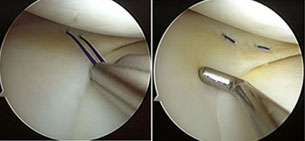
Sutures being placed, arthroscopically, to hold down the torn meniscus. |
|
|
|
|
|
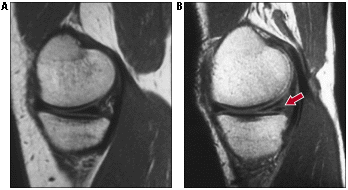
While X-rays are invariably normal with an isolated meniscus tear, the MRI will often reveal abnormalities of the meniscus, though neither is 100% absolute. There are generally two surgical options: meniscal repair, and menisectomy (partial removal of the meniscus). The repair can restore the normal anatomy of the knee, and has a better long term prognosis when successful. However, the repair is a more significant surgery, the recovery can take a longer period of time, and , becuase of the limited blood supply to the meniscus, it is not always possible. On the other hand, the menisectomy has a faster recovery, but it can lead to more trouble years down the road. |
|
|
|
 |
|
|
|
|
|
Figure on the left shows a normal meniscus whereas the figure on the right shows the tear, white line. |
|
|
|
|
|
*Information on this page is to be used for informational purposes only and not for medical advice. |
|
|
|
Back to Knee Homepage |
|
|
|
|
|