B E F O R E " M A D O N N A "
(1978-1982)
This is not an album, but rather a discussion of Madonna's work before she became famous. Madonna didn't make it as a big star immediately, there was a long period of struggle and toil. In those days, it wasn't possible for a company to just groom and market a semi-talented young person into a popstar. This page will document Madonna's journey through her pre-fame days, from her arrival in New York as a wannabe to her record contract signing with Sire Records (later owned by Warner Brothers).
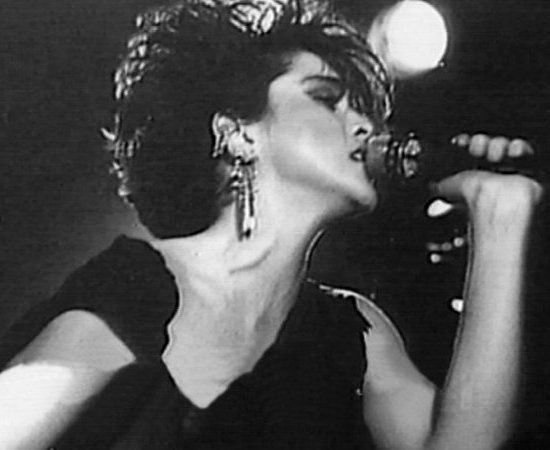
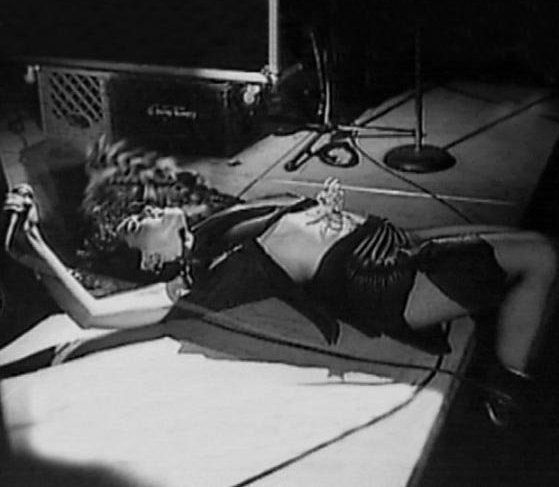
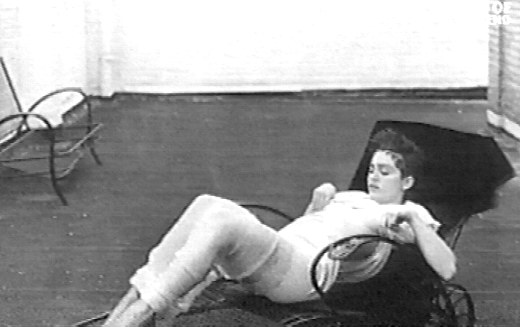
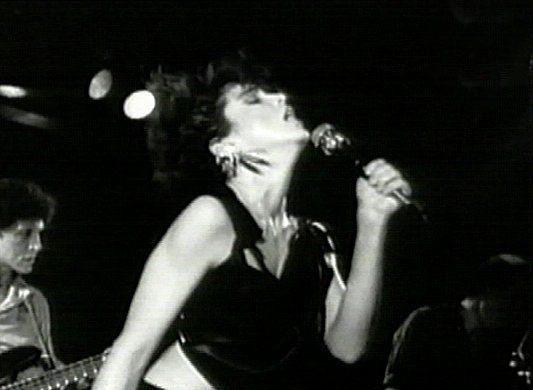
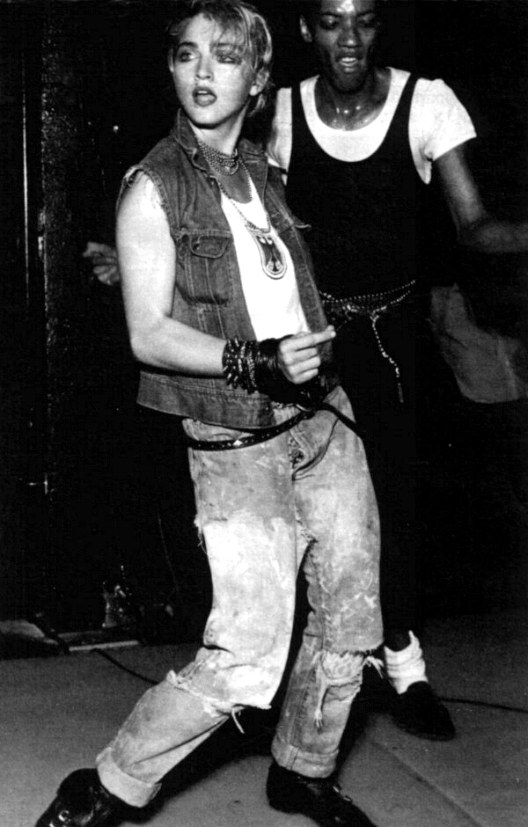
Want to see pictures of Madonna from this era? Visit the page devoted to Breakfast Club and Emmy on the Miss Boogiewoogie site (thanks Emma for the pics!) by clicking here. Otherwise, please click on the thumbnails on this page to open the full picture in a popup window.
No true Madonna fan's research is complete without a good look at songs by these two bands, especially as this era spawned the early hits 'Everybody' and 'Burning Up'. In late 2000, the UK's Channel 4 TV network showed an excellent documentary on Madonna's early career.

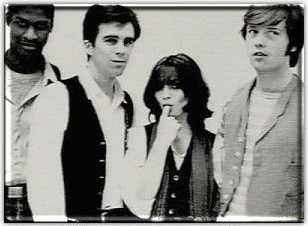
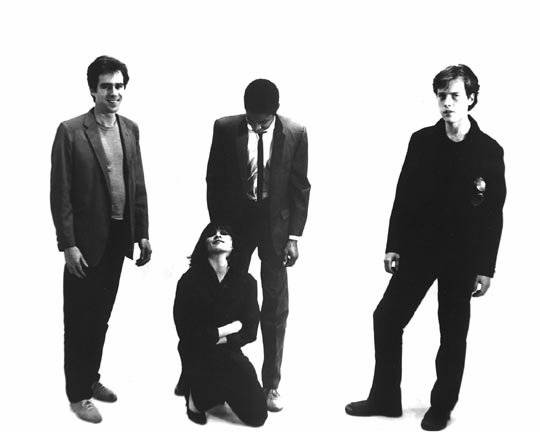
Stephen Bray, Gary Burke, Madonna & Brian Symms
(Emmy)
Coming to the Big Apple
Before coming to New York, Madonna was a dancer student with a scholarship to the University of Michigan in Ann Arbor. There, she met fellow student Stephen Bray, in the (now defunct) Blue Frog Disco, over a drink - each alleges that they bought the other the Gin & Tonic! She would come to watch his band 'The Cost Of Living Band' and dance to their music, where her dancing prowess would attract attention. This man would later prove to be a key person in Madonna's life and career, though at the time, he was 'only' her boyfriend.
However, Madonna did not complete her studies at the University of Michigan and after attending a workshop in North Carolina, she left Bray suddenly in Michigan where her dancing career could not take off and came to New York in July 1978 aged 19, arriving with only $37, her suitcase and a winter coat. She gained another scholarship to Perl Lang's 'Alvin Ailey Dance Troupe' (American Dance Center), a very celebrated company, where she was regarded as their star dancer. Indeed, Perl Lang said in an interview, "She was an exceptional dancer...Madonna had the power, the intensity to go beyond the mere physical performance into something far more exciting. That intensity is the first thing I look for in a dancer, and Madonna had it." However, Madonna soon grew bored of this very classical ballet discipline and was more interested in contemporary dance. She would deliberately wear outrageous costumes that were to signify the punk era (tearing large slashes in her leotards and doing them up again with safety pins, and ripping ladders in her tights), which seemed to offer an outlet for her wildness - arriving late just so she could make a dramatic entrance in her strange clothes, enjoying the stares given by fellow passengers on the subway, she was in her element when the spotlight was shining on her. Perl was sorry to see Madonna go: "It was sad that she left dance, but I knew she had the power, that she would succeed at whatever she tried. Madonna simply has the magical quality that a great artist needs."
Maddy, Beware of the City
New York was in a bad financial situation and these few years were very hard for Madonna and not much is known for sure as to exactly what she did and how she lived. Penniless and living in the most basic of appartments, she resorted to modelling nude for art students and photographers and even managed to get a spread in the German Penthouse Magazine of 1981. Many of these pictures surfaced again in Penthouse and Playboy in 1985 when Madonna was already famous. If people were hoping that she would be embarrassed, they were to be disappointed, as her CV/resume for the pre-fame days lists the Penthouse shoots as an achievement (and as we know, ten years in the future, she would release the soft porn book, SEX). Some stories state that she was so penniless that she had to eat out of trash cans, however this is almost certainly not true, as family members deny this hotly and state that she received money from them at intervals. Madonna also had a succession of part-time jobs, including on at Dunkin' Donuts. So the legend goes, Madonna was sacked from there for squirting jelly over a customer after a dispute. Other stories state that she arrived in Manhatten and asked a cab driver to drop her off in Times Square ("take me to the center of everything"), where she wandered around until a stranger took her in and put her up for a few weeks, that she was date raped, that she had a narrow escape from a fire in a loft and that she lived on popcorn alone. Again, these are probably vastly exaggerated and are denied by her family, who maintain that her father knew someone in New York prior to her arriving and that she was taken care of. In all probability, there is only person on the planet who knows the truth.
French Leave
Another turning point in the building of her character and career was to follow. She used to go dancing in clubs, and people around at the time report how they were mesmerised by her dancing and how much of an elemental being she appeared to be ("not entirely human" according to Bray and "a force of nature" according to her first boyfriend in New York, Norriss Burroughs). One of these was musician Dan Gilroy (a friend of Burroughs'), and they soon became an item, moving in together in the New York suburb of Corona Queen. In 1979, she joined Gilroy's new wave band, 'The Breakfast Club', which included his brother, Ed, and Angie Schmit on the bass. Madonna played the drums, whilst looking for ways to further her dancing career, continually auditioning for Broadway shows and movies. After auditioning for producer Jan Vanloo in the early part of the year, she was signed up to sing backing vocals for 'Born To Be Alive' one-hit-wonder, Patrick Hernandez, touring in France. She indeed went to Paris and spent six months there, while the posse tried to mould her into a disco star. However, while this period gave her confidence in singing and a desire of becoming a pop star, she was clearly unhappy and became ill. She asked the posse to let her go back to New York for a weeks and she duly returned to her boyfriend and never returned to Hernandez. There are no known recordings of Madonna from this period.
A Certain Sacrifice
In October 1979, Madonna and best friend Angie auditioned for parts in the 8mm punk cult film 'A Certain Sacrifice', directed by Stephen Lewicki. Madonna won herself the lead role of 'Bruna' and Angie was an extra. The film contains perhaps the two earliest recordings of Madonna singing, albeit with other cast members. 'Let The Sun Shine In' is a cover of the Fifth Dimension song of the same name, and 'Raymond Hall Must Die' is a bizarre witches' covern song, complete with cackling and incantations!
- Let The Sun Shine In*
Let the sun shine
Let the sun shine in
Let the sun shine in
Let the sun shine
Let the sun shine in
Let the sun shine in
- Raymond Hall Must Die (backing vocals/ensemble chant)
Ha ha ha ha ha ha ha ha
Ha ha ha ha ha ha ha ha
Ha ha ha ha ha ha ha ha
[...male solo...]
Otto Von Wernherr
'A Certain Sacrifice' was recorded in two halves, one in October, one in November of 1979. Between the two halves, Madonna recorded some backing vocals for producer Otto Von Wernherr, who may have been involved as an extra on 'A Certain Sacrifice'. These songs ('Cosmic Climb', 'Wild Dancing' and 'We Are The Gods') were of a strange style which is an acquired taste, worse, once Madonna became famous, Von Wernherr cashed in on her fame by re-sequencing these songs and cut-offs and produced in addition several other 'new' songs like 'Give It To Me', 'Shake', 'Time To Dance', 'On The Street' and 'Oh My', which are bizarre techno-punk in style, and these were released on independent labels. You can buy the albums In The Beginning, The Early Years and Give It To Me in record stores, though to be honest, I wouldn't bother! Do not confuse Otto's version of 'In The Beginning' with the excellent In The Beginning (formerly known as 'Pre Madonna') which was produced by Stephen Bray and contains his and Madonna's early songs.
The Breakfast Club
While this was going on, there was turmoil going on within 'The Breakfast Club'. Madonna, following her french excursion, was not content merely with playing the drums and demanded to be the lead vocalist. This eventually led to her leaving the group and it went on without her and was a minor success in the 80's with hits called 'Right On Track', 'Rico Mambo', 'Never Be The Same', and 'Expressway To Your Heart'. However, while Madonna was with the Breakfast Club, she did record, to my knowledge, three songs where she was the lead vocalist.
- Little Boy
He runs to the street and his socks fall down
And his eyes, they burn as they touch the ground
The baseball glove won't hide the pain
There's no one here today
He runs to the house and he looks for food
He feels so bad but he knows he's good
He lays down on the kitchen floor
He ain't hungry no more
Little boy lost
Little boy lamb
How much does it cost to understand
Little boy say, oh why do you cry
And how much will you pay to know why, huh, how
Some time that night he wets his bed
And his dreams play tricks inside his head
He wakes up cold, turns on the light
There's no one here tonight, oh
Little boy lost...
- Safe Neighbourhood
I live at the top of the hill
No one keeps me here against my will
I don't need no safe neighborhood
I got to feel good my own way, yeah
It's not like I don't have a choice
When you're alone you make your own choice
If you were me you'd be stayin' here too
Well that's somethin' you'll do your own way, yeah
And then I walk outside and there ain't no one around
And I never see the shit on the ground
And I never want to make a sound
More than I do now
I got away from the talk that's cheap
I care about the company I keep
If being good make it understood
I don't want to stand in your way, yeah
And then I walk outside and there ain't no one around
And I never see the shit on the ground
And I never want to make a sound
More than I do now
- Shine A Light
Hear me I'm knocking at your door
Could it be I'm coming back for more
Could it be I could not stay away
Now all I want to do is say, oh
I got to tell you how I feel
It's getting all so dark out here
The moonlight's shining on my skin
Now open up and let me in, oh
Shine a light in your window, ah oh
Out here in the shadow
Saw your face in the doorway, ah oh
Turned around and it slipped away
My body's shaking with the cold
I'm feeling tired feeling old
I see your fire burning bright
Now please wake up on me tonight, oh
Hear me I'm knocking at your door
I ain't gonna go away no more
Gonna stay right here at your door
No I ain't gonna go away no more
|

|
Comment
Little Boy is about a neglected little boy. The jangly guitars lend it a marvellously dated feel which is surprisingly endearing and makes it a good little rock song. Madonna uses what is best described as a 'deep-ish girly' voice and it shows the talent that Madonna would one day project to millions around the world.
Safe Neighbourhood (also incorrectly known as 'On The Ground' and 'Shit On The Ground') is a faster, harder rock song. Madonna's yelling voice mutates into a classic rock chick's, combining flinty hardness (sounding angry), whilst leaving a little vulnerability. The overall effect is the tough streetkid who has a devil-may-care attitude about the place she lives. A rip-roaring rocker of a song, helped by strong bass guitar and jangly lead guitars.
Shine A Light is a slower rock song, and Madonna uses a softer voice that glides around the song with remarkable fluidity in places whilst being staccato in other places providing good contrast and proving that she has completely control over her voice at this stage when she was not even the lead singer. The song is about how her obsession with her lover leads her to come to his door and refuse to go away. Again the combination of strong bass and jangly lead guitar is present and support the vocals. This is possibly the most impressive of the three songs as she ably backs herself (something that she would later do a lot) and has just enough vulnerability in her voice to make it believable but not so much that it becomes dripping and cloying. Full marks!
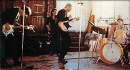
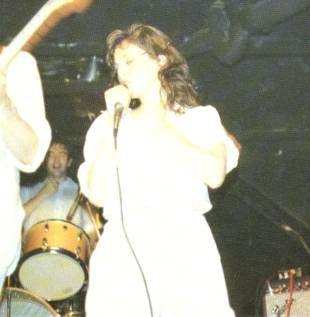
Madonna on the drums
Emmy
In 1980, Madonna set up her own band after leaving the Breakfast Club, and she called it 'Emmy & the Emmys' (either from 'Emmy', which was Madonna's childhood nickname, or from 'Emanon', which is 'no name' backwards) or just 'Emmy'. She was joined by Gary Burke on the bass (which he was also playing at the same time for Breakfast Club), Brian Syms on the lead guitar, and Madonna's old friend Stephen Bray, who came from Michigan to New York at this time, looking for work. He joined as a drummer but would be pivotal later on in forming Madonna's solo career. Homeless, Madonna moved into the band's rehearsal rooms in the aptly-named Music Building on 8th Avenue (not as glamorous as it sounds!). Emmy's demo tape was recorded in Room 1002 of this building, which belonged to Regina Richards, who later released a Madonna sound-a-like hit called 'Baby Love', which Madonna had no hand in, contrary to rumours (Madonna didn't hold to the adage that imitation is the sincerest form of flattery - she was not impressed!)
The time spent at the Breakfast Club was certainly not a waste of time. Apart from learning how to play the drums, Madonna was taught the basics of how to play the guitar by Gilroy and she had started to write a few songs; Gilroy states that she wrote her first song using the guitar "again and again, over and over" (sounds familiar?). By the time Bray joined Emmy, she had written a dozen or so songs, and all Bray had to do was to learn them. He must have been impressed at the change in Madonna.
Stephen Bray worked in records to supplement his income. He was initially under the impression that he and Madonna were soon an item, but the dozens of boyfriends that came in succession soon convinced him otherwise! Their initial influences was British rock music, especially the Twotone scene and Scar. It was not an easy ride at the time, and they changed style musically and aligned themselves more to the Pretenders' style.
Madonna, however, found that the band could not get enough coverage and times were hard, so she enlisted the help of Camille Barboni of Gotham Management, who became their manager. She first sacked the rest of band, as she didn't think they were of the required calibre, but Bray was soon back as the replacement drummer was sacked for sleeping with Madonna! Thereafter, Barboni dictated the direction of the band, channelling it into adult soft rock, and she financed the band's every need during the Gotham city recordings and other live and studio sittings, and she tried to mould Madonna into a Pat Benetar-like artist. Madonna has clearly grown in vocal stature from her Breakfast Club days, as she is the lead vocalist here and she also plays the guitar. The result is a beautiful collection of songs, acting as a reminder, as if we needed any, that some people are just born talented, no matter what they do.
- Are You Ready For It
Take a look around at all the people everywhere
So much energy and excitement in the air
And the time is right to get together with the people you know
So sing out loud and clear don't be afraid to let your feelings show
Are you ready for it
Rockin' steady for it
Are you ready for it
You know the time is right to make the world a better place to be
So don't worry yourself just take a stand and let yourself be free
Because there's too much sadness and confusion out here on the street
And we can change the situation if we just get a majority
I've got a one track mind
I'm gonna have a good time
Are you ready for it
I said ready-set-go
Tell everyone you know
That you're ready for it
Come on, uh, uh
I said uh, uh
I said uh, uh
- Bells Ringing
Bells ringing inside my head
Now I could ignore them
But I choose to live instead
So I take off into the sky
And the bells ringing are gonna teach me how to fly
And I know that I'm alright
'Cause I hear those bells ringing into the night
Yeah I know that I'm alright
'Cause I hear those bells ringing into the night
Well the earth's shaking underneath my feet
Now I could run and hide but I'd rather watch and see
How the world changes before my very eyes
And the earth's shaking comes as no surprise
And I know that I'm alright
'Cause I hear that earth shaking into the night
Yeah I know that I'm alright
'Cause I hear that earth shaking into the night
Oceans roaring miles away from me
Someone teach me how to swim
I'm gonna jump into the sea
Gonna go way down deep
Open up my eyes and see
How the oceans roaring is gonna set me free
Oceans roarin', earth shakin', bells ringin' into the night
Oceans roarin', earth shakin', bells ringin' into the night
I know that I am
I know that I am
I know that I am alright
- Best Girl
[lyrics unclear]
- Drowning
Hey kid!
Why aren't you going
And didn't we just say "goodbye"
You were supposed to be gone this morning
Did you come to watch me cry
'Cause I'm drowning in an ocean of your love
Yeah I'm drowning in an ocean of your love
Now I know that being together
Doesn't always make things right
But I'd like that you'd believe forever
That I could love you with all my might
Oh come on and drown me in an ocean of your love
Come on drown me in an ocean of your love
Come on drown me in an ocean of your love
And now you stand here with indecision
Written on your face and your eyes
Now are you going to make me happy
Or are you going to watch me cry
- Get Up
Get out of bed and you look in the mirror
And the haze in your head doesn't get any clearer
The boss man says you're gonna lose your job
You're gonna lose your pay if your late, late
And then the weather man says
It's gonna be sunny and it starts to rain
And you don't think it's funny
So you visit your friend but there's no one home
And you don't have a dime
And you can't even call her on the phone
So get up, get up, get up, get up, get up, get up, get up
Your stomach's so empty and you need some food
So you distract yourself, but it just doesn't do any good
You think about going home, but it can't be the same
'Cause they'll never change, they don't want to know
About the scene of view, and the wasting of time
They wanna grab your hair and pull you in line
So get up, get up, get up, get up, get up, get up, get up
Pick yourself off the ground
No one can push you around
Don't let it get you down
You get up
So get up
Another day goes by and you look in the mirror
And the haze in your head gets a little bit clearer
And you realize that all the silly things
That used to get you down
Was just a test to see if you could get up
- Hot House Flower
[lyrics unclear]
- Love Express
[lyrics unclear]
- (I Like) Love For Tender
I like the way you walk
I like the way you talk
Oh come on, understand me when I stare
I like the way you wear your hair
I like it when you dance with me
The way you act so free
Oh come on, and hold me tight
I like the way your skin smells at night
And when I kiss you I go into the light
And every hour of the day turns into night
And you may say that I'm a pretender, oh no
I like it when your lips touch mine
And when there's pressure, I forget about time
I've got what you want, you've got what I need
I like the way you walk the street
But when I kiss you I go into the light
And every hour of the day turns into night
And you may say that I'm a pretender
Can't help myself
My love is for tender
My love is for tender
My love is for tender
My love is for tender
So come on
I said come on
I said come on
Come here, come here
Oh baby come on
I said come on
I said come on
Come here, come here now
Ah, aah, ah, aah
Ah, aah, ah, aah
Ho, oh, when I kiss you I go into the light
And every hour of the day turns into night
And you may say that I'm a pretender
Can't help myself
- Love On The Run
I don't want to talk about it
Even if you scream and shout it
Words are nothing 'till they're actions
I can't get no satisfaction
With your love on the run
Oh you're just no fun
To have your love on the run
Oh you're just no fun
Tell your tales to someone else
Or better keep them to yourself
I've heard your stories all before
You're always walking out the door
With your love on the run
Oh you're just no fun
To have your love on the run
Oh you're just no fun
So get out the door with your love on the run
Get out the door you're just no fun
Get out the door with your love on the run
You're just no fun on the run
You would think I had enough
Of all your games that's just too much
I should have known when I first met you
I'm trying so hard to forget your love on the run
Oh you're just no fun
To have your love on the run
Oh you're just no fun
Your love on the run
On the run you're just no fun
Just no fun on the run
On the run you're just no fun
- No Time For Love
No time for love
No time for love
No time for love
No time
I did not mean to make my problems your concern
I know that time is money it's just hard for me to learn
And it may seem a joke for me to ask you for your help
Do you keep your heart inside a jar up on a shelf
You got, no time, time for love
No time for love
I know what goes around will come around as well
But how much time have I got left inside this hell
I know that I can't learn a lesson from a fool
What can I hope to learn from someone that's so cruel
You got, no time, time for love
No time for love
Love, love, love
You got, no time, time for love, no time, time for love
I always work to know the rhythm and the rhyme
I use my dreams like fools gold to buy myself some time
And now you smile to see that I am humble in your eyes
I see the face that's giving heaven in his eyes
- Nobody's Fool
[lyrics unclear]
- Remembering Your Touch
Time passes much too slowly
When I'm waiting for you
Thinking of your arms around me is all I can do
You don't know what it means to love
You don't know its worth
So how could you know that this aching inside me
Is so strong that it hurts
And I'm wondering where you are
And I'm looking up at the stars
Wishing that it didn't hurt so much
Remembering your touch
I'm wishing that it didn't hurt so much
Remembering your touch
You never said goodbye
I woke up and found you were gone
You take what you can from each situation
And then you move on
You never change your ways
And I was a fool to believe
So if you have so many admirers
Why did you pick up me
- Simon Says
[lyrics unclear]
- Society's Boy (High Society)
Dreamin' your whole life away
You never know what's comin'
You live from day to day
Spend all your time
Making sure you look just right
Someone asked you a question
But you don't even have the time
Uh oh, you're society's boy
You'll make some little rich girl a toy
My mistake, didn't think that you'd be
Another victim of a high society
All dressed up and nowhere to go
You spent all of your money
And you got nothin' to show
Got so much to offer
Oh, it's just a crying shame
You can't buy love with your money
It's not the same
Oh, uh oh, you're society's boy
You'll make some little rich girl a toy
My mistake, didn't think that you'd be
Another victim of a high society
Your high society
You can't give your love to me
Your high society
You can't give your love to me
Your high society, your high society, your high society
- Take Me (I want you)
Oh it feels so nice to say your name
You've captured me you're not the same
And when you're standing near it makes no sense
I lose all my self-confidence
And I know about your reputation
Baby I don't care, you're such a sweet sensation
Won't you take me for your lover
I don't want to have another
Won't you take me for your lover
I don't want to have another
I want you, I want you, I want you, I want you
You don't know what you've done to me
I'm growing weaker at the knees
And though I took my chance
When I tossed the dice
I didn't think it would be this nice
I never fall in love, I'm much too clever
But you stole my heart, and I'm yours to keep forever
Someone like you, just won't do, no
I don't want them anyway
I want you, I want you, I want you, I want you
|

|

|

|

|

|

|

|
|

|

|

|

|
Comment
Are You Ready For It has a strong rock guitar accompaniment. Madonna puts on a fine rock performance, deepening her voice ever so slightly to add to the effect. There are some nice touches, like at the end when she sings "I said uh, uh". A classic rock song - rock is steady for it! Somehow this sounds like a song about dissatisfaction about the socio-economical-political situation of New York and how everyone should get up and change things - "...'cos there's too much sadness and confusion out here on the streets. And we can change the situation if we just get a majority...are you ready for it..." and "...I said ready, steady, go, tell everyone you know that you're ready for it...". Rock music changing socio-economical-political situation? Great theme.
Bells Ringing as Madonna says in the live version 'is about the end of the world'. Madonna uses a more whiney voice, suiting the psychedelic theme, and the song is slightly reminiscent of the Rolling Stones' work. The tune is a nice melding of guitar and percussion. The catchy chorus is a nice contrast to the rather bleak verses. Some of the lyrics remind us more familiar to her modern work of the song 'Swim' from the 'Ray of Light' album, e.g. "Someone teach me how to swim, I'm gonna jump into the sea, gonna go way down deep..." (compare with '...carry this train off the track, we're gonna swim to the ocean floor...mmmmmmm, crash to the other shore'). In fact, the theme of the end of the world, 'earth shaking...oceans roaring' are very easily heard in many places in 'Swim' ('...comets fly across the sky and the churches burn their preachers...'), which leads me to believe that 'Bells Ringing' may have been the inspiration for 'Swim', 18 years in the future. In the studio version, you can fully appreciate the work that has gone into the instrumentals - there's a particularly gorgeous guitar interlude. Madonna also has a lovely little bridge which is light on instruments, with her singing in a markedly less rock style. The live version has lesser sound quality, with the vocals sounding distant, but it has the spine-tingling feeling of a live performance. "Are we too loud?" a concerned Madonna asks after the song. "NO!" yells an appreciative and cheering audience. 'Just say if we're blasting your ears' insists Madonna, in a moment whose value makes up for the lesser sound quality.
Best Girl is an up-tempo live rock song, and again the quality of the sound is poor, worse this time. But you can tell that Madonna is heavily influenced by the Pretenders, and even if we can't hear all the details, judging from the cheers of the audience, it went down well at the time. Madonna also calls herself 'Emmy' after finishing the song, and it reminds us that this is what she was known as at the time, to many people ("hi, I'm Emmy, and that's Emmy and that's Emmy" - referring probably to the rest of the 'Emmys').
Do You is a song I've not actually heard myself, apart from a tiny clip on the Channel 4 documentary. Up until this time, I've not been able to track it down, which is really very annoying!! Sorry.
Drowning is reputed to be Madonna and Bray's favourite song from the band's songs. The song is reminiscent of the Beatles, and indeed you could almost imagine Paul McCartney singing this. The song boasts some nice sound effects, including Seventies synth and it has a mellow feel. One reason it's their favourite is probably that it's quite short, not overdone like Bray feels some of the songs were. The ending is nice and simple, but after the music dies down, the synth returns for a final farewell, like an encore! This is really quite good indeed. The live version sports a guitar interlude which is more country style than the studio. The theme of the song is a lover who can't make up his mind whether to go and thereby causing the lovesick Madonna much pain. At the end of the song, you hear Madonna commenting about the venue (which, from what follows, sounds like a disco hall) "still no flashing lights!" and "are there three billion people out there, or only one billion...oh great, thanks a lot, now I can see everyone". Then someone does a hilarious short humming rendition of the start of the BeeGees' 'Staying Alive' and you can hear Madonna giggling and asking "John Travolta, where are you?". She also boasts jovially that she's the best dancer there...all this proof of the ease with which she interacted with the audience.
Get Up is a great song with a nice intro comprising of lead and bass guitar and Seventies synth. There's a continuous synth loop in the verses which sounds like a retro version of the one used in the later 'Till Death Do Us Part'. The verses are relentlessly emotive, the guitar work is fab (especially the breaks), the keyboard blends beautifully, but best of all is the simple but stirring chorus of 'Get Up'. If you're feeling down, play this song, as it's about cheering yourself up when you're depressed. Self-empowerment...a recurring theme of Madonna's later work. Though this song is as long as some of the ones Bray claims are too long for their own good, it doesn't sound too long and is really quite refreshing.
Hot House Flower is another live song whose vocals are unclear, but straightaway you can tell that this rock song is again influenced by the Pretenders. It's a real shame because it's really quite good by the sounds of it, squealing rock guitars and all. There's a high quality snippet on the Channel 4 documentary, which you can download at the top of this page. Is this contender for the best song title?
Love Express is another uptempo live rock song, Sixties style this time. Mischievously, Madonna first introduces the song by saying its name backwards, but relents and tells the audience the real name. Again, the vocals are muffled but there's a lot of "Love express!", "one, two, three!" and "oh yeah...". The song is at first unremarkable because it is similar to other songs done by Emmy, but it contains a section of rap by Madonna (!!) and it has a nice ending.
(I Like) Love For Tender is influenced by the Byrds and is one of those special songs which is just right in every respect. Madonna sings how she likes everthing about her lover and what ecstacy she goes into when they are in love. The lead guitar work is oh so sexy, and Madonna's voice playfully slinks around the words and music. The studio version allows the full scope of the song to be heard, particularly in the intermediate section and the gently chanted ending. The live version is good in that you can make out the words, though it is less sexy and has a slightly quicker, more rock feel. Madonna says "the end" after finishing it, so was this the last song in the session? Bray later said that he felt that LFT was too long, a comment he used for some of these songs, but it is nevertheless one of the highlights of Emmy's work as it sounds the most personal. I certainly can't enough of it.
Love On The Run has such a charming dated feel to it, and Madonna's voice is more 'cutesy' than on the other songs. She alludes to the Rolling Stone "I can't get no satisfaction" but does in that girly voice, which is quite neat. The verse "get out the door with your love on the run, get out the door, you're just no fun, get out the door with your love on the run, you're just no fun on the run" is really effective. Surely this is the nicest dumping any boyfriend has ever had? Short and deliciously sweet.
No Time For Love is somewhat more modern in a retro way (in fact it reminded me of Blur's 'Tender'). It's a giddy up tempo romp, with drums and rhythm section inspired by the fast-playing Police and XTC attitude with a pop finish. Madonna puts on a good performance which adds to the success of the song. Madonna bemoans that her boyfriend has no time for love and says that "it may seem a joke to ask you for your help" and asks "how much longer have I got in this hell?". The bridge and intermediate sections are classic stuff, really top class with excellent guitar sections. The live version is good too, but what sets it apart is what Madonna says after she's finished the song. She explains that she's wearing old swimming trunks that she'd be wearing for the next song, which was...'Drowning' perhaps, especially as Madonna alludes to there being "no flashing lights" here too (see 'Drowning').
Nobody's Fool is 'everyone's theme song', according to Madonna (this is a live performance). It has a great intro consisting of extra high speed hat and powerful rock guitar, and good music throughout. It's just a pity that the sound quality doesn't permit you to make out all the lyrics (though some are clearer). "What you say is what you are" Madonna insists. As far as I can understand, it's about someone trying to impress Madonna, but she's not impressed. After the song, Madonna states "this is, like, first time out of Manhatten, gosh" and the phrase 'First Time Out Of Manhatten' became the title of the most famous bootleg of this period.
Remembering Your Touch has a hard rock intro and the simple rock guitar and percussion instrumentation is maintained through. Madonna's voice adds great drama to this angst-ridden song about a lover who deserted her without saying goodbye - "I'm wishing that it didn't hurt so much, remembering your touch" Madonna mournfully repeats. As the instruments are so much in the background in this song, Madonna's voice is showcased, and she doesn't let the song down in the slightest but adds greatly to its character.
Simon Says is another live song, and has a beat that's quite reggae but which also blends the rock roots of the band. The result is a funky, if unconventional, song. The sound quality is better than a lot of the other live songs - though the lyrics are not all clear - so this is well worth a listen (especially for another Madonna giggle right at the end). The rest of the band chip in with a chorus "Simon says" and Madonna replies with a sharp "hey!". Is it my imagination or does Madonna put on a slight West Indian accent when she later repeats "I love you"? The next time the chorus come around, Madonna replies with a sharp "ow!" to her band's "Simon says". This song is unique because the vocal input of the rest of the band is greater, not only in the chorus but also in the backing vocals.
Society's Boy (more correctly known as High Society) is so good, that it's another spine-tingler. The intro is different with a swooshing snare beat and the bass guitar is low-key but sexy, and the slower tempo really benefits the song. The keyboard accompaniment ices off the song, which becomes apparent in an superbly bleak instrumental interlude in the middle of the song. And all this is having not considered Madonna's wonderfully expressive, emotive and accomplished vocals. The song is about Madonna mourning the fact that her boyfriend is a 'victim of high society' and is basically good-for-nothing and can't replicate her love. "You can't buy love with your money, it's not the same" she admonishes him and "you can't give your love to me" she grieves. You really get the feeling when you hear this song that Madonna really means what she's singing - something that would become her forte in later years and set her apart from other artists. This is really first-class material, very highly polished, if slightly grim. This gloriously melancholy track is probably the best of Emmy's songs.
Take Me (I Want You) has a rock intro, but it is a more nostalgic and romantic Fifties style song. The chorus is a really catchy affair - "Won't you take me for your lover, I don't want to have another" Madonna singly sweetly and she insists that "someone like you just won't do, I don't want them anyway, I want you". This is a gorgeous little song, which perfectly rounds off the Emmy collection.

Madonna on the guitar
Conclusion
What a superb collection of songs! While no-one will suggest that Madonna's voice was as mature as it is today, it is undoubtedly bursting full of raw talent and energy in Breakfast Club. In addition, there is no doubt in my mind that Madonna had taken the first step of vocal maturation while she was with Emmy. She is also multi-talented, playing the guitar and the drums, making her a true musician - something not many people know. With the different styles of music she sang while at the two bands, we begin to see the first stirrings of the emotionally-charged voice that is Madonna's trademark. The guys at Sire Records must have felt the same way, because they signed Madonna up based on four songs (see below). If there is a criticism to be made, then it is that some of the songs have very similar instrumental work, but that's part of the style of Emmy and actually others like 'Love For Tender', 'High Society', 'Simon Says' and 'Take Me (I Want You)' are very distinctive.
According to Bray, the Gotham tape was recorded at Media Sound, which was not Barboni's (Gotham Sound) studio. Media Sound was a converted church where Barboni got 'spec' time with engineer Alec Head and Jon Gordon (he went on to produce Suzanne Vega). Barboni's Gotham studio was a writing studio only, with nothing but 'room sound' tapes being made here. This revelation by Bray explains why there are very different studio and rehearsal versions of these songs.
In conclusion, in the work of these two bands, in the story of their toil and struggle for recognition and in the stories surrounding the lady at the centre of it all, we see the beginnings of the chaemeleon-like, supremely talented and controversial artist that would later become the legendary Madonna.
Going Solo
So how exactly did Madonna become famous? Well, it was, even then, her rebellious attitude that did it. Madonna and Bray were captivated by the resurgence of cool street music in New York in 1980-1981, which was moving on from disco and rock. Blondie and rap songs became her main musical interests. Madonna entered the underground scene in clubs like 'Danceteria' and the 'Roxy' and she went on a mission to be accepted by the people there, pretending to smoke cannabis and to be completely drunk - though keeping her wits clear for an opportunity to gain recognition, in order to achieve this.
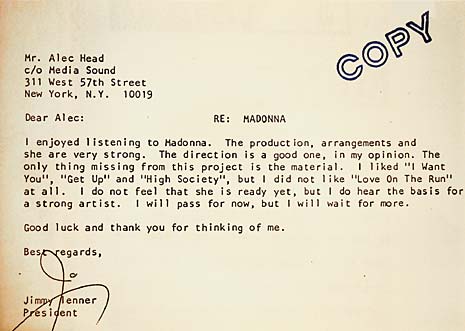
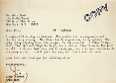
She and Bray were not happy with the continuous soft rock theme of the band and with their lack of success in getting a professional recording contract (their demo tape was circulated and turned down by the likes of Geffen and Atlantic Records). Consequently, their relationship with manager Camille Barboni deteriorated. You can see the kind of difficulty Madonna had in obtaining a recording contract in the rejection letter below (click to enlarge) - Jimmy Lenner, a recording company president thought that Madonna had definite potential as an artist but thought that some of the material was lacking.
Bray moonlighted from the Emmy to record some underground dance songs at night in the Music Building (he had an informal arrangement with a band that they would lend him the keys for nights if he would play drums for them). He asked Madonna to sing vocals on these songs which married pop and dance for the first time, and the collaborative partnership that would make Madonna famous was born, totally behind Barboni's back.
Bray proved to be a genius at mixing and producing songs, and coupled with Madonna's prodigious talent in voice, dance and performance, it would have been only a matter of time before they were noticed. By this time, they had renamed the band 'Madonna' and had fired Barboni (who was very bitter, blaming Madonna for her bankrupcy and sueing when Madonna's first solo single 'Everybody' was released, as this song originated from the Emmy recordings {which she also contested}; eventually a settlement was made).
By spring 1982, Madonna was living in the East Village, holding down a variety of jobs in the daytime (as she was no longer financed by Barboni's group - her contract had stated that she would receive $250 for every unreleased master, and $500 for every released master plus a 3% royalty on the retail price of every record sold) and dancing nocturnally with friends. She wasn't immediately accepted by the dance scene, but chipped away with typical stubbornness and they finally tolerated her and even let in free and received free drinks. Madonna used to carry a tape of the songs she and Bray had been working on in her pocket when she into clubs to dance, sometimes throwing stunts in order to get noticed (one of these was turning up dressed in boys' pyjamas, which was very striking). One night, she connived her way to the side of top DJ Nick Kamin in Danceteria (which had become the centre of cool), and he played her tape, and dated her for a while.
By late 1982, her relentless search for a recording contract was over. The Sire Record Company, which later became part of Warner Brothers (Madonna's eventual record company), received a tape from Madonna with her four presentation songs, 'Ain't No Big Deal', 'Don't You Know', 'Everybody' and 'Stay' (recorded on November 30th 1980). These were later released by Bray independently of Madonna as part of the excellent CD, 'In The Beginning' (formerly known as 'Premadonna' and not to be confused with the 'In The Beginning' by Otto Von Wernherr) which is available in some record stores, from Amazon.com and from Bray's own website Soultone.com, which tells you more about the songs contained on the CD. You can read my review of this album here but basically it's a must-buy for any Madonna fan.
Sire Records must have been impressed with this fusion of Bray's dance/pop production and Madonna's precociously energetic singing and meaningful lyrics, and they gave her a recording contract, but I bet even they didn't know what they were getting themselves into! The company's president, Seymour Stein was especially impressed with 'Ain't No Big Deal'. Although in hospital at the time, he had heard such good things about her that he shaved, combed and bought a new dressing gown before meeting her in the wards. "From what I'd heard I was excited to meet Madonna...It hit me right away. I could tell she had the drive to match her talent."
'Ain't No Big Deal' and was supposed to be the first solo single for Madonna, but the Library of Congress made a mix-up regarding the ownership of the song, awarding it solely to Bray, and despite Bray, Kamins, Reggie Lucas and John 'Jellybean' Benitez producing several versions of the song, Sire decided in the end to release 'Everybody' as the first single (instead of as the second single, as originally intended). This was because Bray had sold publishing rights to July Fourth Music and disco act Barracuda released their own version before Madonna's record company had decided which version to use. At this time, Madonna's boyfriend was producer John Benitez and he would produce Madonna's single 'Holiday', which was to really propel Madonna into the limelight that she had craved for so long.
Bray continued to produce Madonna's work for the next few albums during the Eighties (whilst continuing with the Breakfast Club and their modest success) and the rest, as they say, is history...
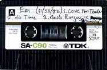
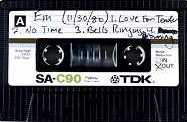
Emmy cassette - Madonna's writing