Nov 1 Chapter 8 (continued)
Meiosis and crossing over (continued)
8)
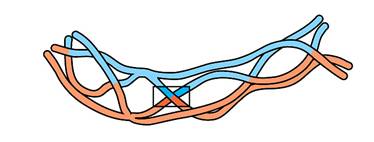
Crossing over (Fig 8.18A, p144)
- The exchange of segments between of homologous
chromosomes.
- Occurs during synapsis (prophase I).
- Results in genetic
recombination, which contributes to genetic variation.
Chromosome abnormality
1) Karyotype
- orderly
display of chromosomes for diagnosis
- treat cells with chemicals to
arrest mitosis at methaphase
- stained
chromosomes are observed under a microscope
- chromosomes
are sorted according to size and shape for identification
- allows identification of gender
and chromosome abnormalities
2) Abnormality in chromosome number
a. Nondisjunction
(Fig 8.21, p148)
- Failure in chromosome separation
during meiosis.
- Results in abnormal number of chromosomes
in gamete, which in turn results in abnormal number of chromosomes in zygote
- Abnormal number of chromosomes
normally results in spontaneous abortion (miscarriage)
b. Down syndrome
- Three chromosome 21 (trisomy 21, Fig 8.20A, p147).
- Most common chromosome abnormality
(1/700)
- Altered facial features, various
health problems, shorter life span.
- Incidence of Down syndrome increases with the age of the mother. (Fig
8.20C)
- Fetal testing is possible (will be
discussed in Chapter 9).
c. Abnormal
number of sex chromosomes
-Abnormal number of sex chromosomes
does not always result in abnormal development.
XXX, XYY –
apparently normal
XXY – Abnormal sex organ development (Klinefelter
syndrome).
Normal intelligence.
XO – (only
one X chromosome) Abnormal
development (Turner syndrome).
Normal
intelligence.
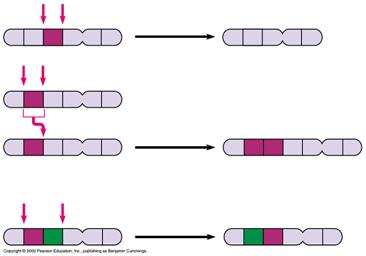
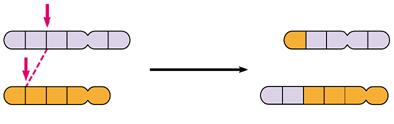
3) Alteration of chromosome structure
deletion
duplication
inversion
translocation
May result in birth defects or cancer.
Chapter 9 Patterns of Inheritance
Mendel’s Principles
1) Gregor Mendel’s experiments
1860s
- observed patterns of inheritance
in pea plants
- controlled fertilization (Fig
9.2C, p157)
self-fertilize or cross-hybridize (cross)
- scored characteristics that were
easy to observe
Genetic terminology
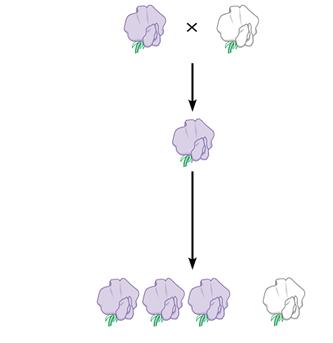
hybrids – offspring of two different varieties
P generation
– parents
F1 generation
– hybrid offspring
F2 generation
– generation resulted from either self-fertilization of F1 generation or
fertilization within F1 generation.
Fig 9.3A, p158
2) Mendel’s principle of segregation
3) Mendel’s principle of independent
assortment