 |
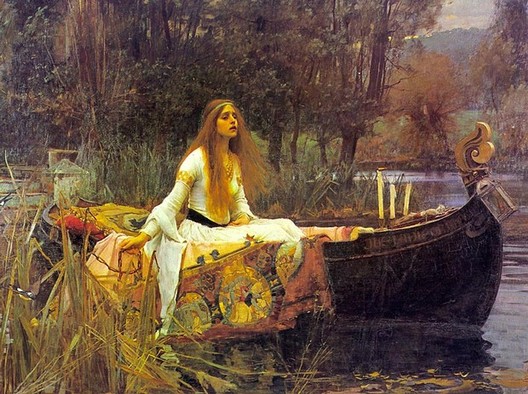
| She left the web, she left the loom, she made three paces 'thro the room, she saw the water-lilly bloom, she saw the helmet and the plume, she look'd down to Camelot. Out flew the web and floated wide; the mirror crack'd from side to side; "The curse is come upon me" cried the Lady of Shallot In the stormy east-wind straining, the pale yellow woods were waning, the broad stream in his banks complaining, heavily the low sky raining Over tower'd Camelot; down she came and found a boat Beneath a willow, left afloat, and round and round the prow she wrote, 'The Lady of Shalot' And down the river's dim expanse like some bold seer in a trance seeing all his own mischance-- with a glassy countenance did she look to Camelot. And at the closing of the day she loosed the chain and down she lay; the broad stream bore her far away, The Lady of Shalott Lying robed in snowy white that loosely fell to left and right-- the leaves upon her falling light-- 'thro the noises of the night She floated down to Camelot: and as the boat-head wound along the willowy hills and fields among, they heard her singing her last song, The Lady of Shalott. Heard a carol, mournful, holy, chanted loudly, chanted lowly, till her blood was frozen slowly, and her eyes were darken'd wholly, Turn'd to tower'd Camelot. For 'ere she reach'd upon the tide, the first hour by the water-side, singing in her song she died, The Lady of Shalott. Under tower and balcony, by garden-wall and gallery, a gleaming shape she floated by, Dead-pale between the houses high, Silent into Camelot. Out upon the wharfs they came, KNight and burgher, Lord and Dame, and round the prow they read her name, The Lady of Shalott Who is this? And what is here? and in the lighted palace near, died the sound of royal cheer, and they cross'd themselves for fear All the knights at Camelot, but Lancelot mused a little space, He said, "She has a liovely face, God in his mercy lend her grace, The Lady of Shalott." |
| An excerpt of the poem "The Lady of Shalott" by Alfred, Lord Tennyson (1843) and Waterhouse's painting inspired by the same. |

|