Unit Two
Accelerate: / k’sel reit/ verb
1. To happen or make something happen faster or earlier: accelerating the rate of growth … tests show global warming has accelerated
2. To increase speed rapidly: he accelerated away from the traffic lights.
Acceleration: / k’sel ‘reifn/ noun
1. An increase in the rate or speed in something: an acceleration in the rate of economic growth
2. The ability of a vehicle to gain speed: a car with good acceleration.
Adventurous: / d’ventf ‘/ noun
An exiting thing that happens to some one:
He wrote a book about his adventurous as a solider
adventurous adjective liking a life full of adventures.
Astronaut: /’aestron>t/ noun
A person who
travels in space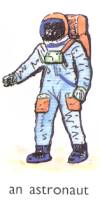
Base: /beis/ noun
- The bottom of something; the part something stands on: bottle has a flat base
- 0the
place where some thing starts: that company has offices all over the
world, but their base is on London.
Cabin: /’k bin/ noun
- A room on a ship or aero plan
- A small wooden house
Come: kam/ (present participle Coming /’kamin/, past tens came /keim/, past participle)
To move towards the people speaking
“come here Mary I want to speak to you”
“I am going out are you coming with me?”
My shoe has come off.
I come from London.
Count: /kaunt/ verb
1. To say numbers in the right order: to count from 1 to 100
2. To name one by one to find out how many there are; add up:
she counted the books _there were fourteen of them.
3. Count Down : to number from 100-1
4. Count: noun (no plural) An act of counting: there were so many cars that I lost count
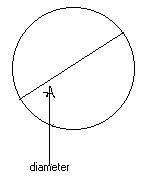
Diameter: /dai’ mit ‘/ noun
The diameter of earth is bigger than the diameter of mercury.
Erupt: / / verb
To be moved: the volcano start to erupt at night.
Fascinate: /’f sinit/ verb
To make someone feel very strong interest: the city fascinates him
Fascination:
noun very strong interest: the city has a fascination for him.
Giant: /’d3ai nt/ noun
A very very large person, usually only talked about in stories.
Giant: adj
Very large: a giant snake.
Hero: /’hi r u/ noun (plural heroes)
A man who does something great or brave:
the football player was Paul’s hero when he was at school.
Huge: /hju:d3/ adj
Very large: a huge a mount of food.
Incredible:/enkredbl/
hard to believe
Launch: /l :ntf/ verb
To put a ship into the water or to send a spaceship into space.
Law: /l :/ noun
A rule made by the government that all people must obey
:
there is a law to stop people driving too fast in towns.
Lawful: /’l :j / adj
It’s not lawful to steal.
Lawyer: / / noun; a person who has studied the laws of our country and helps us to understand them.
Possibilities: noun: is it a possibly that you will work aboard?
Possibly: adv I can eat all that food.
Predict: /pri ‘n/ verb
To say what is going to happen: the teacher predicted that we would all pass the examination.
 Prediction: noun
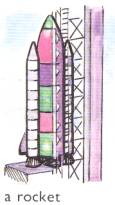
Rocket: /’r kit/ noun
- A thing driven into the air by burning gas, used to lift a weapon or a spaceship from the ground.
- A
firework, which goes up into the air.
Sciences: /’sai ns/ noun
The study of nature and the way things in the world are made, behave, etc…
the chief sciences are chemistry
Scientist: noun: a person who studied or practices sciences.
Science Fiction: prediction about possibilities will be happen in future about science.
Signal: /sign l/ noun
A movement or thing, which tells you what to do:
the rail way signal showed that the train could pass.
Signal: verb: to give a signal: the teacher signaled the boy to begin.
Space: /spies/ noun
- (No plural) the empty area that surrounds the sun, the earth, etc.: People have traveled through space to the moon.
- An empty place: there is no space for another chair in this room.
Spaceman: /’speism n/ noun (plural spacemen)
Spacewoman: /wom n/ (plural spacewomen)
A person who travels in outer space; an astronaut
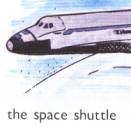
Space shuttle: noun .a type of rocket, which can return to earth like an aeroplane.
Strap: /str p/ noun
A narrow piece of leather plastic, cloth etc. used of fastening something.
Strap: verb. To fasten with a strap: he strapped the bag onto his bike.
Volcano: /v l’kein / noun (plural volcanoes)
A mountain from which burning and melted rock sometimes comes.
Weigh: /wei/ verb
1. To measure how heavy a thing is: he weighed to fish.
2. To have a weight of: the fish weighed two kilos.
Weight: noun (no plural) the heaviness of anything: the baby’s weight four kilos.
Weightless: adj. having no weight, or with no Wight relative to the surroundings because of the absence of gravity.
Weightlessness: noun:
Become accustomed to weightlessness in a scarf.
Prepared by:

Ehsan Al Natsheh
Haetham Najada
Yassen Maaea
References:
Oxford ,Longman