
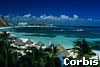
MEXICO
The most beautiful country of the world Mexico is a land of extreme diversity: the superficial glitz of fly-in fly-out tourist resorts coexists with awe-inspiring ancient cities, and snow-capped volcanoes slope down to pine forests, deserts and balmy tropical beaches.
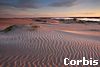
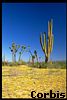

The bursting industrial megalopolis of Mexico City is a one-hour flight from the resource-rich southern state of Chiapas, where Indian insurgents recurrently tangle with the ruling party's paramilitary forces.
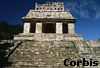
Up along the northern border, Mexico's disorienting tumult of heritages merge with the air-conditioned cultures of California, Arizona, New Mexico and Texas. Mexico's landscape and its people reflect the country's extraordinary history - part Indian, part Spanish. One look at this country is enough to remind visitors that there is nothing new about the so-called `New World'. Despite the considerable colonial legacy and rampant modernization, there are still over 50 distinct indigenous peoples, each with their own language, maintaining vestiges of their traditional lifestyles.




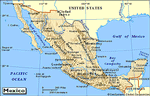
Environment Covering almost two million sq km (800,000 sq mi), Mexico curves from north-west to south-east, narrowing to the Isthmus of Tehuantepec then continuing to the Yucatán Peninsula. On the west and south the country is bordered by the Pacific Ocean, with the Gulf of California lying between the Baja California peninsula and the mainland. Mexico's east coast is bordered by the Gulf of Mexico, and the east coast of the Yucatán Peninsula faces the Caribbean Sea. Mexico shares borders with the USA (to the north), and Guatemala and Belize (to the south-east). Mexico is a mountainous country with two north-south ranges framing a group of broad central plateaus known as the Altiplano Central. In the south, the Sierra Madre del Sur stretches across the states of Guerrero and Oaxaca to the Isthmus of Tehuantepec. From the isthmus, a narrow stretch of lowlands runs along the Pacific coast south to Guatemala. These lowlands are backed by the Chiapas highlands which merge into a steamy tropical rainforest area stretching into northern Guatemala. The flat, low Yucatán Peninsula is tropical savanna to its tip, where there's an arid desert-like region. Bridging temperate and tropical regions, and lying in the latitudes which contain most of the world's deserts, Mexico has an enormous range of natural environments and vegetation zones. Its rugged, mountainous topography adds to the variety by creating countless microclimates. Despite the potential for great ecological diversity, human impact has been enormous.
Before the Spanish conquest, about two-thirds of the country was forested. Today, only one-fifth of the country remains verdant, mainly in the south and east. Domesticated grazing animals have pushed the larger animals, such as puma, deer and coyote, into isolated pockets. However, armadillos, rabbits and snakes are common, and the tropical forests of the south and east still harbor (in places) howler and spider monkeys, jaguars, ocelots, tapirs, anteaters, peccaries (a type of wild pig), deer, macaws, toucans, parrots and some tropical reptiles, such as the boa constrictor, though even these habitats are being eroded. Mexico's climate varies according to its topography. It's hot and humid along the coastal plains on both sides of the country, but inland, at higher elevations, such as in Guadalajara or Mexico City, the climate is much drier and more temperate. The hot, wet season is May to October, with the hottest and wettest months falling between June and September over most of the country. The low-lying coastal areas receive more rainfall than elevated inland regions. December to February are generally the coolest months, when north winds can make inland northern Mexico decidedly chilly, with temperatures sometimes approaching freezing. When to Go Mexico's climate varies according to the country's topography. It's hot and humid along the coastal plains on both sides of the country, but inland, at higher elevations (such as in Guadalajara or Mexico City), the climate is much drier and more temperate.
The hot, wet season is May to October. The southern coastal regions can be uncomfortably hot and extremely humid between July and September. Unless you want to do nothing but lie on the beach and avoid occasional downpours, it's best to avoid the southern coast of Mexico during these months - especially since July and August are also the peak holiday months for foreign visitors and the coastal resorts attract large numbers of tourists. October to May is the most pleasant time to visit since it is fairly dry and still comfortably warm. December to February are generally the coolest months, but north winds can make inland northern Mexico decidedly chilly, with temperatures sometimes approaching freezing. The peak domestic travel periods are Semana Santa (the week before Easter) and Christmas/New Year, when facilities are often heavily booked. Facts for the Traveler Visas: Citizens of many countries - including the USA, Canada, Australia, New Zealand and virtually all Western European countries - do not require visas to enter Mexico as tourists. However, they must obtain a Mexican government tourist card (tarjeta de turista), available from embassies or at border crossings. Health risks: Cholera, dengue fever, hepatitis, malaria, polio, rabies, tetanus, typhoid. Air pollution in Mexico City is extremely high between December and May. Time: Most of Mexico is on Central Standard Time (six hours behind UTC). Baja California Sur and several other states in the north-west are on Mountain Standard Time (seven hours ahead of UTC) and Baja California Norte is on Pacific Standard Time (eight hours ahead of UTC). Electricity: 110V, 60 Hz Weights & measures: metric Tourism: 16.5 million visitors Money & Costs Currency: Nuevo (new) peso Relative costs: Budget meal: US$3-4 Restaurant meal: US$8-12 Budget hotel: US$8-15 Mid-range hotel: US$15-30 Your costs will depend on where you spend your time: Mexico's big cities and coastal resorts are much more expensive than rural areas. If you take in a mix of these places, budget travelers should be able to squeeze by on around US$25 a day. Traveling in reasonable comfort, staying at the better mid-range places and eating at the more expensive restaurants should cost around US$60 per day. You'll spend a lot more than this if you stay at luxurious hotels and hire a car occasionally. It's best to bring US-dollar denomination travelers' cheques and some US dollars in cash. You can exchange money in banks or in casas de cambio. Note that bank exchange facilities are often only open between 9 or 10 am and noon or 1 pm. Exchange rates vary a little from bank to bank. Major credit cards are accepted by airlines, car rental places and more expensive hotels and restaurants. In heavily touristed areas such as Acapulco, Cancun and Cozumel, you can often spend US dollars as easily as pesos at hotels and restaurants (although the exchange rate will probably be awful). Note that the dollar sign is used to refer to pesos in Mexico so don't mix it up with US dollars which are usually marked US$ or USD. Mexico has a 15% value-added tax but by law this tax must be included in quoted prices. Sometimes - usually in top-end hotels - a price is quoted without this tax. Tipping in restaurants in resort areas is equivalent to US levels - somewhere between 15% and 20%. Outside these areas, a tip of 10% is sufficient at mid-range or quality restaurants; in general, staff at smaller, cheaper places do not expect a tip. Expect to bargain at markets and with drivers of unmetered taxis.
I live in Toluca it's the Capital of the State of Mexico it's located in the cntral part of the Mexican Republic, it's 67 Kilometers from Mexico City, Toluca is the highest city of the Mexican Republic, it's 2,680 meters over the level of the sea you can find everything just like in a any Industrialized city
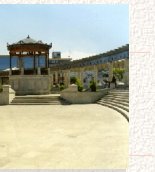
This is located at the downtown of Toluca my city which also has some nice places to visit like:

This is the Cosmovitral, it's a place with a variety of plants we also have great small towns, near Toluca that have become cities like Metepec in which we produce ceramic like this:

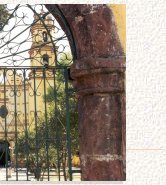
Metepec it's very traditional town in which you can find great churches like this;
You are welcome to Mexico any time and if you want to come to Mexico and have some good timesyou can write to: [email protected]