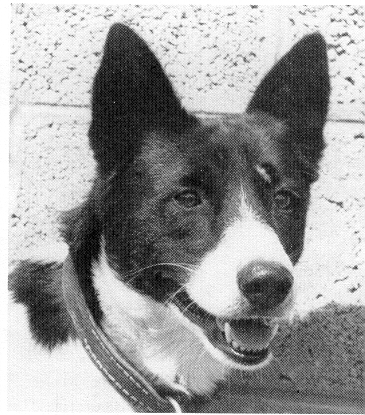
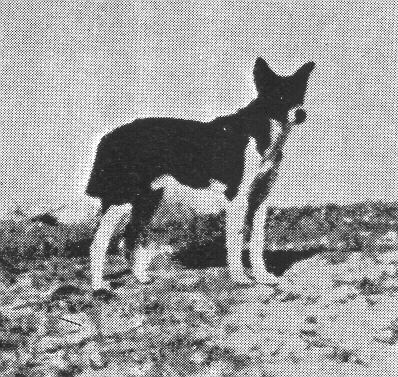
Canaan dogs probably originated about four thousand years ago in what is now Israel. As the ancient Israelites were dispersed by the Romans and other conquerers, most of their guard and herding dogs returned to the wild, living for centuries in the Negev desert.
In modern times they have been used as watchdogs, in shepherding, and by the military for search-and-rescue work, landmine detection, messengers and Red Cross helpers. They have become a favourite as guide dogs for the blind.
The Canaan lived as a pariah, a dog that lives on the border between wild and domestic, able to adapt in order to survive. The Canaan, then and today, is perfectly capable of surviving on its own, but his desire to be close to man, the difference between a dog and other canids, kept him on the fringes of civilization.
It was in the 1930's that the Menzels started to capture and train Canaans, initially for the Haganah. She found them to be highly adaptable, amenable to domestication, and very trainable. She began a breeding programme and provided many highly trained dogs for the military.
In 1965 Dr. Menzel selected four Canaans and shipped them to the United States to become the basis for the that breeding programme.
It was not until 1992 that the United Kennel Club recognized the breed. In 1998 they moved the Canaan from the Herding Group to the newly formed Sighthound & Pariah Dog Group. The Canadian Kennel Club put the Canaan in their Working Dog group in 1993. In 1997 the American Kennel Club took the Canaan into their registry in the Herding Group. |