Close Window |
|
A Systems Approach to Medication Safety
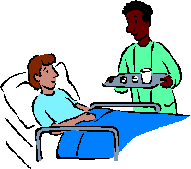
Know
the patient
-
age, weight,
allergy history, diagnoses, pregnancy status
-
monitoring information: vital signs & lab results are keys to gauging the
effects of prescribed medications and underlying disease processes
 Know the drugs Know the drugs
-
Obtain
up-to-date drug information from various sources (drug formulary, PDR, drug
protocols, & frequent, consistent contact with pharmacists)
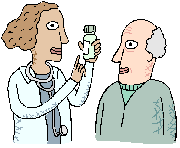 Communicate clearly Communicate clearly
-
Limit use of
verbal orders. If taking a verbal order, restate the order to the prescriber.
When a drug dose is <1, a zero should always precede a decimal, e.g., 0.125 mg.
Use correct drug names. Use only hospital approved abbreviations.
-
Be aware of
look-alike and sound-a-like drug names – Carefully read and reread labels.
-
Match the drug
label with the ordered drug on the MAR.
-
Encourage
patient participation – Teach the patient about the drugs being administered.
-
Listen to the
patient
Maintain competency in use of drug delivery
devices
-
Appropriately
use infusion pumps and other parenteral administration systems (PCA pump).
-
Take the MAR
to the bedside. Check the patient’s name band.
Don’t Sabotage Yourself !!
-
Use good
lighting, an uncluttered area, & avoid frequent interruptions.
-
Be attentive
during drug administration.
-
Check all
drugs for expiration dates prior to administration.
-
Do not use discontinued drugs from the drawer
of another patient – return discontinued drugs to pharmacy.
-
Don’t
sacrifice safety for timeliness, i.e., the need to quickly administer drugs
doesn’t outweigh safety checks for medication administration.
-
Document all
medications administered.
-
Follow
hospital policies and procedures for medication administration!!
Close Window |