GREECE
Greece consists of a peninsula and about 2000 islands, only 166 of which are inhabited. Since ancient times the arts have been integral to Greek life. In summer, Greek dramas are staged in the ancient theatres wehre they were orginially performed.
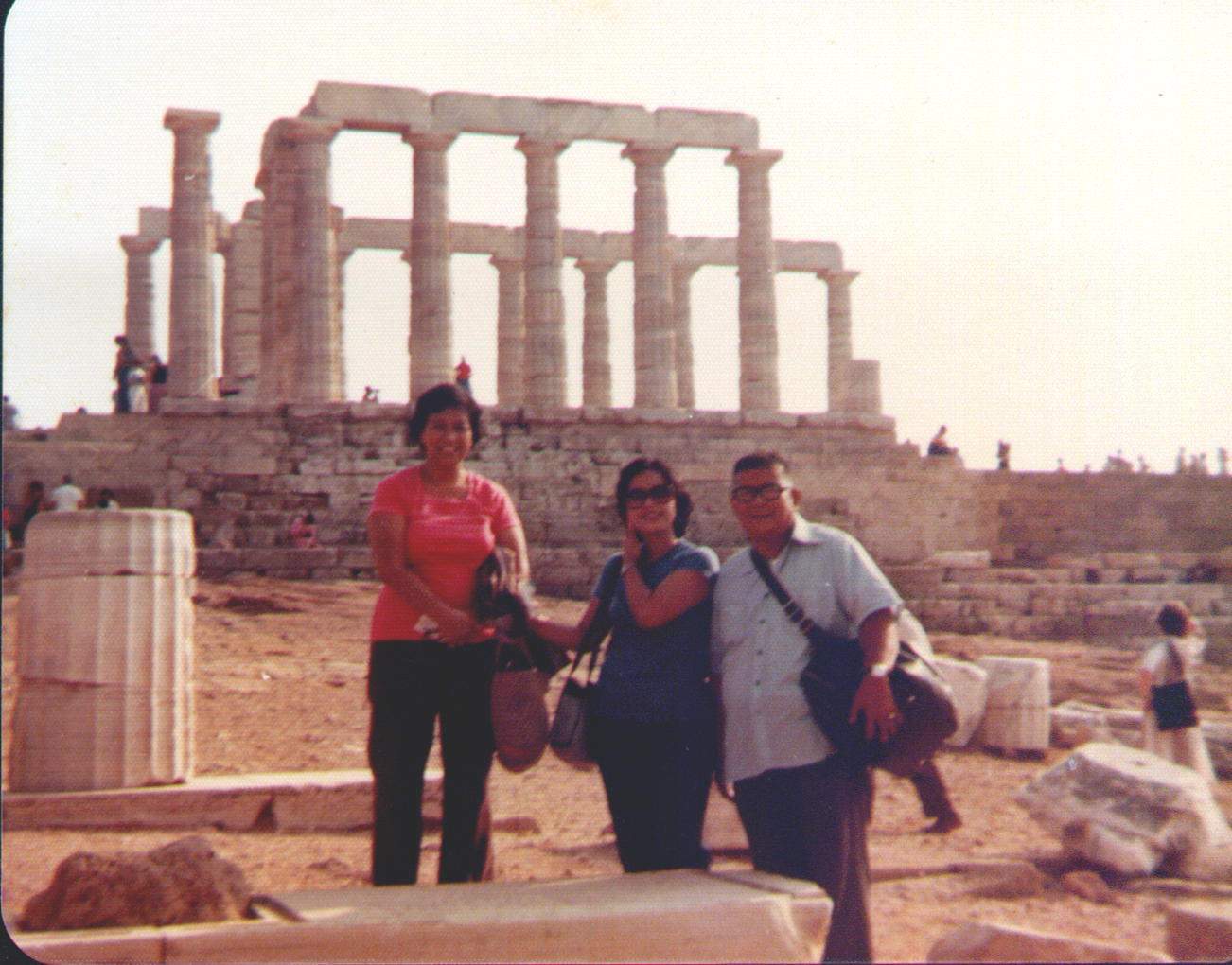
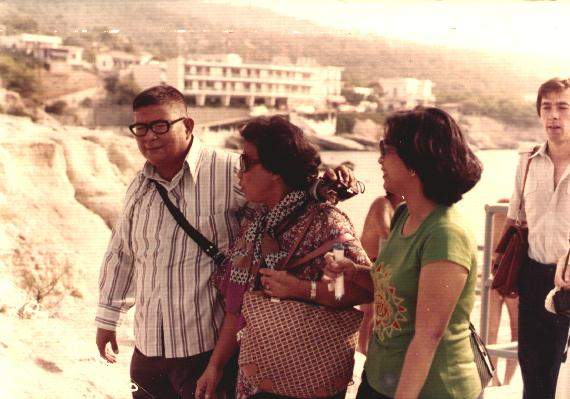
This trip to Greece and some islands was in September of 1978. The waters were so tempting but the weather was cold so difficult to take a dip.
Athens
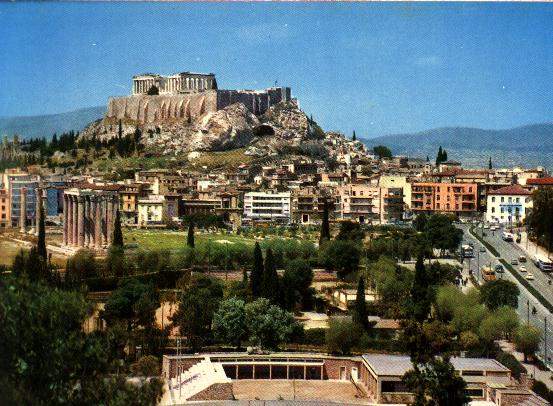
The city of Athens ranks with Rome and Jerusalem for its glorious past and its influence on Western civilization. Despite the concrete and pollution, Athens also has many redeeming qualities. It is bounded by mountains on three sides and these can be glimpsed from almost every street. The city is also punctuated by eight hills and, wherever you are, at least one of these will be visible.
The Acropolis hill, so called the "Sacred Rock" of Athens, is the most important site of the city. During Perikles' Golden Age, ancient Greek civilization was represented in an ideal way on the hill and some of the architectural masterpieces of the period were erected on its ground. The first habitation remains on the Acropolis date from the Neolithic period. Over the centuries, the rocky hill was continuously used either as a cult place or as a residential area or both.
During the Classical period
(450-330 B.C.) three important temples were erected on the ruins of earlier
ones: the Parthenon, the Erechtheion, and the Temple of Nike, dedicated to
Athena Parthenos, Athena Polias, and Athena-Apteros Nike, respectively. The
Propylaea, the monumental entrance to the sacred area was also constructed in
the same period.
The monuments on the Acropolis reflect the successive phases of the city's
history. Some of them were converted into Christian churches, houses of the
Franks and later on, of the Turks. After the liberation of Athens from the
Turks, the protection, restoration and conservation of the monuments was one of
the first tasks of the newly-founded Greek state. This major effort is continued
until today, with the large-scale restoration and supporting of the monuments,
which started in the 1970's and is still in progress
Aegina
 The
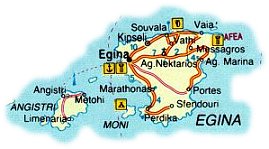
Greek island of Aegina (pronounced Ayina with the stress on the long A of the
first syllable) is a triangular shaped island in the middle of the Saronic Gulf,
midway between the port of Piraeus (from where it can be reached by ferry in 1
½ hours), Megara on the mainland and Epidavros on the Peloponnesse. It was
reputedly named after one of Zeus' favourite daughters.
The
Greek island of Aegina (pronounced Ayina with the stress on the long A of the
first syllable) is a triangular shaped island in the middle of the Saronic Gulf,
midway between the port of Piraeus (from where it can be reached by ferry in 1
½ hours), Megara on the mainland and Epidavros on the Peloponnesse. It was
reputedly named after one of Zeus' favourite daughters.
It has an area of 85 sq. Kms and a population of approximately 11,000 of whom, over half live in the capital, Aegina Town. It is a popular weekend retreat with Athenians, many of whom are trying to escape the smog of the capital.
Though the island is predominantly mountainous, it's highest point being Mount Oros at 532 metres, there is a large Plain on the western part of the island where crops such as pistachio nuts introduced from Syria over 100 years ago, grapes, olives, figs and almonds are grown.
The eastern side of the island is predominantly rocky with high cliffs dropping down sharply to the sea, though the exception to this is the bay of Aghia Marina, which is also the main tourist resort on the island.
On
the western side of the island are the ba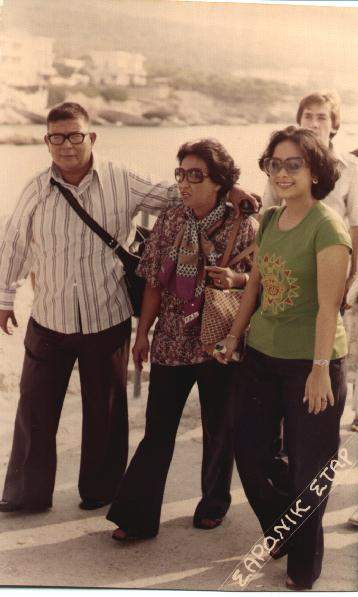 y
of Marathona and the capital itself - Aegina Town.............
y
of Marathona and the capital itself - Aegina Town.............
History Of Aegina: Zeus, according to mythology, loved Aegina and had with her a son named Aiakos. Aiakos was father of Pileas and Telamonas. Son of Pileas was Achilles and of Telamonas was Aias. After his dead Aiakos, the king of Ioni - that was the name they called Aigina back then - became one of the judges of Hades (underworld) with Minos and Rhadamanthos.
In the Archaic Era (7 c. - 6 c. BC) Aigina was a powerful maritime state, minting its own coins, marked with a turtoise, exporting its ceramics and bronzes and establishing colonies round the Mediterranean. Its rivalry was Athens, however, proved fatal and in 455 BC the islanders were defeated and had to emigrate.
 Aegina Town:
Situated on the South of the island, it is the capital of the island - and also
the first capital of Greece 100 years ago - visited by thousands
of Athenians and tourists every week. There is frequent transportation
to and from Piraeus (75 minutes by Ferry or 45 minutes by hovercraft).
Aegina Town:
Situated on the South of the island, it is the capital of the island - and also
the first capital of Greece 100 years ago - visited by thousands
of Athenians and tourists every week. There is frequent transportation
to and from Piraeus (75 minutes by Ferry or 45 minutes by hovercraft).
The low pink and white houses of the town cluster round the little harbour of coastal and fishing vessels protected by a charming chapel dedicated to St Nicholas, the patron of sailors. The shops along the waterfront sell the local specialities : pottery, pistachio nuts and marzipan; some of the boats act as floating shops dealing in fish, fruit and vegetables.
Aigina enjoyed a brief moment of glory during the struggle for independence from 1827 to 1829 when it was the capital of the new Greek state and Kapodistrias set up his government on the island. Printing presses produced the first books and newspapers of free Greece and the first national money was minted bearing a phoenix, symbol of rebirth.
On Cape Colonna, north of the town, stands a fluted column crowned with a capital (8 m - 23 ft high), once part of a temple to Apollo errectued in the 5 C. BC; excavations in the neighbourhood have uncovered the remains of a theatre and a stadium, as well as a prehistoric dwelling (museum). From the beach remains of quays of the ancient harbour can be seen below the surface of the sea.