Buckling Control of Nozzle Shell
using PZT,
Development of
Constitutive Models for Smart Materials
Development of
algorithms & codes for analysis and modelling of
SMA components
Development
of PVDF Hydrophones
Adaptive EFG for
laminated composite plates
Development of a Palmyrah Tree Climber
-----------------------------------------------------------------
Buckling
Control of Nozzle Shell using PZT,
ISRO-IITM cell
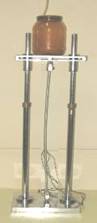
 The project aims at characterizing the fundamental
electromechanical properties of PZT materials supplied by the manufacturers and
to demonstrate the active control of simple thin rectangular columns. It also
envisages to theoretically simulating buckling control of shell structures and
to demonstrate buckling control of shell structures using control parameters
with the experience gained from column studies.
The project aims at characterizing the fundamental
electromechanical properties of PZT materials supplied by the manufacturers and
to demonstrate the active control of simple thin rectangular columns. It also
envisages to theoretically simulating buckling control of shell structures and
to demonstrate buckling control of shell structures using control parameters
with the experience gained from column studies.
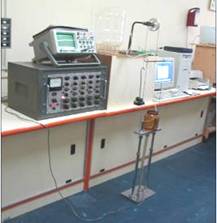
An experimental setup has been fabricated for loading the
slender columns. The load is applied continuously using water. The variations
in the strains were sensed using strain gauges (pasted on to the column) which
were connected to a strain gauge amplifier. The output of the amplifier was
directed to an A/D card for converting the analog signals to digital values,
which were recorded in a computer. 11.7
% enhancement of the buckling load was observed.
-----------------------------------------------------------------------------------------------------------------------------------
Development of Constitutive Models for Smart Materials
NPSM – DST
project Sept 2001- May 2005.
 Smart materials such as PVDF, SMA
and PZT are studied in this project. The
procedures and constitutive models have been developed that are capable of
satisfactorily modeling the behavior of these materials under wide range of applied
fields. The outcome has provided
well-defined procedures for calculation of material constants and parameters
for a particular material and model. Two
modes of modeling are relevant, the phenomenological modeling that seeks to combinedly simulate a wide range of phenomena that occur in
the material is one and the meso- or micro-
structural modeling that aims at simulation of the material behavior from the
more basic features of the material such as microstructural
characteristics is another. Attempts
have been made to model using both approaches in this study. Testing facilities have been developed to
characterize these materials.
Smart materials such as PVDF, SMA
and PZT are studied in this project. The
procedures and constitutive models have been developed that are capable of
satisfactorily modeling the behavior of these materials under wide range of applied
fields. The outcome has provided
well-defined procedures for calculation of material constants and parameters
for a particular material and model. Two
modes of modeling are relevant, the phenomenological modeling that seeks to combinedly simulate a wide range of phenomena that occur in
the material is one and the meso- or micro-
structural modeling that aims at simulation of the material behavior from the
more basic features of the material such as microstructural
characteristics is another. Attempts
have been made to model using both approaches in this study. Testing facilities have been developed to
characterize these materials.
Infrastructure / Facilities
created:
a)
Multi-axial
load testing facility: This machine can
used for static tests in tension and torque, multiaxial
fatigue tests with combined of axial loading and torque.
b)
Electromechanical
Module testing facility PVDF under biased loads: This can be used for characterization of PVDF
sheets for their electromechanical properties.
c)
Creep
test setup: This is used for electromechanical creep tests of PVDF.
d)
Biaxial
loading facility for testing PZT.
Development of algorithms & codes for analysis and modelling of SMA components
GM Tech
 The project aims at
developing constitutive models and identifying material constants for
thermo-mechanical modeling of Shape Memory Alloys (SMA). Numerical codes will
be developed to compare various models available in literature offering scope
to comprehend the merits and demerits of each of the model. Pilot thermomechanical
tests will be carried out for a conceptual understanding of the phenomena and
mechanisms involved in the deformation characteristics of an SMA wire. A hierarchical model to simulate the behavior
of SMA material will be developed. A
one-dimensional wire element model will be developed to incorporate into
standard finite element packages. Focus
will be placed on directing the effort towards the use of such developed codes
to analyze SMA components for design purposes.
The project aims at
developing constitutive models and identifying material constants for
thermo-mechanical modeling of Shape Memory Alloys (SMA). Numerical codes will
be developed to compare various models available in literature offering scope
to comprehend the merits and demerits of each of the model. Pilot thermomechanical
tests will be carried out for a conceptual understanding of the phenomena and
mechanisms involved in the deformation characteristics of an SMA wire. A hierarchical model to simulate the behavior
of SMA material will be developed. A
one-dimensional wire element model will be developed to incorporate into
standard finite element packages. Focus
will be placed on directing the effort towards the use of such developed codes
to analyze SMA components for design purposes.
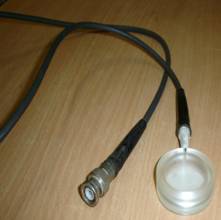
Development of PVDF Hydrophones
Adaptive EFG for laminated composite plates
(under
construction…)
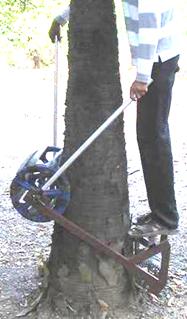
Development of a Palmyrah Tree Climber