How the World Wide Web Works
The World Wide Web is the fastest growing part of the Internet. When you are on the Web, you see multimedia pages, which are made up of text, graphics, sounds, and video. The Web uses hypertext links that enable you to move from one page to another on the Internet. The language that lets you do all of this is called the Hypertext Markup Language, or HTML.
The Web works with clients and servers. The client software is the Web browser that runs on your computer. The server software runs on a Web host. In order to use the Web, you must be connected to the Internet and have your Web browser open.
Once inside your Web browser, you must either type in a URL or click on a hyperlink to visit another Web page. Web locations are called uniform resource locators (URLs). When you request a URL, your Web browser sends it using Hypertext Transfer Protocol (HTTP), which decides how the Web browser and server will communicate.
The Web server receives your request using HTTP protocol. Your request tells the server which specific page you would like to visit. The Web server sends the request to the Internet. Routers determine which server to send the request to. The Internet will find out which Web server to look for the information on by looking at what is on the right of http:// in the URL.
When the server finds the page you asked for, it sends it back to your web browser, and it is displayed on your screen. Once the page is sent, the HTTP connection is closed, but it can be reopened when you would like to send or receive more data.
How Web Pages are Organized
A Web sites first page is its home page. This may be the only page on the site, or it may be linked to hundreds more. If it is, the home page works as a table of contents to help you find your way around the site.
Hypertext is often used on the home page to connect the home page to other pages on the site. Any page on the Web site can be linked to any other page on the site, or on another site.
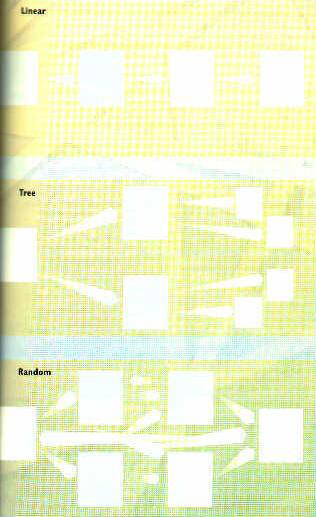
Web sites are usually organized in one of three ways: