How Routers Work
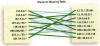
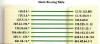
A router sends information across the Internet by choosing its path. A router has input and output ports for receiving and sending data toward its destination. When a packet arrives at an input port, the router looks at the packets header, and compares it with a routing table (a database that tells the router how to send packets to various destinations). The packet is then sent to an output port based on the information on the routing table. The output port sends the packet to the next router which is closer to the destination.
If packets come to the input port more quickly that the router can handle them, they are sent to a holding area called an “input queue.” The router then processes packets in the queue in the order they were received, just like a cashier would at a grocery store. If the router receives more packets than the queue can hold, packets can get lost. If a packet gets lost, the TCP protocols on each side of the data transfer will ask for the packet to be sent again.
A simple routing table is called a “static” routing table. Static routing tables have specific routes to get data to other networks. Only these paths can be used, and they cannot be adjusted when network traffic changes, so this routing table is not optimal.
Dynamic routing is different because packets can have various routes to get to their destination. Routers can change the route that certain packets will take as network traffic and conditions change.