
THE SANCTUARY OF THE MAGNA MATER
One year later, what�s going on?
Almost one year has passed since my first surveying of the area of the temple, on the Palatine hill. Since then I have learned a lot about this topic, and the most personally rewarding aspect of all, I was appointed to follow this project on the behalf of Cohors Aedelis Fr Apuli Caesaris.
Last year, as Scriba ad Historiam Provinciae Italiae I provided a first report to Cohors Aedilis Caeso Fabius Quintilianus
(See at http://italia.novaroma.org/cohorsaedilis/ludi/templemagnamater.htm).
What did we find out last year? All the south-west area of the Palatine hill is the object, since 1977, of systematic surveying directed by Professor Patrizio Pensabene Perez (with the collaboration of numerous graduates and students of the Department of Archaeological and Anthropological Historical Sciences of the University of Rome "La Sapienza"). Unfortunately it is still not possible to visit that area as it remains all fenced and under restoration. At the entrance of the area there is still a sign stating jobs of removal of asbestos materials in progress.
A telephone call with Soprintendenza Archeologica di Roma, made two weeks ago has confirmed this situation.
What all has happened within the past year? Well, this report focused more on the archeological news about the temple. As you will see, we have gathered as much information as we can about the temple, because within a few weeks we look forward to a key event for this project. I think it is safe to assume that for the first time in her history, Nova Roma will have face-to-face contact with the manager of a Roman monument
Later this month Propraetor Italiae and myself, together with other Italic citizens, will have an appointment with D.sa Irene Iacopi, managing director of Roman Forum and Palatine archeological areas, to offer our ecomomic help to preserve the temple, and other possible related assistance. It�s our intention to understand better what both sides can earn. There are some possibilities enlisted by the Italian law, which allows private citizens, alone or associated, to collaborate with the Ministero per i Beni e le attivit� culturali (for cultural assets and activities) as written in the Decreto legislativo 368/98, art.10, comma 1.
Questions of importance are as follows:
- What are the rules for fundraising?
- What forms of control are needed?
- What merits could Nova Roma display?
The Soprintendenza Archeologica di Roma, addressed in Piazza S.Maria in Nova 53, will hold the meeting on April 14 (http://www.archeorm.arti.beniculturali.it/sar2000, email: [email protected]).
The Cult of Magna Mater, the Great Mother, is probably the oldest religion of all. The earliest stone-age sculptures depict the mother- goddess, as an idol found in Catal H�y�k, six thousands years old. In a later form she became a seated woman flanked by two leopards. The area of the Aegean Sea and especially the Cretan Isle, organized by a matriarchal order during the prehistoric age, adored a Mother Goddess as dispenser of fecundity. She was adored as Cybele, worshipped with this name in Greece, Phrygia and Anatolia. On the banks of the Euphrates as Koubaba and near the Babylonians as Damkina, which means "married with the earth and the sky". Other names were Gaia, Ga or Ge (from greek Mother Earth), Terra (in Latin) and Gatumdu (her Sumerian name); she was also called Ishtar in Akkadia and finally Isis in Egypt, not saying that behind her name there was also the oriental goddess Shub-Niggurath.
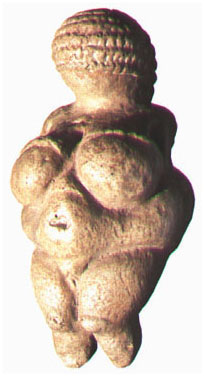
In nearly all creation myths of all cultures she appears to be the eternal, not born, just existing from the beginning of time. She gives the earth its shape. She is the bearer of the world and the population of this planet (plants, animals and humans).
The Romans identified this goddess with the Greek Rhea, and called her the Magna Mater, the Great Mother.
Although the priests of the cult were men who had castrated themselves in front of her image, most of the followers were women. They worshipped the goddess in different temples
, independent of each other, although some temples had more influence than others did. They were mainly in Phrygia, Greece and Italy.In Pessinus, in northern Asia, a simulacrum of the divinity was worshipped: one black stone of conical shape, probably a meteorite. Another major temple was in Delphi, which was later re-consecrated to Apollo and became much more famous for his oracle.
In each temple the High Priestess had the greatest status, followed by the Archigalli. Below in status was the ordinary priestesses and lowest the gallae.
The Second Punic War had put in crisis the republican Rome and its religious structure too. In the attempt of recovering the support of the Gods, which appeared to be lost, the cult of the Magna Mater was introduced in 204 BC, after the consultation of the Sibylline Books.
It�s also believed that the patricians imported the cult of Magna Mater explicitly so that their social class would have a goddess that served some of the functions that Ceres did for the plebeians. As a result, there was sharp antagonism between the two cults, becoming rivals separated only by the social classes they served. The same year the Sanctuary of Magna Mater was dedicated, a new festival dedicated to Ceres was established. This festival was called the Ieinium Cereris, and may have represented a Plebeian response to the new Patrician goddess.
The embassy was sent to the king of Pergamus, in which territory the sanctuary was located. Having obtained the delivery of the simulacr
um, it was then carried and loaded on a ship to Rome. The simulacrum was one pointed black stone of conical shape, called acus, which represented the goddess. On its arrival it was welcomed into the city by a vir optimus, or best man, selected from one of the most distinguished patrician families. The matrons that escorted the goddess on the road from Ostia to Rome were entirely drawn from the patrician class. Since its arrival in Rome until the completion of an appropriated temple, the black stone was kept in the Temple of Victory (the Aedes Victoriae), on the western side of the Palatine hill.(Livy Ab urbe condita XXIX.37.2; XXXVI.36)
Between 204 and 191 BC the sanctuary was built in the same area in order to receive the acus. Probably that place was chosen also because of the proximity to the cave of the recovery of the twins, the Lupercale, as mountains and caves were sacred to the Magna Mater, and her temples were often built near them in the tradition. It was dedicated on April 11 191 BC, by the praetor Marcus Iunius Brutus , on which occasion the ludi Megalenses or Megalesia, were instituted and celebrated in front of the temple (Livy loc. cit.; Fast. Praen. ap. Corpus Inscriptionum Latinarum I". p. 235, 314-315, cf. p. 251=VI. 32498; Fast. Ant. ap. NS 1921, 91; Cicero de har. resp. 24; cf. for site Ovidius Fast. II. 55; Martial VII.73.3).
In 111 BC there was a first fire in the Temple of the Magna Mater when the statue of Quinta Cloelia within the temple was uninjured. It was caused by the aedile Quintus Memmius, who took with him the black stone.
The temple was restored by Metellus Numidicus, consul in 110 BC, and the cult resumed in an official and pacific version.
Burned again in 3 BC, it was destroyed by mysterious circumstances.
Augustus restored it in 3 AD. He also showed his closeness to the Religio of Cybele (the other name commonly used in Rome) and his wife Livia was resembled to the goddess. This worship had a large following since the end of the Imperial era (or since the interdiction of Paganism). After that the traces of the cult of the black stone were lost.
(Val. Max. I.8.II; Obseq. 99; Ovidius Fast.IV. 347-348; Mon. Anc.IV.8)
According to writings about Roman Regiones, the temple was still standing unharmed in the fourth century (Not.Reg.X).
During Roman History there are other references by classic authors:
- The temple is found in Cassius Dio (XLVIII.43.4), Juvenal (IX.23) as a place of assignation, and in the third century (Hist. Aug. Claud. 4; Aurel. I).
- The stone needle itself is described by a late writer (Arnob. adv. gentes vii. 49) as small and set in a silver statue of the goddess (cf. Herodianus ab exc. d. Marci i. II; Arnob. v. 5). It was perhaps removed by Elagabalus to his temple (q.v.) on the Palatine (Hist. Aug. Elag. 3; cf. LR 134-138; but cf. BC 1883, 211; HJ 53-54, n. 44).
Archaeological Evidences of the Sanctuary
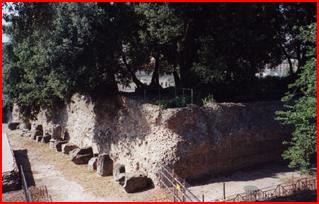
At the top of the Scalae Caciand behind the area of the Romulean huts, on the southwestern corner of the Palatine, stand the ruins of the ancient temple. Nowadays only a large brick box is visible in a squared work with a staircase inside, on which a small wood of elm-oaks has grown.
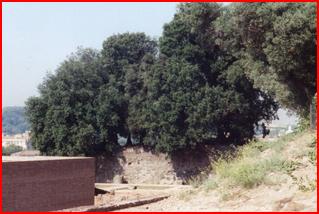
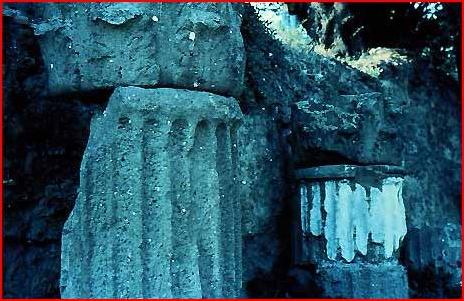
These ruins consist of a massive podium made of irregular pieces of volcanic tufo and peperino laid in thick mortar, and fragments of columns and entablature. The building presents its own guideline (NorthEast - SouthWest, which was decided by cultural reasons), different from the previous one of 191 BC. Moreover a great courtyard occupied a large portion of the front space and the western area of the temple, while to the East eased a connection with the area of the nearby temple of Victory.
All of this was contained within a wide rectangular area. This is because the courtyard had to be classified for a specific function, probably connected to the theatrical events of the Ludi. The structure shows the need of great bathtubs for the rituals of the cult. The priests of Magna Mater used these when they washed her image in the sacred waters of the Almon River during the festivals of the Goddess.
The temple by Augustus (the last version and how we see it today) was created on a high base with big steps. The great concrete podium which, with the foundations laying directly on the cliff of the Palatine, was 9 Mts. (29.5 feet) high. With the reconstruction of temple by concrete and the elevation of the courtyard, the squared bathtub and the accessing angled scales were obliterated. A new great rectangular concrete basin (16,50 x 3 Mts., 54.13 x 9.8 feet) was constructed in the West area of the podium of the temple. It is evident that the restoration of that period was carried out using materials from the original structure.
The dimensions of the podium are 33,40 x 19,35 Mts. (110 x 63 feet). The walls are 3,84 Mts. (12.60 feet) thick on the sides and 5,50 Mts. (18.04 feet) in the rear, but this unusual thickness is due to the fact that the rear wall is double, with an air space, 1,80 Mts. (5.91 feet) wide, between the two parts. This wall was faced on the outside with stucco, not with opus quadratum. The walls of the cell were somewhat thinner than the podium ones, forming a smaller rectangle (32 x 64 Mts. = 105 x 210 feet), lying on a high covered base with lava stone blocks. From the rear wall of the cell projects the base of a pedestal on which the stone needle probably stood.
-
- While the aforementioned information is widely accepted, there is considerable divergence of opinion as to the date of the podium itself.: some attribute it to 110 BC, and believe that the architectural members were given only a new coat of stucco under Augustus. Fiechter assigns the whole to the middle of the first century BC, but it does not seem at all necessary to suppose that Augustus would not have used peperino coated with stucco.
(photo by
http://archeoroma.cjb.net/)There weren't columns on the sides (prostylos) but only six columns (hexastylos) in the front of the Corinthian order. And a plinth in masonry for the cult of the statue, was placed perhaps in the inside of a sacellum on the bottom wall (as said before). It was approached by a flight of steps extending entirely across the front. The relationship between cell, pronao and front body is 4:2:1. The rest of masonry are in opus reticulata and built after the fire of 111 BC: the columns in lava stone lying beside podium are of Augustan age. On the forehead of the pronao a terrace, supported by parallel walls on turf made blocks, datable to III century BC. For following generations this last structure was likely reused for several shops. They were placed on a covered inner path that crossed the area.
Is this the real Sanctuary of Magna Mater?
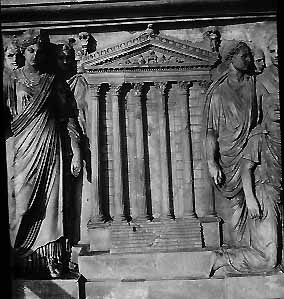
Such a reconstruction has been confirmed as a relief of the first imperial age that reproduces a procession in the front of the temple. This relief is now at Villa Medici in Rome (http://www.villamedici.it/). This temple was formerly attributed to the Ara Pacis.
(photo by http://classics.furman.edu/~rprior/courses/RA/RAU2.html)
This is commonly thought to be the temple of Magna Mater owing to an identification of a coin of the elder Faustina (not possible to see the picture.)
This represents a temple of the Corinthian order, with curved roof, and a flight of steps on which is a statue of Cybele with a turreted crown enthroned between lions.Recent diggings have characterized, to the east of the temple, the foundations and the rests of the podium of another temple identified as the one of the Victory. It was built in 294 BC by Consul Lucius Postumius Megellus and to which Marcus Porcius Cato in the 193 BC added a place dedicated to the Victoria Virgo. As said there was conserved the acus previously.
- Inscriptions and objects found in the area make it extremely probable, if not for sure.
Inscriptions referring to Magna Mater, especially one with a dedication to the M(ater) D(eum) M(agna) I(daea), goddess of Mount Ida, a mount in Phrygia by Pessinunt.
(CIL VI. 496, 1040, 3702= 30967; NS 1896, 186; cf. CIL XII.405),
Also found was a portion of a colossal female figure seated on a throne and a fragment of a base with the paws of lions, the regular attendants of the goddess
.Diggings are supposed to have recovered several votive terracotta of the first age of the temple. Thanks to them many interesting aspects of the cult have been revealed, like the importance of the spring celebration during the equinox.
To say the least, a story says that in some cases hidden somewhere would be located the acus, the famous black stone, itself recovered during the diggings.
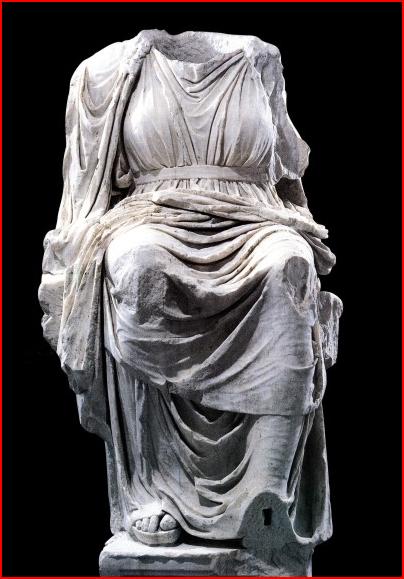
(photo by Antiquarium Palatino)
NR declaration & edict about the MM project
- Nova Roma has shown its duty toward the temple of Magna Mater through two main acts.
- JOINT DECLARATIO ABOUT THE TEMPLE OF MAGNA MATER IN ROMA
March 8 2002
I. Senior Curule Aedile Caeso Fabius Quintilianus (Aedilian site, Thule site), Honorable Caius Cornelius Puteanus (Germania Inferior site), Honorable Claudia Cornelia (Germania Inferior site), Illustrus Franciscus Apulus Caesar (Italia site), Honorable Caius Curius Saturninus (Finnicae site), Honorable Emilia Curia Finnica (Finnicae site and Academia site), Illustrus Antonius Gryllus Graecus (Lusitania site), Illustra Iulia Cocceia and Illustrus Sextus Apollonius Scipio (Gallia site) have formed an alliance to further the correct restoration and care for the Temple of Magna Mater in Rome.
II. Each of the above promise to place a picture of the Temple of Magna Mater in Rome on "their" Nova Roman web-site (Aedilian,
Provincial or Regional) with an inquiry asking all that visit their web-site to contribute to the correct restoration and care of the Temple of Magna Mater in Rome. The web-site shall also have the address of the Propraetor of Italia, so that it is possible to contact him to send funds to him to enable Provincia Italia to execute this joint promise. This web-page shall be designed by Illustrus Franciscus Apulus Caesar and made available by him to all the co-signers of this declaratio.
Signed in March the 8th, in the year of the consulship of Marcus
Octavius Germanicus and Lucius Cornelius Sulla Felix, 2755 AUC. by:
Senior Curule Aedile Caeso Fabius Quintilianus,
Illustrus Franciscus Apulus Caesar,
Honorable Caius Curius Saturninus,
Honorable Emilia Curia Finnica,
Illustrus Antonius Gryllus Graecus,
Illustra Iulia Cocceia,
Sextus Apollonius Scipio.
-
- EDICTVM PROPRAETORICVM V - REFECTIO TEMPLI MAGNAE MATRIS
May 7 2002
Italian version:
Ex Officio Propraetoris Provinciae Italiae
I. Con Questo Edictum la Provincia Italia ribadisce ufficialmente l'impegno assunto nella JOINT DECLARATIO ABOUT THE TEMPLE OF MAGNA MATER IN ROMA promossa dalla Cohors Aedilis di Caeso Fabius Quintilianus, firmata dal Propraetor in carica e visionabile all'indirizzo http://italia.novaroma.org/cohorsaedilis/ludi/megalesia/temple.htm
II. La Provincia Italia istituir� un fondo, con le modalit� ritenute pi� convenienti, per la ricezione della donazioni provenienti dai cittadini di Nova Roma a favore della ricostruzione e della manutenzione delle rovine del Tempio di Magna Mater sul Palatino a Roma.
III. Per favorire la pubblicit� del progetto al pi� ampio pubblico, sar� predisposto un apposito sito Internet all'interno di http://italia.novaroma.org contenente tutte le informazioni storiche sul tempio, i dati per la ricezione delle donazioni e gli aggiornamenti sull'andamento dei lavori.
IV. La Provincia Italia designer� un magistrato provinciale come responsabile del progetto. Egli dovr� ricercare notizie storiche ed archeologiche sul Tempio di Magna Mater, curare i contatti con i donatori e con gli enti pubblici manutentori delle rovine, conservare i fondi raccolti ed individuare un'associazione o ente locale per la manutenzione del Tempio.
Egli sar� anche il supervisore per Nova Roma dell'andamento dei lavori. Altri magistrati provinciali potranno essere coinvolti nel progetto a supporto del responsabile.
V. Questo Edictum ha effetto immediato. Promulgato alle Nonis Maiis MMDCCLVI a.u.c. (May 7, 2002), nell'anno del Consolato di Marcus Octavius Germanicus e Lucius Cornelius Sulla Felix.
VI. Questo Edictum ha l'approvazione della Curia Italica (04/05/2002, http://italia.novaroma.org/curia/r30042002.txt)
Curiae Post Scriptum: Il Propraetor Provinciae Italiae, quando lo riterr� opportuno, emaner� un Edictum contenente le indicazioni precise relative all'Ente che si occuper� dell'opera di restauro e alle modalit� di raccolta delle offerte di denaro a favore del progetto.
Franciscus Apulus Caesar
- Propraetor Provinciae Italiae
English version
:I. With this Edictum, Provincia Italia officially undertake the commitment expressed in the JOINT DECLARATIO ABOUT THE TEMPLE OF MAGNA MATER IN ROMA, promoted by Cohors Aedilis of Caeso Fabius Quintilianus, and signed by our current Propraetor (see at http://italia.novaroma.org/cohorsaedilis/ludi/megalesia/temple.htm)
II. Provincia Italia will create a fund, following the most convenient methods, to receive money from Nova Roma citizens explicitly given for the restoration and management of the ruins of the Temple of Magna Mater on the Palatine hill, Rome.
III. A new Internet site at http://italia.novaroma.org will be created to advertise the project, to let it be known to as much as people are possible. It will contain all the historical information about the temple, data about fundraising and update about the working progress.
IV. Provincia Italia will appoint a provincial magistrate as responsible of the project. He shall research historical and archeological news about the Temple of Magna Mater, paying attention to the money givers and keeping contacts with public organisms managing the ruins, saving money raised and finding an association or local administration for the restoring the Temple. He will be also a supervisor for Nova Roma about the restoration and other kind of works. Other provincial magistrates could be involved in the project in the future to support the supervisor.
V. This Edictum is immediately valid. Given in the Nonis Maiis MMDCCLVI a.u.c. (May 7, 2002), in the year of the Consulship of Marcus Octavius Germanicus and Lucius Cornelius Sulla Felix.
VI. This Edictum has the approval of Curia Italica (04/05/2002, http://italia.novaroma.org/curia/r30042002.txt)
Curiae Post Scriptum: Propraetor Provinciae Italiae, up to his own decision, will emanate an Edictum with the right indications about the administration which is going to restore the monument, about rules for fundraising about this project.
Franciscus Apulus Caesar
Propraetor Provinciae Italiae
Samuel Ball Platner,
A Topographical Dictionary of Ancient Rome.
(London: Humphrey Milford. Oxford University Press. 1929)
Pensabene Patrizio,
Scavi nell'area del tempio della Vittoria e del santuario della Magna Mater sul Palatino
(Rome: Archeologia Laziale IX, 1989)
Lynn E. Roller,
In Search of God the Mother The Cult of Anatolian Cybele (Berkeley-Los Angeles: University of California Press, 1999)
Magna Mater, The Great mother
(
http://inanna.virtualave.net/mother.html)Sophia Eva Kharis� site at http://
www.geocities.com/Athens/Olympus/2179/magna_mater.htmBy Anders Sandberg at
http://hem.bredband.net/arenamontanus/Mage/magna.htmlBy
Alicia Ashby at http://students.roanoke.edu/groups/relg211/ashby/Index.html