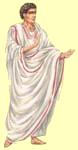

People at the origins of Rome
We all know how Rome has been the leader in the first unification of the peninsula, precursor of the idea itself of Italy, as well as a light for the western civilisation. Tu regere imperio populos, Romane, memento (Aeneid, VI, 851-853). And among these people, first the ones to whom Rome belongs, and that it is at the same time its extension, from the Alps down all along the Italic boot: fecisti Patriam diversis gentibus unam (said Rutilio Namaziano, magistrate from Gaul in 416 A.D.). But whom Rome is supposed to thank for its same origin? We quite know the legend; it talks about its Olympic and Trojans origins. More likely the truth was another, but perhaps not so much far away. Or perhaps the story went in all another direction from what we learned on the books at school. We will discover now different hypothesis, and the result is that the simpler thing seems to be the one which explains Rome like a mix between more people, more or less contemporary, and that they had likely a common origin.
The archaeological evidences
Among the more ancient evidences in Rome, there is an archaic wall of 40 meters at the boundaries of the Forum, found in 1988, by Andrea Carandini. It is hypothesised that it is the one that was built to delimit the boundary of the Pomerium, between 750 and 725 BC. And it is evidence that "someone" surrounded the Palatine hill with a wall that previously did not exist. At a little distance there are the bottoms of four huts, called commonly Romuleans, found on the Palatine by Carlo Boni, and dated around the VIII century BC. The rests of the best preserved allowed to rebuild its appearance: Mts. 4,90 x 3,60 and presented seven holes along the perimeter and one to the centre. The holes corresponded to poles that supported the roof. A small portico preceded the door. The roof was of straw while the walls were done of pipes covered with argyle. To the centre of the hut there was a fireplace. All this seems to ascertain that the conventional date of the birth of Rome should be likely right.
Archaic graves (from the VIII to the VI century) were found both on the Palatine (the Sepulcretum) and on the Quirinale: they are graves with incineration method blend to other more recent for burials. The evidence that the burials are older than the others is clearly seen, for example on the Palatine, where a round grave of the first type is cut by an oblong one of the other species. As known, the manner and the type of preservation of the graves are indicators of the variety of culture of the people. The funerary rites of the incineration or cremation, as also asserted by palaeontologist Luigi Pigorini, let us think for a northern origins of these inhabitants. Particularly the first Romans would have received it as inheritance by the Etruscans and/or by the Italics that lived at the north of the Tiber River.
Also, supporting this origin, that we will call "nordic", while the one according to the tradition will be called hence "eastern", there is the discover of archaic ruins in Sant�Omobono area, in the Foro Boario, happened in 1930. This witness the presence in the zone, in the VI century, which means in 100 years before the conventional date of the birth of the town, of populations with Etruscan life styles (or, at least, from the North-central Italy).
The etruscan Luceres
The origin of the name Luceres seems linked to the religion of the light, a rite of the populations of Northern Latium. In the archaic Rome the feriae luceriae are documented, dedicated to the gods of the woods. The lucus was a sacred wood (for example Lucus Feroniae, a few kilometres north of Rome and accessible today by the A1 highway, close to exit Fiano Romano) likely been derived from the word Vuvcis and previously from the Umbrian term vuku, with the same meaning.
The Etruscans, called Tirrenians by the Greeks and Etruscans or Tuscians by the Romans, called itself with the name of Rasenna. According to Erodots, they arrived in this land called Etruria migrating from Lidia, in modern Turkey. Other ancient writers, as for instance Dionysious of Alicarnassus, supported they were native populations. In a lot of Villanovian places rose Etruscan towns without an apparent separation of time that would seem to exclude the hypothesis of a massive migration. On the other hand an enrolment from Lemno of the VI century, in a likely Etruscan language, does consider reliable also the hypothesis of the Eastern origin. The Etruscan tongue, testified in total by six thousand enrolments found, does not belong to the Indo-European group. Already known during the life of the Greek poet Esiodus in 700 BC, the archaeological evidences show that already at that time, in the above mentioned area of Etruria, corresponding to a huge zone of the present central Italy, began to spread a large civility. The most important population of the Italian peninsula, in the age of the Iron, presenting common cultural features, is the so-called Villanovian civilisation. The name come from Villanova, in the outskirts of Bologna, where some typical installations were found back in 1853. It�s commonly accepted that the Etruscans derived from them or were integrated. The main reperts of the Villanovians, it is the spread of cemeteries of cremated bodies, found almost everywhere on all the territory of the Italic peninsula. Other common feature pertains the method of making the ceramics and later that of the metals, particularly for the production of thin sheets for buckets, helmets and use of fibulae. The Etruscans put into practice the cremation of the dead according to the Villanovian usage, even if in a second time they preferred the burials with enrichment of the funereal equipment. How first said, in the Foro Boario, Rome, were found reperts of this type of ceramics.
The territory of the Etruscans arrived until the very city centre of actual Rome, on the prominence of the Gianicolo hill where it is possible to dominate the valley of the Tiber. Besides the Etruscan kings testify a presence in the life of the Urbs since its very first years. Not forgetting that the same name of Rome could be been derived actually from an Etruscan word, that rumon which means river. The link existing between Romans and Etruscans is also testified from all those objects and customs taken by the firsts: the purple toga, the sella curule, the fasces and axes, lictores, omens and the amphitheatres. A last consideration: it was comfortable to the Roman not to feel themselves as heirs in no way with the Etruscans, to show that all what is not assimilable, did not came from outside but was native. The Romans considered themselves a people immigrated that have been donated of those sacred banks of the Tirrenian Sea and of the Tiber.
The Latin Rumni
Along the Tirrenian costs, some findings allowed to individualise the existence of a previous civility compared with the other Italics, and well known conventionally with the name of Protolatins. Such findings should testify the arrival, around the beginnings of the second millennium BC of Indo-European populations.
Other evidences make believe this Protolatin system, essentially based on linguistic and archaeological type. On the other hand, how it happens also in the Virgil legend, the ancient told about this "eastern" origin for the Latin peoples. In the Greek-Sicilian literary tradition (Tucidid and Polibius) it is remembered their presence in the peninsula, calling them with the name Ausons, Enotrians, Chons, Itali or also Morgets. The connection is more marked thanks to the pots of Centuripe. Centuripe was a town based on Sicily, inhabited by a population of Oscan-Umbrian origin that arrived to Sicily likely in a previous period than the X century. The connection between the Protolatins and the Sicilians is confirmed from the tongue used by this latter. A famous enrolment, today retained to be the more important in the comprehension of the origins of the Sicilians, is contained on a well-known Centuripe askoi (a pot) of VI century BC, today preserved in the Museum of Karslruhe, Germany. This enrolment, although of not easy interpretation, contains unequivocally elements of affinity with Latin.
In 1962 Mario Mazurco found fortuitously in Centuripe, an ancient enrolment on stone, a peace treat between the Sicilian town of Centuripe and Lanuvium in Latium. In this, it is written about the common origin of the two cities, thing that would give further strength about the tight connection between the two peoples. The tombstone tells just of a diplomatic mission of three ambassadors from Centuripe (Filarkos, Lampon, Zoarkos) that about in the II century BC would be in Lanuvium and therefore in Rome to renew the relations between their companions and the Lanuvinians.
As said, the tradition link the Latins to the Aegean area, noticing how, for example, the religion adopted by them was the one from the Olympic Pantheon, also true for other Italic populations and for the Etruscans. The myth of Aeneas, who arrives on the banks of Latium, does not belong to the only Aeneid saga; there were found several terracotta, dated V century, that represent the son of Venus with Anchises on the shoulders. One of this is the Tabula Iliaca, an important stone found in a villa in Rome. Trying to figure out the temporal space existed since those events, Erotostenes fixed the date of the fall of Troy in 1182 BC. The problem is to rebuild the facts happened since then until the traditional date of the foundation (753 BC). This last date assigned by Varro that, starting since the first year of the Republic fasti (the list of the Consuls since 505 BC, which means 248 years ab urbe condita), and considering an average of 35 years of kingdom for any of the seven kings. The rest is quite dark if not for the work of Cato who calculated the list of thirty kings of Lavinium and of Alba Longa. What lacks it is the evidence of the continuance of the installations until the successive phase in the age of Iron, in the first centuries of the first millennium, things that could link the Protolatins to the Latins.
To refute the theory of the origin from Alba there are several considerations. In primis there�s not an archaeological evidence that Alba is precedent to Rome. In a second place, if Alba had been really the mother homeland of the Romans, how it is justified that they had then destroyed it? To hide this regrettable fact, the Roman historians, like Titus Livy, would invent the tale of the challenge between Oriazi and Curiazi. There�s more. Examining these two names could be deducted a flaw on the usage of the word axare, meaning "to choose". Perhaps a choice of three men among the Cures-axi and three from the Hor-axi? This would mean a war between the Sabins of Cures and the Etruscans? (Hor, as for the name Horta-Orte, province of Viterbo), means town in Etruscan language.
The Sabins Tities
An Indo-European population of Villanovian origin, dwelling in the central Italy, and having common features with the other Italics (or less generically, to the Oscan-Umbrians). They spoke the same tongue as the other Oscans but, according to the tradition, they were the most ancient group, from that would have been derived the Sannites. Besides the territory known as Sabina, they conquered some towns by the Tirrenian Sea as Terracina, Pomezia, Satricum and Velletri. A tribe of the same group, the Sedicines, occupied Teanum (after called Sedicinum) not far from Naples. The connection with the Romans is both traditional and historical. The tradition tells about the famous Rape of the Sabines, concluded with the merge of two populations and the successive common kingdom of Romolus and Titus Tatius. Also, the three following kings in Rome were alternatively Romans and Sabines. The diversion of their name seems to come from Sabinus, a mythical king of them, son of the God Sancus (or also from the Spartan Sabus). This last name seems to be at the origin of the name Sabelli (other tribe among the Sabines).
Another interesting topic is about the name of Quirites that identified later the same Romans themselves. Quirinus was an Italic god, associated to the same Romolus after his death. On the Quirinal hill once rose a temple dedicated to Quirinus, but it was also where (see above) the Sabines dwelled, the men of Quirinus. Besides Quirus was likely a type of spear used by those people. Another origin could be this: Quirites, like the Curiae, could be derived from Co-vir or co-vir-ia, important meeting of men, in archaic Latin. The first four curiae or co-vir in Rome were the Foriensis, the Velitae, the Raptae and the Veliensis.
Another hypothesis is the one testified by Zenodotes, Trezenes and Dyonisus of Alicarnasssus (in his Roman Antiquity, II,49,1). Professor Bocci elaborates his theory: the name of one of the four curiae, the Veliensis, could mean "those who come from Valensia". This, a town in Sabina (or, better, a Nahark town) and, even more surprisingly, it could be the same name of Rome, the mythical her other name kept secret to avoid blasphemy. Tocci supports this hypothesis also in its mythological dictionary. But let�s go to discover the theory of the Naharks.
The Naharks, founders of Rome?
Who were the Naharks? The Tabulae from Gubbio, Italy, main deposition of the Umbrian language in the VIII and VII century, call them as Naharki Numen, the Nahark nation. In the proto-historic age (which means since IX to VIII century BC) a massive migration of Celtic population moved from Central Europe toward the Italian peninsula. From the other side of Alps arrived the Senons (that established in the Ager Gallicus, where the Roman town Sena Gallica, modern Senigallia, was founded). Other Gallic populations were the Cenomans, Salluvians, Boi and Lingons. Bocci, a university professor, thinks that the first Celts, arrived here from the other part of Adriatic Sea and not, how commonly thought, through the "huge valley", the Valley of the Po River. To be exact they would have followed the Road of the Iron. To support this theory he uses the toponomyc evidences of the names of the places, an excellent historical way of seeing the interactions between humans and territory. The road of the Iron can be visualised with the names of towns, rivers and mountains, on the strip of land that from the high Adriatic arrives to the Faliscan territory.
The following names are of some importance:
Iesi (Aesis), the Esino River, Cerreto d�Esi, Esanatoglia, Perugia (Perusia from per-eisen-al), for in ancient Umbrian it means "on the other side"), the mount Subasio (sub-aesis), Assisi (Asisium), San Anatoglia di Narco, Valenzia-Cesi (Val-eisen-al, Val Eisen, that is to say "the valley of the iron", maybe the modern valley of Terni, homeland of Italian steel). Besides, with this last term, it introduces the connection between the Road of the Iron and the name Valenzia. In Terni there is a district called Valenzia as well, and about twenty kilometres to the north there�s Col Valenza (where a famous Catholic sanctuary is) and the same Etruscan name of Orvieto (although more distant) seems to have the same root: Velzna or Velxa.
- Bound to copper (cupra in Greek): Cupra Marittima and Cupra Montana, in the Italian region of Marche.
Fabriano (Faber Ianus), Torgiano (Tor-Ianus), Marsciano (Mar-Iuanus), Paciano (Pagus Iani), all of these three latter in the Perugia province.
The story goes: iron and copper arrived on the Adriatic Sea and were sent off to South (along what in part became after the route of the Flaminian way) until a zone across the current provinces of Viterbo, Terni and Rieti. From where did this material arrive? Well, on the other side of the sea there is the city of Jesenice in Slovenja (another eisen word), and Noreja, always in Slovenja, commonly translated in Italian as Norcia, like the homonymous and famous St.Benedict�s town in the zone of Terni. The Naharks established in the above mentioned zone (main site of the proto-historical culture, called "of Terni") and left later its inheritance to the Faliscans, to the Umbrians and the Sabines.
We already said about the Sabines.
The Umbrians, according to Pliny, were the ombrios, those who were survived to the rains. A lot of localities, in their historical territory (the left bank of the Tiber), carry in their name something that reminds us the Naharks. I.e. Terni (Interamna Nahartium), the Nera river (ancient Nahar), Narnia (the name of modern Narni adopted by the Romans after the conquest of the town in 299 BC. Before it was Nequinum, a name somehow malign for them), the above mentioned S.Anatoglia di Narco. And Val Nerina, the Valley of the Nera River, which is still called, in dialect, "Vallinarca".
According to Cibrario the Umbrians have an eastern origin but admits the supposition they were a part of the nation of Celts. To what we see the diatribe is around the direction taken in their migration. Either from the northeast together with the rest of populations of Gauls, accross the Po valley (which is also known as Insumbria) or crossing the Adriatic Sea, how said. Or also, along the its western cost, being lately chased by Tirrenians (the Etruscans) together with the Pelasges (in the Polesine area, the mouth of Po) and having reached the Southern areas of central Italy.
Concerning the Faliscans, situated a little more to the North of Rome, along the banks of the Tiber, they seem to have had also the same origin as the Umbrians. Their territory was extended, at the beginning, from the southern feet of the Cimini Mountains, till reaching the Roman country, close to the town of Capena. The Tiber River delimited it to the southwest, and the crater of Bracciano Lake to the east. Their main installations in the Faliscan ager be identified as Narce (in the surroundings of Calcata) and Falerii Veteres and Nova (both of them in the surroundings of modern Civita Castellana, Viterbo). In the Faliscan territory there is also the little village of Gallese (the Gaul?) and Rocca San Zenone which lead us to Celtic memories (a Senon saint? A Christian adaptation of the name?). The Faliscans had also a different alphabet from their neighbours Sabines (using the Oscan), Etruscans and Latin. According to the tradition this Indo-European people would come with an Ellenic colonisation, having their origin from Halisc, a son of Agamemnon. Then they developed in a territory continually dwelt since the age of Bronze but it was during the period of Iron, in which these peoples begin a historical and cultural division from the others, to reach an autonomous life in IV sec. BC.
Siti consultati:
"Romolo e Romoletta" di Giulia Grassi
http://web.tiscali.it/scudit/mdromolo.htm"Il Foro Romano, Storia e monumenti" di Christian Hulsen
http://www.ku.edu/history/index/europe/ancient_rome/I/Gazetteer/Places/Europe/Italy/Lazio/Roma/Rome/Forum_Romanum"Le origini del popolo etrusco"
http://www.isa.it/tuscia/storia/etrus1.htm"La civiltà villanoviana"
http://www.comune.santamarinella.rm.it/museo/html/italiano/a12.html"I vasi di Centuripe"
http://www.geocities.com/BourbonStreet/Delta/1843/centurip.htm
Bibliografia
Storia dell�unità d�Italia (da Roma al Risorgimento)
Armando Lodolini, Biblioteca di storia patria, Roma 1963
Roma, Storia e monumenti
Tina Squadrilli, Rusconi, Roma 1984
Guida alla Storia romana,
Guido Clemente, Oscar Mondadori, 1977
Storia d�Italia vol.I,
Indro Montanelli, Fabbri Editori, 1994
Roma Antica, tra mito e scoperta
Claude Moatti, Universale Electa/Gallinard, 1992
Breve storia di Roma,
Armando Rovaglioli, Tascabili Economici Newton, 1993
I paleoumbri Nahrki,
Piero Bocci, Ed. Thyrus, 1997
Storia di Torino
Luigi Cibrario, 1861
Aeneide, Publio Virgilio Marone
De Iano, Teodosio Macrobio