1)One paragraph summary of the key idea summarizing the major idea of the section.
The fifth part of our Junior Faith course dealt with the challenges to faith that we encounter in our lives. These challenges can affect both our small "f" faith in someway and our capital "F" Faith as well. The book gave us three challenges to our Faith: scientism, atheism, and moral relativism. Our book gave us two of the most famous atheist, Friedrich Nietzsche and Thomas Hobbes. Nietzsche believed that there isnt a single meaning to life, that humans could be a great race but only if we can reject God, and that reason was not capable of discovering truth. Hobbes belived that people can't have meaning because they are controlled by their own instincts, Humans are worthless and only focus on themselves, and lastly that the universe could be understood. But the book did give us a Theist, St. Ignatius. He believed that God created everyone for a purpose, to be something great but he also believed that it is up to us to get there. Ignatius believed that humans have great reasoning power but not enough to discover the truth of God. In class, we studied the challenge to faith from society, advertising, and materialism, and how they affect our values in life. Our class together looked at challenges in our world and came up with laziness, peer pressure, and the media. Some other challenges we studied included: indifference, reason, lack of virtue, fear of the cost, and dehumanization.
2)List and explain three of the most important ideas you want to remember from this week.
A) The first thing that I want to remember is the part Science has played in Theology for thousands of years. First, people accepted Theology without reflecting on it and understanding it(unreflective unity). In the Renaissance, people started to question the Church's teachings and often used science to try to prove the church wrong(reflective disunity). Eventually, the Catholic Church and Science came to coexist peacefully(reflective unity). Our Readings Book gave us an example of how this is much like the life of a child. The child has an unreflective unity with his parents till he is about 14. In these years he simply does what his parents tell him to do and believes what they tell him to believe. Once the child is 14, he begins to question the parents and the things that they might have taught him to believe(reflective disunity). Then, when the child is around 22, he begins to understand why his parents taught him what they did and why they told him to believe what they did(reflective unity).
B) The second thing I want to remember is the message from the movie "Merchants of Cool." The message from that movie was about the influence of the media on teens and the influence of teens on the media. This idea was referred to in the movie as "the giant feedback loop." The media watches what teens are doing in their lives and uses that information to generate something that would attract them. But at the same time, the teens are looking to the media for whats "cool" and "hip." I think it is important to remember this because we often times fall into this loop but instead we need to realize that it is us that dictates whats cool, not the media.
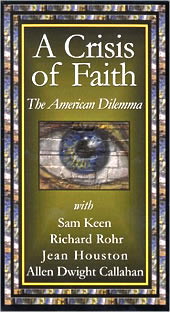
C) The third thing I want to remember the most is the ideas that the movie "Crisis of Faith" gave us. Some of the more important ideas that I want to remember are the idea of homoeconomicus and Religion giving us desire. The idea of homoeconomicus is the idea that humans went from homosapiens, beings who desire knowledge and wisdom, to homoeconomicus, beings who desire wealth and power. This is important because I think it is true of almost everyone in the U.S. Americans live their lives according to their jobs and their wealth, not their religion or their family. I need to remember this so that I dont live my life like that. The idea of religion giving us desire is the idea that religion shouldnt satisfy us, but instead make us dissatisfied and want to find out more. I think this is important because I alot of the times see religion as jsut something there for me to believe in, not something for me to discover the truth of God.
3.) Images that remind you of key ideas.
4.) One good question you should keep with you to ponder.
Am I a homosapien or a homoeconomicus? Do I seek to gain knowledge and wisdom or do I seek money and power?
5.) What should you try to do to make you a better person, a more faithful person, from this study?
One thing I should try to do that I've learned from this study is to base my education not on getting good grades so I can go to a good college so I can get a good job. But on learning and gaining knowledge and wisdom.
