CONFUCIANISM
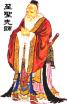
Image Source
Confucius ( in Chinese Kong Fuzi, meaning "Master Kong") was born in 551 BC to a mother and father in exile in the city of Qufu. When his father died when he was only three, his mother was left to raise him in poverty. He was involved in the politics of the Chinese culture as a young child and by the time he was a young man, he had the position of Judicial Minister in the State of Lu. He resigned after several years because of his disapproval of the governemtns politics. It wasnt until he was about fifty that he went on his twelve year journey around China trying to explain his political beliefs and the reasons the Chinese governments should adopt them. With no success, he returned home and taught his beliefs to a group of followers and wrote them all out in a set of books called The Five Classics.
- Wikipedia
At the time of his teaching, China was experiencing a widespread introduction to individualism. Chinese society was held together by the customs and traditions built up over time in China, and when people ignored these while becoming more individualistic, society began to fall apart. Confucius’ teachings combined the new schools of thought in China, with the morals, values, and ideals of Chinese tradition and custom. These ideas are called the "Deliberate Tradition" social system and are outlined by the following:
- JEN: "The virtue of virtues". It means the goodness of the human spirit. In English, a person who has JEN would be described as diligent, unselfish, courteous and empathatic. It also describes the perfect human relationship, a relationship where man is equal and treats each other in the same way.
- Chun tzu: A person who is comfortable with oneself and their surroundings. This person would be described as a mature and confident.
- Li: This is the idea that in all situations a person is to act in a certain way and the person should always act in this way. A person should know the right way to act at all times. But if one finds oneself in a strange situation and does not know the right way to act, then they should at least act with dignity.
- Te: "The power by which men are ruled". Te is the power that men rule by and are ruled by. Te is the virtues and discipline of a ruler with which he or she rules.
- Wen: "The arts of peace". The aspect of culture that creates the arts, like philosophy, dance, music and poetry.
- The Content of Deliberate Tradition
Central ideas to Confucius' teachings are The Five Great Relationships. They are:
- Kindness in the father and obedient devotion in the son
- Gentility in the eldest brother and humility and respect in the younger
- Righteous behavior in the husband and obedience in the wife
- Humane consideration in elders and deference in juniors
- Benevolence in rulers and loyalty of ministers and subjects
According to Confucius's teachings, there will be harmony among all if these attitudes are practiced. He believed that the family is the basis for all humanity. Confucius didnt not believe in an individual self or soul, only a person's relationships and roles in a community defined that person. According to him, a person could acheive harmony by acting appropriately in those roles and relationships.
- Pat Zukeran, Leadership U.
In the "Great Learning" Confucius described the process by which self-development is acheived and by which it flows into the common life to serve the government and mankind. The order of development which Confucius set forth is as follows:
- Investigation of phenomena
- Learning
- Sincerity
- Rectitude of purpose
- Self-development
- Family-discipline
- Local self-government
- Universal self-government.
- Religion-Cults.com
Confucius taught that a virtuous man has three awes:
- Awe for Heaven's decree
- Awe for great men
- Awe for saints' words... When worshipping God, one must feel as if He were visibly present
Confucius stressed greatly the cultivation of character, purity of heart and conduct. He recommended that the people develop a good character first, a priceless jewel and the best of all virtues.
- Religion-Cults.com
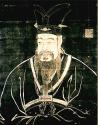
Image Source
Other Key Terms:
Junzi is a another term important to the teachings of Confucius. It is defined as the ideal of a gentleman, proper man, and perfect man that for which Confucianism advises all people to strive for. Gentlemen, princes, and nobles were those refered to as a "perfect man" and were expected to act as moral role models for the rest of society. They were to:
- cultivate themselves morally;
- participate in the correct performance of ritual;
- show filial piety and loyalty where these are due;
- and cultivate humaneness.
The opposite of Junzi was Xiaoren , literally meaning "small person" or "petty person." These people were petty in mind and heart, self conceited, greedy, superficial, and materialistic.
- Wikipedia
Go Back