| Thesis Presentation Panels | ||||||||
|
|
|
|
||||||
|
Thesis Presentation Model |
||||||||
 |
 |
 |
 |
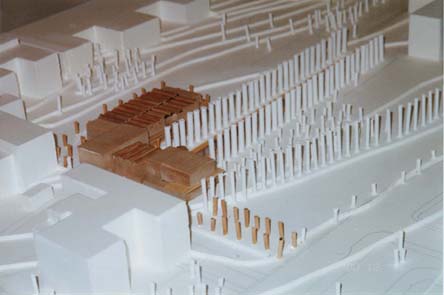 |
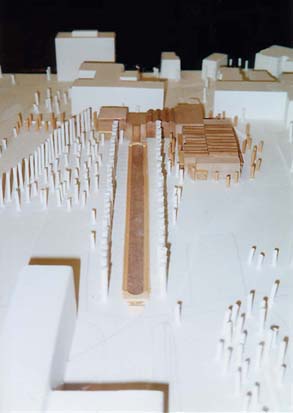 |
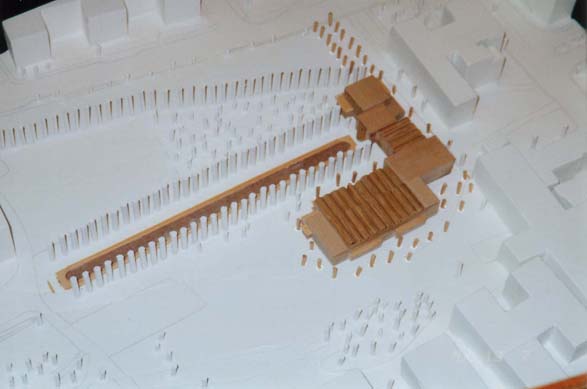 |
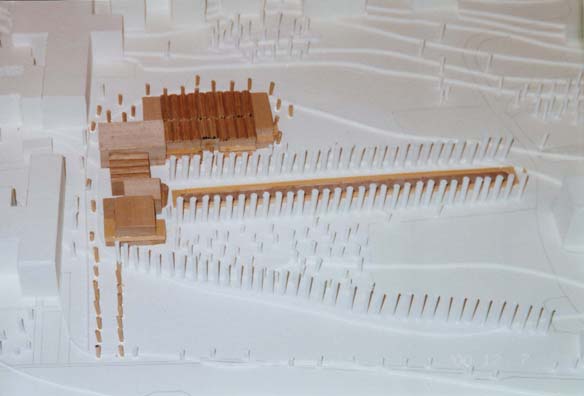 |
 |
Introduction
Palliative care, the care for individuals that are diagnosed with terminal illnesses, in Montreal is exclusively offered in the palliative care units of our hospitals. Hospitals which are a place for healing, are where people go on short or on longer terms in order to be diagnosed and treated for their ailments. However, people with terminal illnesses only have a limited number of days to live. How is it that someone who is living the end of their life must be subjected to living it in the institutional environment of a hospital. They are no longer searching for a treatment or a remedy for their ailment, they are looking for a way to make the end of their life as painless as possible. The pain is not merely physical but also emotional. This pain extends beyond that of the patient, it is also very much present in their loved ones, who have to face this inevitable loss. There comes a point in the attempt to treat a patient when the reality of death becomes imminent. In the case of terminally ill patients, healing is not an issue, rather comfort of the patient and their loved ones should take precedent. The basic principal of palliative care is about making the patient as comfortable as possible, by reducing or controlling the level of pain until the very end of their life. However much remains to be improved in the physical surroundings of these individuals. On the other hand, there is this emerging idea of hospice. Hospice is not a place, it is a concept of care, where the aim is to improve the quality of life for people with a life threatening or terminal illness from the time of diagnosis. The focus is on caring, not curing, and on life, not death. How can the hospice, as architecture cater to the needs of those living in this final stage of life and that of those surrounding them. This thesis has attempted to answer this question through the design of a hospice dedicated to housing terminally ill patients and helping them and their loved ones cope with death and mortality.
The Program
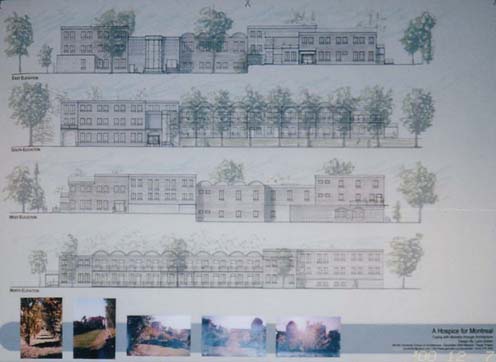
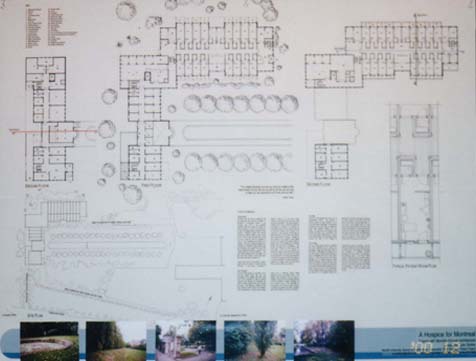
The aim of this hospice is to provide a more home-like setting where the care and counseling of the patients and their loved ones can be provided, as well as offering materials and services for educating the public on how to deal with the topic of death and dying. The building is divided into five main sections, namely: offices for the health-care professionals; a chapel; group therapy rooms and a reference library; family gathering rooms; and patient rooms. The program was developed with the intent of creating a place where the following services could be provided: in-patient residence for the constant care of the terminally ill; occupational and physical health services; counseling for patients and family members; and a public reference materials and library.
The Site
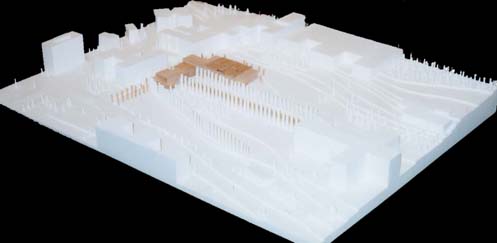
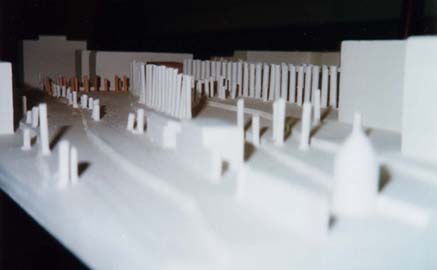
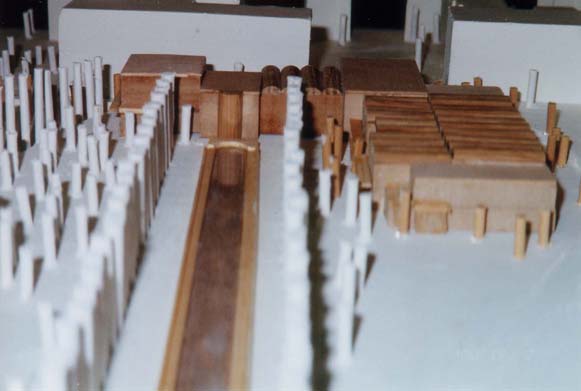
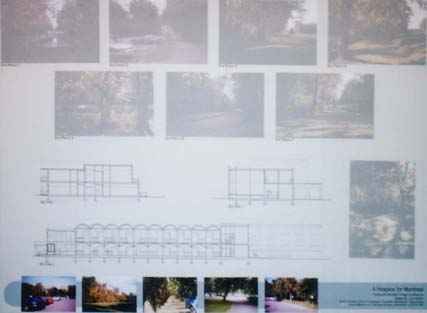
The site for the hospice was chosen for its contemplative nature. The property is currently owned by the Sulpicians at the Grand Séminaire de Montréal. The seminary is located on the North side of Sherbrooke Street West between Atwater and Guy Street. The perimeter of the property lining Atwater has been sold to developers who have built luxurious condominiums. The rest of the property West of the seminary building (located just West of the Collège de Montréal) is currently being used for parking. The site, located on the lower part of the Mount Royal slopes upwards going North. At the center of the property there is a long water basin (approximately 116m) that runs almost perpendicular to Sherbrooke Street. However, the basin has been neglected over time and the retention walls are deteriorating. On either side of the basin a row of maple trees runs parallel it. There is also a row of poplar trees on the lower par of the site.
The Project
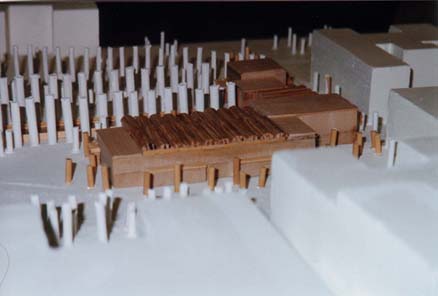
The most critical issues here for all patients and family members was for privacy and designing a project that would offer views to the outside. Segmenting the building by its use was a way of creating small pavilions in order to breakdown the size of the overall building. In this same mind set, the design emphasis was on vertical elements rather than the horizontal. The only horizontal view is that of the basin, the symbol for this thesis, and to which the best view is offered from the chapel that sits at one of the extremities. The long simple shape of the existing basin was kept due to its simplistic beauty and contemplative nature in its setting. The vault shape was preferred for the ceiling and roof in certain parts of the building to emphasize the breakdown of individual in-patient quarters and for the creation of the spaces in the reference library. The domed ceiling creates a comforting space, as well as sets a method of construction; the walls separating the rooms are structural on top of which the vaults sit. This type of structure also offered the possibility of having the ends very opened, in order to offer the patients views outside.

HOME