
back
|
|
|
|
|
|
|
|
|
|
|
|
|
|
|
|
|
|
|
|
|
|
|
|
|
|
|
|
|
|
| Head of the Nation | |||||||||||||||||||||||||||||
|
|||||||||||||||||||||||||||||
| The Grand Duke's constitutional duties account for ony a part of his public role. Aside from his functions as head of state, he fulfils an equally important role as the representative head of the nation. | |||||||||||||||||||||||||||||
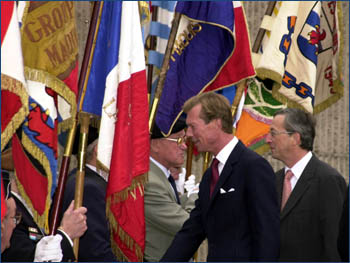
| Photo: The Grand Duke meets war veterans during the National Day of Commemoration, October 2001 | |||||||||||||||||||||||||||||
| This aspect of the Grand Duke's work is manifested in the numerous public engagements which he fulfils each year. These engagements are not a formal duty of the head of state - nothing in the Constitution obliges him to undertake them - but they are nevertheless an integral part of his work. The Grand Duke's regular visits to events of all kinds enable him to maintain an active knowledge and understanding of different sectors in Luxembourg society. Often, they will have the purpose of giving recognition to a wide range of initiatives, be they concerned with trade, culture, educaiton, social welfare or the arts. | |||||||||||||||||||||||||||||
|
|||||||||||||||||||||||||||||
| The representative functions of the monarch's role are not a modern phenomenon. During the dark years of the Second World War, and the difficult period of reconstruction following, Grand Duchess Charlotte provided a focus for the nation's emotions, as demonstrated by the rapturous reception given to her on her return from exile. | |||||||||||||||||||||||||||||
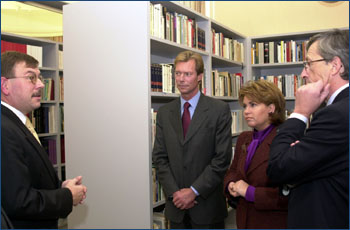
| Photo: The Grand Duke and Grand Duchess visit the library of the National Resistance Research Centre, October 2001 | |||||||||||||||||||||||||||||
| Today, the Grand Duke's representative functions are most apparent on major national occasions, such as the National Day and the annual Day of Commemoration. However, these functions are continued in countless other, less high-profile, visits, both throughout the Grand Duchy and abroad. | |||||||||||||||||||||||||||||
| As well as attending public engagements, the Grand Duke also fulfils his role through meetings with representatives of many different organisations. In the Grand-Ducal Palace, alongside formal meetings with ministers and ambassadors, the Grand Duke also meets with figures from, for example, sports teams, charities, community organisations and trade unions. Such meetings provide him with a comprehensive awareness of the issues facing modern Luxembourg, and this awareness can, in turn, complement his political functions as head of state. | |
||||||||||||||||||||||||||||
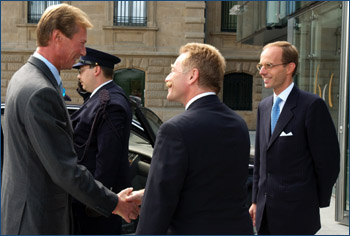
| Photo: The Grand Duke visits the Central Bank of Luxembourg, September 2001 | |||||||||||||||||||||||||||||
| In exercising his representative role, the Grand Duke is supported by the Grand Duchess and other members of his family. Whether accompanying the Grand Duke to official events, or undertaking engagements of their own, they too play an activerole. All members of the Grand-Ducal Family have their own particular interests in the public life of Luxembourg, and their presence at events can draw attention towards the valuable work of the many charities and organisations that exist within Luxembourg. | |||||||||||||||||||||||||||||
|
|||||||||||||||||||||||||||||
| Visits by family members abroad can serve to highlight the international work of the Grand Duchy, for example in the area of economic development, or can help to promote Luxembourg's economic interests, through the encouragement of international investment. back |
|||||||||||||||||||||||||||||
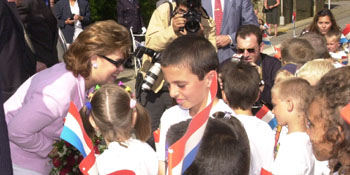
| Photo: The Grand Duchess meets school children in Burmerange, June 2000 | |||||||||||||||||||||||||||||