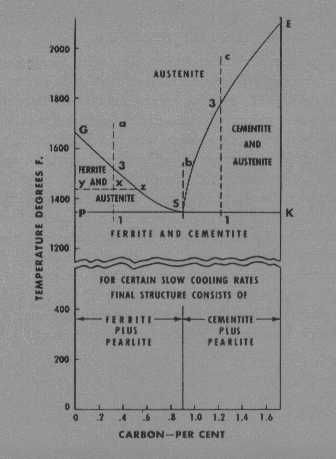
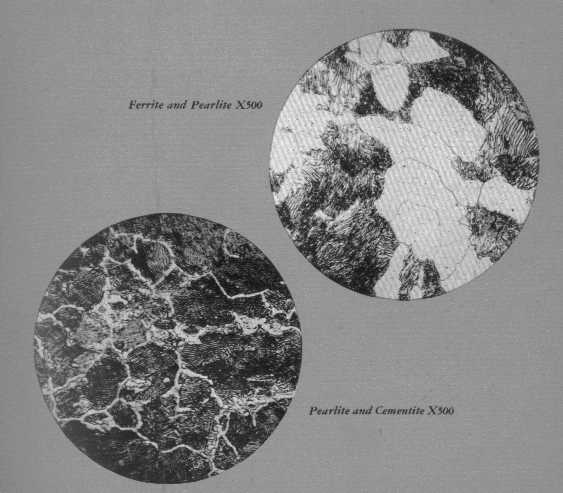
Steel is made of Iron and Carbon. About 99% Iron, 1% carbon and other impurities.The carbon is dissolved by the iron, at an elevated temperature. Like a solution of sugar dissolved by hot water. Steel is a solid solution. Steel when cooled, forms crystal structures. (like a popsicle) Depending upon the amount of carbon in the steel, and the temperature, different crystal structures are formed.The chart below shows the relationship between the proportions of iron and carbon in the steel at various temperatures and the different crystal structures formed. The different structures have different names. The steel is always iron and carbon, just the structures of the crystals formed is different. The crystal structures formed are different depending on the amount of carbon in the steel and the how it was cooled. To change the crystal structure, the steel must be heated above a certain temperature and cooled. (heat treatment). Different crystal structures give the steel different properties. The more carbon in the steel, the harder it is.The less carbon in the steel, the softer it is. Carbon percentage also determines its hardenability. Steel with .85% carbon has the most hardenability. This means it will give the greatest CHANGE in hardness when heat treated (see the dip in the chart.) Pictures through a microscope of 2 of the crystal structures are shown at the bottom of the page, after being polished and etched with an acid.(there are many more!) Still just iron and carbon, but as you can see, their crystal structures are quite different. These 2 types of steel would have different properties. The ferrite and pearlite steel is softer and more ductile than the cementite and pearlite steel which is harder and more brittle. The carbon percentage and type of heat treatment is chosen to create the desired crystal structure and thus, the desired properties of the steel.