HOMELY HOMER'S
RECIPES
"Poor Little Hair Faced Boy"
I want to get something straight, right here and now;
"Yes, I do share my family with a few other furry critters.
There's "Bogie Man" and "Ethel Morman" who are pretty cool (for cats),
so I don't mind sharing the space with them from time to time.
But Lucy the Lunitic Ferret...
she's a terrible cook and I refuse to let her in MY kitchen!
So don't bother asking why there arn't any recipes from her."

LINK TO A RECIPE
Beefy Jerkey Treats / Better Breath Pet Biscuits / Cheesey Pet Biscuits / First Aide for Your Pet / Fishyballs-Kitty Treats / Holy Mackerel-Kitty Treats / Kitty Cookies / Pet Puffs / Picture Frame for your Dog / Super Cheesey Treats / Sweet Peanut Butter Treats /
PICTURE FRAME FOR YOUR DOG
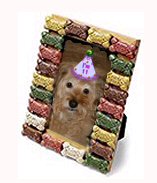
Flat wooden frame
Dog-bone treats
Water-based high-gloss polyurethane
Small paint brush
Hot glue
* Remove the glass and the cardboard backing from a flat wooden frame and set them aside. Lay the wood, face side up, on a flat working surface and arrange crunchy dog-bone treats on top of it. Place them horizontally, end to end to fashion a border all the way around, or diagonally to accent the corners.
* Once the pattern is determined, remove the dog bones, lay them face down, and apply a coat of water-based high-gloss polyurethane to the backs. Once dry, hot-glue the bones to the frame so that the polyurethaned sides are against the frame (adults only).
* Apply polyurethane to the tops and sides of the glued-on dog bones, let dry, and apply another coat of polyurethane.
* When the final coat is completely dry, insert the puppy's photo and reassemble the frame.
Return to List
HOMEMADE HOUND-DOG and KITTY CAT TREATS
SWEET PEANUT BUTTER TREATS
4 Tbs. chunky style peanut butter
1/2 cup Reeses Peanut Butter Bits�
(these can be found with the chocolate chips in the baking isle)
1/2 cup cornmeal
6 Tbs. oil
2 cups whole wheat flour
2/3 cup water or broth
*Preheat oven to 350� F.
* Mix all ingredients together well.
"This should be the consistancy of a moist pie dough. You'll want it to stick together when squeezed. If it doesn't, add a little more peanut butter."
* Roll out to 1/4 - 1/2 inch thick.
"I prefer mine to be on the THICK side." >:O~~
* Cut into desired shapes with cooky cutter.
But hey... give us dogs a little credit. Avoid those cute little doggie bone shapes! We KNOW the difference!
* Bake 35-40 minutes, for thin ones and about 45 minutes for the thicker ones.
* Let cool and store in tightly sealed container.
Return to List
SUPER CHEESEY TREATS
3 Tbs. Chedder cheese powder
(for making soups and sauces)
1/2 cup cornmeal
6 Tbs. oil
2 cups whole wheat flour
2/3 cup canned beef broth
Preheat oven to 350� F.
* Mix all ingredients together well.
This should be the consistancy of a moist pie dough. You'll want it to stick together when squeezed. If it doesn't, add a little more oil.
* Roll out to 1/4 - 1/2 inch thick.
I prefer mine to be on the THICK side. >:O)~~
* Cut into desired shapes with cooky cutter.
But hey... give us dogs a little credit. Avoid those cute little doggie bone shapes! We KNOW the difference!
* Bake 35-40 minutes, for thin ones and about 45 minutes for the thicker ones.
* Let cool and store in tightly sealed container.
Return to List
BEEFY JERKEY TREATS
A package of Doggie Jerkey, chop up in food processer
1/2 cup cornmeal
6 Tbs. oil
2 cups whole wheat flour
2/3 cup canned beef broth
Preheat oven to 350� F.
* Mix all ingredients together well.
This should be the consistancy of a moist pie dough. You'll want it to stick together when squeezed. If it doesn't, add a little more oil.
* Roll out to 1/4 - 1/2 inch thick.
I prefer mine to be on the THICK side. >:O)~~
* Cut into desired shapes with cooky cutter.
But hey... give us dogs a little credit. Avoid those cute little doggie bone shapes! We KNOW the difference!
* Bake 35-40 minutes, for thin ones and about 45 minutes for the thicker ones.
* Let cool and store in tightly sealed container.
Return to List
FISHYBALLS - KITTY TREATS
8 oz. can tuna in oil, drained
2 oz. cooked herring, skin removed
3 baby carrots, boiled until tender, mashed
1 egg - beaten
3 Tbls. grated cheese
2 Tbls. whole grain bread crumbs OR rolled oats
2 Tbls. tomato paste
2 tesp. brewer's yeast
1/4 tesp. catnip
* Combine all ingredients; mix well.
* Roll dough into 1" balls and place balls 1" apart on a greased cookie sheet.
* Bake in a 350 degree oven for 15-20 minutes, until golden brown and firm.
* Allow to cool on wire racks.
Notes:
1. Store in refrigerator up to 3 weeks or freeze up to 1 year.
2.Brewer's yeast is an excellent source of essential fatty acids and B-Complex vitamins for a glossy coat and stable nervous system.
3.It's also known to prevent flea infestation.
Return to List
HOLY MACKEREL - KITTY TREATS
1/2 cup canned mackerel, drained and crumbled
1 cup whole grain bread crumbs
1 Tbl. vegetable oil or bacon grease
1 egg, beaten
1/2 tesp. brewer's yeast
* Combine all ingredients; mix well.
* Drop dough by 1/4 teaspoonfuls 1" apart onto a greased cookie sheet.
* Bake in a 350 degree oven 8 minutes.
* Cool biscuits and store, covered, in the refrigerator.
Notes:
1. Store in refrigerator up to 3 weeks or freeze up to 1 year.
2. Brewer's yeast is an excellent source of essential fatty acids and B-Complex vitamins for a glossy coat and stable nervous system.
3. It's also known to prevent flea infestation.
Return to List
KITTY COOKIES
1 cup whole wheat flour
6 oz. can tuna in oil, undrained
1 Tbls. vegetable oil or bacon grease
1 egg
* Combine all ingredients; mix well; add small amounts of water if mixture is too thick.
* Turn dough onto a lightly floured surface and roll out to 1/4" thick.
* Cut shapes out of dough with a cookie cutter and place 1" apart on an ungreased cookie sheet.
* Bake in a 350 degree F. oven for 20 minutes, or until firm.
* Allow to cool on wire racks.
Notes:
Store in refrigerator up to 3 weeks or freeze up to 1 year.
Return to List
PET PUFFS
1/4 cup warm water
1 packet active dry yeast
1 1/2 cups whole wheat flour
1 cup all-purpose flour
1 cup dry milk powder
1 packet unflavored gelatin
1/4 cup vegetable oil or bacon grease
1 egg
6 oz. can cat or dog food
1/4 cup water
* Stir yeast into warm water; allow to rest for 5 minutes.
* Combine flours, milk powder, and gelatin; stir in remaining ingredients, including dissolved yeast.
* Drop dough by 1/2 teaspoonfuls 1" apart onto an ungreased cookie sheet.
* Bake in a 300 degree F. oven 25 minutes.
* Cool biscuits and store, covered, in the refrigerator.
Notes:
Store in refrigerator up to 3 weeks or freeze up to 1 year.
Return to List
CHEESEY PET BISCUITS
1 cup boiling water
1 cup rolled oats
1/3 cup margarine
1 cup shredded cheddar cheese
3/4 cup cornmeal
1/2 cup milk
1 egg, beaten
1 Tbls. granulated sugar
2 tesp. chicken or beef bouillon granules
2 1/2 - 3 cups all-purpose or whole wheat flour
* Stir together water, oats, and margarine; allow to sit for 10 minutes.
* Stir cheese, cornmeal, milk, egg, sugar, bouillon into oat mixture.
* Stir in flour, 1/2 cup at a time, mixing well after each addition, until a stiff dough forms.
* Turn dough onto a lightly floured surface and knead in remaining flour until dough is no longer sticky; knead a total of 4 minutes.
* Roll dough out to 1/2" thick.
* Cut shapes out of dough with a cookie cutter and place 1" apart on a greased cookie sheet.
* Bake in a 325 degree F. oven for 35-45 minutes, until golden brown.
* Allow to cool and dry on wire racks.
Notes:
Store in refrigerator up to 1 month or freeze up to 1 year.
Return to List
BETTER BREATH PET BISCUITS
2 cups brown rice flour
1 Tbls. activated charcoal
1 tesp. salt
1/2 cup chopped fresh parsley
1/3 cup chopped fresh mint
3 Tbls. vegetable oil
1 egg
2/3 cup milk
* Combine flour, charcoal, and salt; set aside.
* Beat together parsley, mint, oil, and egg.
* Gradually add dry mixture to wet mixture while mixing.
* Stir in enough milk to make a thick, pasty dough.
* Drop dough by heaping Tablespoonfuls 2" apart onto a greased cookie sheet.
* Bake in a 400 degree oven for 15 minutes.
* Cool biscuits and store, covered, in the refrigerator.
Notes:
Store at room temperature up to 1 month or freeze up to 1 year.
Activated charcoal can be purchased in most health food stores.
Return to List
FIRST AIDE FOR YOUR PETS
Anemia: Feeding your pet foods high in iron and B vitamins will help this problem. A serving of liver once a day is sufficient: 1 oz. for cats, 2 oz. for small dogs, 3 oz. for medium dogs, 4 oz. for large dogs.
Animals In Heat: Your pet's affectionate (and sometimes annoying) actions are demands for attention, so give them more than usual. The strong smell Vicks� VapoRub ointment may help keep roaming males away: rub a little in the fur of the tail on females and above the nose on males. Keep the windows closed; a male cat can smell a female in heat a mile away, while a dog's range is about three miles. Get your pet spayed/neutered.
Arthritis: For overweight pets, losing weight will help lighten the load on those achy joints. A 20 minute walk several times a day can reduce the progression of arthritis. If it's cold outside, let them sleep inside. Make sure they are provided with soft bedding to reduce discomfort. Moist heat applied for 20 minutes twice a day can be a great comfort.
Asthma: Keep pets with asthma free of excess weight; overweight animals have a harder time breathing. Use a humidifier; dry air irritates the airway. If you, the owner, smokes, stop! Keep them indoors during pollen season. For cats, use a dust-free kitty litter.
Bad Breath: A foul odor coming from your pet's mouth is a sign of plaque. Prevent this by brushing your pets teeth, feeding them a raw turkey neck or raw carrots; don't feed them canned food or table scraps, and get them a rope to play with. Your vet can also thoroughly clean your pet's teeth.
Broken Bones: Immobilize your pet while holding him still and place him on a board, car floor mat, or a folded blanket. Do not attempt to bandage or splint broken limbs as you can cause more damage. Take your pet to the vet immediately.
Car Sickness: Most animals travel best on an empty stomach, so pick up their food 6-8 hours before travel. However, some pets prefer to have a small amount of food in their stomachs. See what works best for your animal. Other ways to reduce sickness includes letting them sit in the front seat, allowing them to look out the windows, and cracking the windows to allow fresh air to flow inside the vehicle.
Cat in a Tree: Cats will more than likely come down on their own. Leave them alone to make their way down. Give them an entire day to do so. Tempt them with their favorite strong-smelling food. If the cat is injured, wearing a leash that could choke them, or hasn't come down in a day, you need to climb up and get them, whether up the tree itself, or with a ladder. Grab them by the skin on the back of the neck and make your first attempt at reaching them a good one - they may flee further up the tree. The Human Society may be able to assist you if you are not able to reach the cat yourself.
Choking: Open your pet's mouth to see if you can visualize the object and remove it. If you are unsuccessful, take your pet to the vet immediately. If your pet is not breathing and you can't find what's obstructing the air passage, try the Heimlich maneuver: Hold your pet against you and clasp your hand around his upper abdomen OR place your pet on their side, on the floor and put one of your hands on top of the other so that the bottom hand is just below the rib cage. Push or lift upward to dislodge the object.
Diarrhea: Ensure your pet is drinking enough fluids. In addition to their water bowl, a bowl of Gatorade� will further help. Stop feeding for 24 hours from the onset of the diarrhea. When your pet is ready to eat again, try 2 parts cooked white rice mixed with 1 part boiled hamburger or skinless white meat chicken, feeding small amounts every 4 hours for 2 days. Slowly introduce their regular food back into the diet. If the diarrhea doesn't subside, seek the advise of your veterinarian. It may be caused by intestinal parasites or something more serious.
Ear Mites: You can temporarily treat the ear mites by soaking a cotton ball with mineral oil and swabbing the ear canal. Then, seek the assistance of your veterinarian for treatment with Ivermectin.
Fever: Normal temperatures of cats and dogs ranges from 100.5 and 102.5 degrees. Sooth away the heat with a cool compress on their belly or a 10 minute cool bath. Ensure they are drinking enough water. Consult your vet, as fever can mean serious illness and/or infection.
Flatulence: Exercise helps move gas out of the system, so take them for a walk. Stop feeding table scraps and dairy foods and ensure they aren't getting into the trash. Check the soy content of your pet's food; high soy content causes gas. Many yogurts contain digestion-friendly bacteria that can help decrease flatulence. Give 1/4 tsp. plain yogurt to cats and small dogs, 1 tsp. to dogs 15-20 pounds, and 1 Tbls. to large dogs. Raise their food dish to eliminate air digested while eating.
Fleas: Though a preventative such as Advantage� , Frontline� , Revolution�, or K9 Advantix� is the best way to treat and prevent fleas, a diet including Brewer's Yeast and garlic prove to keep them away, as well. Flea collars, powders, and dips only work temporarily; don't consider them for long-term use or you'll find the fleas returning.
Getting Out Mats: Wet fur is more difficult to unmat, so keep them dry. Starting at the ends of the hairs and working inward, divide the mat in half with your fingers. Then divide the halves into quarters, the quarters into eighths and so on until all the clumps are gone. A light sprinkling of cornstarch makes stubborn mats easier to pull apart. For a particularly tough mat, clip the mat in half with scissors.
Hairballs: First try a commercial hairball lubricant or a tsp. of petroleum jelly. Sometimes, high-fiber diets accelerate the passage of hairballs. Keep fleas under control to reduce licking. Brush your cat often, then follow with wiping the coat with a moist towel to pick up any loose hairs.
Hot Spots: Dissolve 2 adult aspirins in 1 Tbls. rubbing alcohol. Steep 1 tea bag in 1 cup warm water; discard tea bag. Stir together aspirin mixture and tea; allow to cool. Shave hair around hot spot. Blot prepared mixture over spot with a cotton ball. Follow with over-the-counter cortisone spray or cr�me. Repeat as necessary.
Insect Bites and Stings: Remove stingers, if present. Dab a mixture of baking soda and water on the spot to help reduce discomfort. Milk of Magnesia and meat tenderizer works in the same way, as well.
Itchy Skin from Allergies: Give your pet a 10 minute cool bath to relieve itching. For further soothing, you may also add colloidal oatmeal (Aveeno�) to the bathwater. For dogs with itchy feet, fill the tub with enough cool water to cover their feet, dissolve a couple cups of Epsom salts in the water, and soak the dog's feet for 5-10 minutes. Be careful not to let them drink the water.
Kitty Litter: To keep cat litter fresh smelling, mix baby powder in with the litter.
Poisoning: Call your vet immediately and have on hand the substance your pet ingested. If your pet has gotten into pills, antifreeze, or other toxic substances (but not caustic substances) getting him to vomit will help eliminate some of the danger. If your pet has ingested something alkaline, such as cleaner or kerosene, don't induce vomiting. Give him about 3 tsp. vinegar or lemon juice diluted in an equal amount of water. If your pet has ingested something acid, maybe from chewing on a battery, give Milk of Magnesia, 1 tsp. per 5 Lbs. of pet.
Puppy Diarrhea/Dogs with Soft Stool: Plain canned pumpkin works well for puppies with diarrhea and adult dogs with soft stool. A few spoonfuls in their food will often stop it right away. The pumpkins adds fiber to the diet, therefore firming up the stools. It often works more completely and more quickly than Kaopectate� if your pet isn't ill from something else.
Reduce Anal Sac Problems: Stop feeding your pet table scraps. The fatty foods soften the stool, making the fluid more likely to build up.
Removing Burrs: Remove burrs in your pet's coat as soon as possible. Allowing their fur to get wet makes it worse, so keep them dry. Most burrs can be removed with your fingers or tweezers. For the more difficult ones, soak the area in vegetable oil to help slide them out.
Seizures: Dogs don't swallow their tongues, so don't put your hand in their mouth. Move furniture out of the way and try to keep the area as dark as possible. Gentle talking and stroking may help to shorten the length of the seizure. If the seizure lasts more than 10 minutes, take your pet to the vet immediately. If this is the first time your pet is having a seizure, take him to the vet for assessment.
Severe Bleeding: Place gauze over the wound and apply direct pressure using your hands for 5 minutes, recheck, and continue applying pressure until bleeding stops or you've reached the vet. Do not use a tourniquet, as they are dangerous. Cold packs over oozing wounds can help reduce swelling and bleeding. Take your pet to the vet immediately.
Skunk Spray: If your pet's eyes are watering, use an eye wash to flush out any irritating spray. Shampoo with a mixture of 1 quart 3% Hydrogen Peroxide, 1/4 cup baking soda, and 1 Tbls. liquid dish soap. Follow with a washing of regular pet shampoo.
Stop Bleeding from a Nail Trim: When you've cut a nail too short, stop the bleeding by pressing the nail in styptic powder or flour, then tap the powder in.
Urinary Infections: The common human remedy of cranberry, orange, and other citrus juices also work for pets in boosting the acidity of the urine and decreasing the amount of bacteria. A chewable vitamin C tablet a day will reduce the acidity to prevent further infections.
Pet Urine on Carpet: First, blot up what you can with paper towels. Then, with warm, soapy water and a clean cloth, blot the area clean; rinse with clean water; blot until dry. Next, combine 1/3 cup white vinegar with 2/3 cup water and dab it on stain; rinse with clean water; blot until dry. Once the area is totally dry (at least 24 hours), sprinkle entire carpet with baking soda or rug deodorizer; vacuum after a few hours.
Vomiting: Stop feeding your pet for 24 hours, only providing water. Afterwards, slowly introduce mild foods back into the diet over a 3 day time period, to include boiled hamburger, boiled chicken, cooked rice, and/or cottage cheese. If the vomiting continues after the first 24 hours or if there is bloating, Consult your veterinarian immediately.
Return to List
To Return to Home Page
Click on the Enter Sign