The
telegraph quickly became an important from of
transmitting news. The nation reacted to the
system with wonder and ease, but it had its
consequences. By 1851, the United States had more
than 50 telegraph companies. Each company had
short telegraph lines, and many were poorly
built. Several companies went bankrupt as a
result of faulty construction, lawsuits, and
fierce competition. The public started to see the
telegraph as unreliable because delivery of
messages was unpredictable, many messages did not
arrive, and the rates were high.
Despite the poor service and high
rates, many new uses for the telegraph developed.
The companies soon began to offer financial
services. Newspaper reporters used the telegraph
to sent stories to their newspapers. Telegraph
companies advertised for business from newspapers
and offered them special rates. It also became a
vital tool during the American Civil War.
The telegraph began to spread around
the world. The German inventor Ernst Werner won
Siemens set up telegraph lines in Germany,
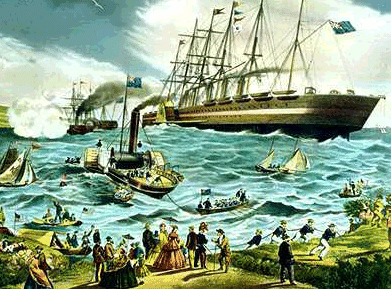
Russia, and other nations. In 1866, an underwater
cable was laid between France and the U.S. By the
1860's, central telegraph offices existed in most
major cities in the United States and Europe.
|