
Are the Tamils in Sri Lanka (Ceylon) minorities?

Our ancient history says, at one time, thousands years
back, Ceylon (Sri Lanka) was
part of India. The people living in the southern part of India spoke a
language called Tamil and thus they are called Tamils. Tamils are of
Dravidian origin and they had a very good civilization called `Indus
valley civilization. Their main occupation was cultivation. It is an
accepted fact that Tamil language is one of the oldest language in the
world. Many thousand years ago, due to geographical changes of nature,
Ceylon (Sri Lanka) was separated from India by sea. During this period
(King Ravana´s period) Tamils were living all over Ceylon (Sri Lanka).
A notorious prince by the name Vijayan along with 700
of his friends, who were living in Northern
part of India, were deported by sea, by his father Singhan, who was a king
at that time. Vijayan and his 700 friends sailed for many days and finally
reached Ceylon (Sri Lanka). Here Vijayan met a Tamil princess Kuveni
who fell in love with him and got married to him. Shortly
afterwards Vijayan deserted Kuveni, and brought another Tamil princess
from South India along with 700 brides to his friends too!
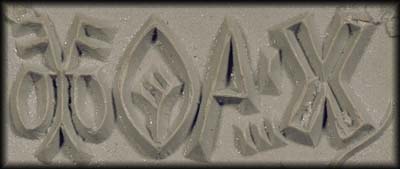
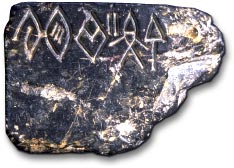
Although the Indus Valley script is still undeciphered, there is some agreement among a number of leading scholars that it represents some sort of proto-Dravidian language common in South India today. These scholars include the Finnish Sanskritologist Asko Parpola whose Deciphering the Indus Script was published in 1994 but is based on nearly 30 years of computer-aided research, and India's Indus script pioneer and scholar of early Tamil, Iravatham Mahadevan.
It
is believed that the history of Singhalese race began with the arrival of
Vijayan and his 700 friends. Vijayan, his 700 friends and their
descendants spoke the language Singhalese and thus they are called
Singhalese. And also, because of Vijayan´s father whose name was Singhan
and he was thought to be a lion faced man!
This period was supposed to be the origin of Singhalese race and kingdom.
Buddhism came to Ceylon (Sri Lanka) about 2500 years ago.
The Singhalese kings gave very prominent place to Buddhism and Buddhist monks.
Gradually, the Buddhist monks became the chief advisors to the kings and controlled the kingdom and politics of Ceylon.
After the arrival of Buddhism to Ceylon (Sri Lanka) there were religious wars between Tamils (who were Hindus and then living in all parts of Ceylon) and Singhalese who were living peacefully. Thus discrimination began between the two races. The Tamil Hindus were driven and pushed away from the flourishing central areas of Ceylon (Sri Lanka) and ultimately the Tamils occupied the Northern and Eastern parts of Ceylon (Sri Lanka) which are dry zones.
As we know, our neighboring country southern India was always ruled by Tamil kings and very occasionally the Tamil kings waged war and drove away the Singhalese kings. So, the Singhalese always had the fear for the Tamils living in Ceylon as well as in India!
Now, I would like to emphasize on the modern history, where there is no dispute at all and this history is accepted by everyone!
Portuguese arrived in Ceylon (Sri Lanka) in 1505. At that time there were three kingdoms in Ceylon (Sri Lanka). They were, the Jaffna, Kotte and Kandyan kingdoms. The Tamils were ruled by the Tamil kings and the Singhalese were ruled by Singhalese kings and sometimes by Tamil kings also. The last Kandyan king was a Tamil king called Sri Wickramarajhasinghan who was defeated by the Englanders in 1815.
There is a common believe among the European and Western people that the Tamils living in Sri Lanka (Ceylon) are having a very short history of about 200 yrs in Sri Lanka (Ceylon). And they say it is not fair for the Tamils to demand more rights from Sri Lankan (Ceylon) government. This is one of the false propaganda made by the successive Sri Lankan governments against the native Sri Lankan Tamils. The truth is, the majority of the Tamils living in the central and South central parts of Sri Lanka among the Singhalese are from Indian origin. They were brought by the Englanders about 200 years ago to work in the tea and rubber plantations.
Let us go back to the modern history again.
In 1505, the Portuguese traders captured part of Ceylon (Sri Lanka) including a small portion of Jaffna kingdom. During this period, Tamil king Pararajasekaran (1478 to 1519) was ruling Jaffna kingdom.
The Portuguese ruled part of Ceylon (Sri Lanka) from 1505 to 1658.
In 1658 came the Dutch to Ceylon (Sri Lanka) and chased away the Portuguese and once again they ruled part of Ceylon (Sri Lanka) only, till 1798.
Finally the Englanders supplanted the Dutch in 1798. They took full control of the island Ceylon in 1815.
Britain ruled the entire island Ceylon (Sri Lanka) till 1948.
Ceylon became independent from England on February 4th 1948.
Ceylon (Sri Lanka) is a diverse nation.
Singhalese represents about 74% of the population and are concentrated in central and southwest parts of Ceylon (Sri Lanka).
Tamils of Ceylon origin form around 12% of the population and live in the north and east of Ceylon.
Indian Tamils who were brought by Englanders are of 6% and they live in south-central part of Ceylon among the Singhalese.
Other minorities are Muslims, Burghers (who are descendants of European colonial settlers) and Vedas (people living in jungle) who are becoming extinct now.
The British colonial policy of divide and rule sowed the seeds of renewed tensions between the Singhalese and Tamil communities after independence.
Tamils, although well-educated, were given a disproportionate number of top jobs in the civil service by the British. Once the Singhalese majority held sway, its politicians sought to redress the balance with populist but discriminatory policies against Tamils.
The present President’s father Solomon West Richard Dias Bandaranaike was a Christian, and became a Buddhist to win the support of the Singhalese Buddhist votes. He was a member in the UNP party and broke away from UNP (he speculated that the chances of becoming a Prime Minister was very less had he remained in UNP) and formed a new party called MEP promising to make Singhalese and Buddhism as the official language and the state religion, respectively.
He won the elections in 1956 and made Singhalese as the official language within 24 hours!
Thus he sowed the seeds of communalism. The communal tension between the Tamils and Singhalese grew and increased from this period 1956 and escalated to a very major riot in 1958. Many hundreds of Tamils were killed, Tamil women were raped, and hundreds of thousands houses were looted and then burnt. This was the beginning of a major flushing of Tamils who were living all over the island employed as government servants and holding business establishments. After this riot, Tamils who are few in number concentrated in the major Singhalese towns mostly as government employees.
In 1971 admission to the university based on merit was abandoned and "standardization" to university admissions through G.C.E A/L examination results was introduced. Lower qualifying marks were fixed for Singhalese than for Tamil students. The introduction of "standardization" adversely affected Tamil students' access to higher education.
After the independence, the successive governments, began to colonies the native Tamil areas with Singhalese. The discrimination in the high ranking government posts and very less employment opportunities both in government and private sectors brought frustrations, especially among the Tamil youths.
From the period of independence (1948), the Tamil parliamentary elected leaders like Mr S. J. V. Chelvanayagam (Thanthai Selva) leader of Tamil United Liberation Front (at the beginning this was called as Federal Party) , MrG.G.Ponnambalam, leader of Tamil Congress Party and their members fought for Tamils´ fundamental rights in a very peaceful way. Always, the Tamils were hit, brutally injured and killed by the Sri Lankan forces and by the thugs and hooligans hired by the successive governments. The Tamils fought in a very peaceful way for about 30 years. The results were, beatings, killings, lootings, raping with constant riots!
With no higher education and jobs the Tamil youths were wondering as what to do for their future!
As and when the Singhalese government used violence against the Tamils, the youths started to retaliate to defend the Tamils.
Thus there was an uprising against the Singhalese governments by the Tamil youths under the names of various groups/organisations. The prominent groups existing at present are LTTE, PLOT, TELO, EPRF, EPDP etc. apart from the TULF and Tamil Congress Party which are still functioning as members in the parliament.
(Here, I would like to mention about Mr Kumar Ponnampalam, leader of Tamil Congress Party, who lived in Colombo among the Singhlese who always stood up and querried the government whenever atrocities were done to Tamils. He was brutally murdered on Jan 5th 2000 for doing so!)
Realizing taking up arms is the only way, Veluppillai Prabhakaran formed New Tamil Tigers Organization in 1972, comprising brave, self sacrificing and disciplined youths to:-
Safeguard the language and education rights of Tamils
To halt the encroachment of Tamils traditional homeland through Singhalese colonization.
(Here, I would like to remind Thiagi Sivakumaran´, who was almost a lonely brave youth, fought single handed for the above causes for the Tamils in the late sixties and early seventies)
On 5th May 1976, `New Tamil Tigers Organisation was renamed as Liberation Tigers of Tamil Eelam. Mr V. Prabhakaran was named as the Chairman and Military Commander of the LTTE.
He
knows each and every nooks and corners of Tamil Eelam!