2.0 The real job – computer career at
Digital Equipment Corporation
Tseung did not pass the security clearance test. He could not get into the high
technology area of airplanes and missiles as a career. His main career turned out to be in
computers. That earned him and his
family very comfortable living. He
had his second child - a daughter while working at Digital Equipment
Corporation. He made a name for
himself in the computer industry with his innovative work and a very important
‘many-to-many’ patent which influenced the development of the internet.
|
Comments from the Editor and reviewers: (a)
Tseung failed to
use his primary university training in his lifelong career. Is that a blessing in disguise? Is it a waste of university years for
him? I believe every book he
read, every game he played, every visit to the library and every
International function he attended helped to model him. (b)
In hindsight,
Tseung used his university training in both physics and aeronautics after his
retirement. In other words, some
of his most innovative ideas did not get a chance to develop until some 30
years later. Life is not always
a smooth and straight path. We
need to equip our students with the best. (c)
Can the Hong
Kong or China educational system tolerate such a delay? Should such delay be regarded as the
price to pay for innovativeness?
The success of one important innovative idea – such as the Lee-Tseung
theory – brings more wealth to the human race than the sum of all known
wealth in the past. (d)
Some people
argue that the fastest way for a developing country is to copy and not to
innovate. Is this argument still
valid for Hong Kong and China? |
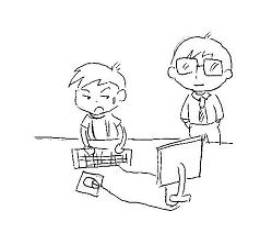
Tseung went to the Interview at Digital Equipment
Corporation. The Manager was very
busy and gave Tseung a PDP-8 manual to read. Tseung had 3 hours to digest the book. When the manager came back, Tseung was
writing a mini-program using the PDP-8 instructions. The manager had a look at the program and asked Tseung to
report to work on the next day.
The manager must have been brainwashed by the agency that he was
interviewing a genius. It was the
start of a 20-year relationship with the Company.
|
|
Figure 2-1 Writing a Program at Job Interview Tseung had the success of scoring full marks
at two consecutive IQ tests. He
used his job interview to write a computer program for the PDP-8
computer. He had the Instruction
Manual for a few hours. The
success landed him the job. |
Thinking back, Tseung believed that almost any one could
score high in the IQ tests if one were to spend the same effort in the
University Library. It was
dedication, hard work and total focus.
The job interview was also luck and hard work. The luck was the brainwashing of the manager by the
agency. The hard work was the
willingness to write the mini-computer program rather than sitting around and
wasting time.
The myth that Tseung was a genius affected Tseung
throughout his life. He was given
many challenges not normally offered to the average person. He failed many times but he always
stood up again. He got invited to
closed-door forums with the US Department of Commerce. He got invitation to help in the many
US Presidential Elections. He
appeared in front of many Hong Kong politicians. He got chances to appear in front of important Chinese
Officials even though he could not speak Putonghua. Einstein said that Genius is 1% inspiration and 99%
perspiration. That applied in the
life of Tseung.
|
Comments from the Editor
and reviewers: (a)
I wish my job
interviews would go as well. If
this book becomes a best seller, I may be in that privileged position. I better try my best and get the best
people to help me. Proof reading
is a painstaking task demanding much patience and concentration. It is not glorious but it needs to be
done. Life will have more
periods like this than the glamorous ones. (b)
How can we show
our best in a short job interview?
I have the special advantage in presenting and writing material that
will change the world.
Hopefully, that will be my blessing. However, I still need to package it and present it in the
few minutes of the interview.
Tseung has a similar task.
He needs to package his ideas and experiences into this book. (c)
What can you present
in your job interview? |
2.2 The first Business exposure
The first job position for Tseung at Digital Equipment
Corporation was that of a software instructor. The job involved teaching the instruction sets; helping
customers to type and enter the mini-programs from paper tapes. It also involved the debugging and
running of those mini-programs.
Tseung and other instructors had to design and develop the mini-programs. Tseung spent many hours preparing the
course material. His normal
schedule was - have dinner with the family and came back to the office for a
couple of hours testing his programs.
That was the best time because the machines would be available and there
were no disturbance from telephones.
The hard work paid off. Tseung was soon regarded as “the answer man” known as such
even to the sales force. One day,
the Sales Manager for Europe came to see Tseung and his manager. The Sales Manager said, “I have two
extremely important customers from Eastern Europe. They are evaluating our Company. They represent several East European Countries. The potential sales are in the
multi-millions. Please help to impress
them”.
Tseung made special efforts to help them. Tseung spoke more slowly when
communicating with them. Tseung
even took them to one of his evening preparation routines. A few mini-programs were written
specially for them with their participation. They were delighted.
A few weeks later, the Sales Manager came and said, “We
have the multi-million dollar deal.
The two evaluators were extremely impressed with the enthusiasm of our
instructors. They said that they
learned more about our products than almost any other manufacturer. They could actually program and use our
products. Congratulations!”
Tseung then realized the importance of going the
extra mile. That became his motto
at Digital Equipment Corporation (DEC).
One of the greatest impacts he made at DEC was teaching both internal
software support staff and customers how to extract information directly from
computer listings.
|
Comments from the
Editor and reviewers: (a)
Opportunities
knock at every door from time to time.
It is a matter of whether one can take advantage of it. If Tseung did not spend those extra preparation
hours when he first joined DEC, he would not have been known as “the answer
man”. (b)
The extra mile
he went with the customers from Eastern Europe is worth noting. Many people feel that if they spent
their 9-5 office hours at the company, they have done their duty. How many would work with the customer
outside office hours. Genius is
99% perspiration. I believe that
is an understatement. Genius is
at least 199% perspiration. The
average person may not see the extra 100%. (c)
What is your
extra mile? |
2.3 Teaching
RSX11M from listings
Many DEC customers were OEMs or “Own-Equipment
Manufacturers”. They bought the
PDP-11 computers from DEC and added their own hardware and/or software. They were not satisfied with reading
the user manuals. DEC got a real
computer guru from DuPont (Mr. Dave Cutler who was later the development Vice
President of Microsoft and gave the World the de facto standard – Windows
Operating System). In the Computer
World “guru” implies a master from whom to learn. A guru is above average. He can lead the way and support an entire division or even
an entire company.
DEC was not well known for its software before
hiring Cutler. DEC had an
operating system called RSX11D which was inefficient and had many bugs. Cutler was hired to help to fix the
problems. He took a look and said
that the RSX11D operating system sucked.
It was beyond repair.
Another totally new operating system must be written from scratch. That upset many RSX11D developers. However, Cutler had a great reputation
and was specially hired with great expense. He was given a computer and a desk. Within 6 months, the award winning
operating system, RSX11M, was born.
The RSX11M system could be conditionally assembled to include or exclude
certain features to make the operating system larger or smaller. The source code was provided to
customers as part of the package.
One of the stories on how Cutler motivated the
other DEC engineers was to challenge the other software engineers to improve
his code. Any person could get a
free coke from his personal refrigerator if the person could improve a single
line of code. That motivated the
other software engineers to study his code in great detail. The support person from Europe spent
four months in the USA learning the system and was very proud to tell us that
he got two cokes from the Cutler refrigerator. To earn that reward, he had spent many sleepless nights
studying and discussing the computer code alone and with other software
engineers.
Tseung was assigned to teach this RSX11M
operating system. He had a look at
the three-inch thick computer code listing and was totally lost. That was just too much information. The code was well written but it was
for computers and not for human beings.
One needed to have an extremely clear overall picture before one could
understand the brilliant code. The
analogy was that one needed a map of Hong Kong before one could explore and
find the interesting places in the City.
Tseung decided to write such a map. He asked for dedicated time of a few
months. There were some objections
initially. There were arguments
that customers did not need such detailed knowledge. Tseung decided to go his own way with or without
support. He flopped a couple of
times. Both the internal software
support people and the customers complained. They said that Tseung confused them totally. The courses taught by Tseung were a
waste of time. It required a great
manager to protect Tseung. Tseung
was extremely lucky to have such a manager. The manager got a few other instructors together and
personally supervised Tseung and the team as they developed a section of the
course material. He was aware of
Tseung’s brilliance and so he decided to give Tseung some dedicated time to
prove his point of view.
The many months of reading computer code finally
paid off. The source code was very
large. A two-stage process was
needed to turn the code into something the computer hardware could
understand. The first stage was
the assemble process in which small chucks of code were turned into object
code. In technical terms, this was
known as running the source code through the Macro Assembler. The second stage was putting this
object code together into the final computer-readable code. In technical terms, this was known as
task building. There was a task
builder map showing where the code would be loaded into the computer
memory. The task builder map
contained symbols or labels from the source code.
Tseung made a chart relating the labels to the source
code. He traced mini-trips or
tours of the computer source code.
It was like a guided tour of a city. The tour guide gave an overview introduction of the city and
then went into the scenic spots in detail allowing tourists to take pictures
etc. Tseung did a similar
thing. He showed the software
support people how to actually modify the RSX11M executive. That quickly established his reputation
as the undoubted number one instructor inside the company. One of the most important customers in
England – the Atomic Energy Authority – heard about it and wanted Tseung to
teach them the Internals of the RSX11M Operating System. Tseung asked his manager were there any
sections that he should not teach.
The manager said, “This is an extremely important and influential
customer. They had many PhDs
studying the code already. Some of
them are even more knowledgeable than our software support person”.
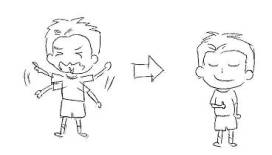
Tseung started the special course. Within 10 minutes, a customer raised
his hand and said that the privileged task feature never worked. The RSX11M system was no good and he
wasted two years. Tseung then
asked him how he used the switch task code inside the executive. He said, “What task switching
code?” Tseung showed him the
correct way to use the code. He
disappeared for two hours. When he
came back, he said that the problem which had bothered him for two years was
solved. Apparently, he was one of
the most respected computer gurus at the Atomic Energy Facility. He raised many in-depth questions and
Tseung was able to answer them all.
When others raised simpler questions, he helped to answer or commented
on them.
|
|
Figure 2-2 Turning a Skeptic into a Believer Tseung turned a
computer guru at the Atomic Energy Facility from a skeptic into a believer. A nice letter of appreciation helped
Tseung’s career. |
A few days after the special course, Tseung’s
manager called Tseung to his office.
He said, “The customer said that you could walk on water”. Tseung did not understand that statement
at first. The manager explained
that it was the highest praise that could be bestowed on a software
engineer. It implied that the
engineer could work miracles. He
then showed a long letter of appreciation from the customer. The customer requested DEC to provide a
standard course on the Internals of the RSX11M Operating System. The Head Office of DEC in USA was
willing to triple the salary of Tseung and move him to USA.
Tseung said, “But I flopped before - I did not
have a perfect record”. The
manager said, “In DEC, the company motto is to make mistakes and show those
mistakes to the rest of the company.
In this high technology field, if you do not make mistakes, you are not
moving forward. If you make your
mistakes known to the rest of the company, others will not make the same
mistake. You essentially learn on
behalf of the company. Your
technique of learning directly from computer listings will now be standard
practice”.
Tseung then become a top consultant of DEC. Some of his successful projects
included writing the first e-mail program using the indirect file features of
RSX11M, supporting the Hong Kong Jockey Club, training the first batch of
computer engineers from China and the development of the many-to-many patent
that greatly influenced the development of the internet.
|
Comments
from the Editor and reviewers: (a)
Tseung got
complaints from both Internal Software Support Engineers and Customers. The average manager would have
demoted, isolated or fired him. (b)
I am sure that I
shall meet with similar fate in my career path. I shall attempt many things that have never been done by
humans previously. It is the
challenge of innovation. Will I
get a manager good enough to protect me? (c)
In accepting the
task as the Chief Editor of this book at the age of seventeen, I have already
opened myself to ridicule, jealousy and criticism. Dreaming that I can achieve more than Bill Gates? I have to work extra hard to prove
myself. (d)
I feel like a
child getting a tennis racquet as a gift. At the same time, he gets the encouragement that he may
became the tennis champion of the World some day. It motivates him.
But there will be a long and difficult road ahead. He has to take lessons, practice
alone, enter competitions and receive the inevitable jeers and cheers. But the chance of getting involved in
Lead-Out-Energy machines and Flying Saucers at their infancy is one in a
thousand. Life will not be
dull! (e)
Have you ever
taken on seemingly impossible tasks?
Will you start now?
Bringing benefits to the entire world seems impossible – will you do
it? |
22.4 Moving from
England to the United States
There was an interesting story related to a
fortune-teller associated with the Tseungs move to the USA. Tseung had the date fixed and already
had the plane ticket for him and his family. One of their very good neighbors and friend gave the Tseung
family a farewell party. That
friend invited a lady fortune-teller from Cambodia. Tseung asked the fortune-teller casually whether the move to
USA would be successful. The
fortune-teller said, “The move will not happen that quickly. You will have to
wait”. Tseung secretly laughed and
ignored her.
The next morning, the manager said to Tseung,
“We need to train up someone in England to replace you. We are willing to give you a very good
deal. We shall triple your salary
when you move to USA. We shall
take care of your house in England.
We essential pay your rent.
If you want to sell it any time, we shall pay all the necessary
fees. When you go to USA, we shall
pay for your first years rent, including all furniture. Can you stay in England for a few more
months and help to train up a few persons to replace you?” There was no way for Tseung to say no.
After about 9 months, Tseung was ready to move
to the USA again. This time, he
specially requested his friend to invite the fortune-teller. He was extremely polite to the
fortune-teller and asked seriously about his future in the USA. The fortune-teller said, “Be careful
with your teeth”. She then
continued, “You are an extremely special person. Your fortune depends on your heart. If you have a kind heart and perform
good deeds, you will be successful.
The moment you become selfish and greedy, you will lose everything. In addition, after the age of 55, if
you still have a kind heart, you will achieve phenomenal success. A success that will dwarf all great men
in history”. Tseung remembered
those words. So far, they appear
accurate and they have had a great effect on Tseung.
When Tseung moved to the USA, he was playing
with his daughter who was jumping up and down in bed. His daughter accidentally banged her head on the front tooth
of Tseung. The tooth broke. Blood streamed out and Tseung was
rushed to the hospital. How could
a fortune-teller predict such an accident? Tseung had to believe her.
Tseung was willing and eager to do good
deeds. His brother-in-law called
and said that he and some of his newly graduated, married friends wanted to buy
homes. However, they did not have
enough cash for the down payment.
They were willing to let Tseung co-own a small percentage of the
property. They will repay after
they sell the house in a couple of years.
Some of the friends of Tseung laughed. They said, “What happens if they do not sell? You will never see your money
again”. Tseung focused on good
deeds and decided to help out. The
price of homes rocketed in California.
The US $20,000 helping money increased tenfold or more in just a few
years.
Tseung’s wife got bored and talked about getting
a job so as not to waste her university education. Tseung’s mother-in-law came to help take care of the
children. Suddenly, the Tseungs
became a two-income, upper middle-class family.
Tseung did a project for the Mexican Stock Exchange
as a DEC consultant. He wrote a
dummy-trading program. He modified
that program to include stock options and trading of stock indices. That dummy program earned many dummy
dollars. Tseung was tempted to go
into real stock trading but he remembered his promise to his friend and the
words of the fortune-teller. He
joined a social club called Greater Boston China Cultural Association where he
met many successful Overseas Chinese.
These friends learned about the computer-trading program and persuaded
Tseung to join them in a joint investment effort. Tseung said, “You must all promise to donate 10% of the
profit to charitable causes, otherwise, I will not participate”.
Their initial target was a 20% increase in the
value of their portfolio. That was
achieved within a few weeks. They
donated 10% of the profit to charitable causes. They set a higher goal of a 100% increase. They played with stock options. They were lucky to catch a rising bull
market. The target was achieved
within a month. Again 10% of the
profit was donated to charity.
This time a few people grumbled as the actual sum amounted to many
thousands of dollars. Many friends
put in extra money and invited more friends to join in. Some even talked about setting up a
mini-investment fund. The target
was again a 100% increase. With
stock options on a rising bull market, that was predicted and achieved. The group started to disagree on the
10% donation. Some said that they
previously lost money. They needed
to recover their losses. Some
argued that the donation was an individual thing. Some looked at the donation amount and said that it exceeded
their annual income. The donation
was never made.
|
|
Figure 2-3 Tseung falling into the temptation of
money Tseung broke his promise
of never playing in the Stock Market to his friend who helped him to raise
educational money. He and his investment
friends lost heavily on his computer-trading program of stock options. |
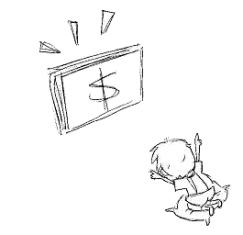
Sure enough, the group started losing
money. In stock options, the total
amount could be lost if one guessed incorrectly. The group broke up and accused each other of making the many
bad decisions. On zero profit or
losses, nothing would be donated.
Tseung also lost heavily but he had a good job and investment in real
estate to cushion his losses.
Tseung began to believe in doing good deeds and regretted he broke his
promise of never playing in the stock market.
|
Comments from the
Editor and reviewers: (a)
I do not believe
in fortune-tellers but if they help to point me in the direction of doing
good to society, I listen to them.
I am not religious but I go to Church or Temple from time to time. (b)
I hope I shall
never fall into the temptation of greed – wanting more and more money. May God and Buddha help me! (c)
Have you ever
fallen into temptation? Did you
benefit from the experience afterwards? |
2.5 Getting the
first pot of gold via an unintentional investment
Tseung also went into the restaurant business by
accident. Their family dentist
called one day and said that he wanted to buy a restaurant. His father failed on a restaurant
business and the son laughed at the incompetence of the father. The father angrily challenged the son
to show that he could do better.
The dentist found a local 400-seat American restaurant on the verge of
bankruptcy. Apparently, the owner
incurred huge gambling debts. The
restaurant was run down and had few customers. The restaurant at its peak was worth US $2 million and the
owner was willing to sell it for US $600,000 in order to get a quick deal. The property alone would be worth more
than that amount. The dentists did
not have that much cash and looked around to find investment partners.
Tseung’s wife decided to invest. She did not trust the stock market any
more. She also wanted to help the
dentist friend and to impress others by showing that she could handle a
business herself. The decision was
to turn the American restaurant into a Chinese restaurant. Tseung initially objected and said that
they did not have any experience in running restaurants. Investing in such a business would need
much personal time and attention.
It would be a bad decision.
However, his wife got some of the profit on property investment in
California from her brother. She
said to Tseung, “I have been supporting you throughout your life. I helped to earn and save money for
your MSc. I left my family in Hong
Kong to join you in the foreign lands of England and the USA. I did not blame you when you lost much
of our joint savings in the stock market.
Can you support me this time?”
Suddenly, the highly paid software engineer and friends became painters
and decorators in their spare-time.
Then came a lucky break. When the restaurant opened, one of the
large local American restaurants had their license suspended because they
served drinks to minors. Another
large restaurant was turned into a private club. The new Chinese restaurant was the only game in town. The $6.00 lunch buffet was the talk of
the town. It included soup, salad,
desert and fruit. It had daily
variations of four main dishes. The menu was actually half American and half
Chinese to cater for the predominantly American neighborhood. The lunch buffet was almost always
full. In particular, the bar at
night was packed. The income from
drinks at weekends easily exceeded $100,000. A band and six cocktail waitresses were employed. The $600,000 investment was recovered
within the first few months.
Tseung’s wife became a social celebrity
especially with the Overseas Chinese Professionals. There were many admirers and flowers were sent to the home
and to the office. The family
relationship suffered. After one
of the long business trips, Tseung got the call from the wife of a very good friend. She said that her husband wanted a
divorce. She asked whether Tseung
received a similar message from his wife.
Tseung then saw the start of the break up of his marriage and
family. There were daily quarrels
but they decided not to separate until their children were both at
university. Tseung’s wife had
enough money of her own to buy a property to live with her lover. Her lover also got venture capital to start
up a bio-tech company. Tseung
realized that money was not everything.
After a couple of years, the marriage finally ended in a divorce.
|
Comments from the
Editor and reviewers: (a)
Money and
success do not necessarily bring happiness. I better remember that. I am seventeen.
I care more about being popular.
I dream about romance with a Prince on a White Horse. (b)
Innovators may
not be good businessmen. Nikola
Tesla is a good example. Mr.
Tesla invented the AC current that we all use today. He died penniless in a cheap hotel. (c)
How do you
handle your family relationships?
Can you do it better?
What can you do now? |
2.6 Taking up the
challenge of Networks
Unhappy at home, Tseung focused his attention at
the office. The internet was in
it’s infancy. The DEC machines were
the favorite of the academics and many DEC machines were used on the
Internet. DEC also had its own
propriety networking software – DECnet.
Tseung could direct his attention away from the RSX11M Operating System
as the RSX11M knowledge at DEC was well spread. Hundreds could trace executive code and add new features.
Tseung wrote his first primitive E-mail program
allowing the vice president of training to communicate with the vice president
of software engineering via dial-up modems. It involved the use the indirect file feature on
RSX11M. Tseung was invited
to many strategic meetings related to the future direction of the Company. He picked up a good deal of management
training at the same time.
One of the things that sank into his soul was the
Silicon Valley Mentality. There
are five major characteristics of this Mentality.
l
Whatever we want
to achieve, or have already achieved, is only third class. We have to turn it into second or first
class. When we pass the thing to
you, you should treat that as only third class and seek to improve it to second
or first class. When you pass it
back to us, we shall treat it as third class again. This Mentality will cause us to become better and better.
l
When a problem is
passed to us, either we crack the problem or the problem cracks us. This Mentality causes us to concentrate
and overcome all possible obstacles.
l
We are the
Gods. We can change or make any
new rule. This Mentality will
force us to think outside the box.
We will not be bounded by past experience or traditions.
l
We shall not find
excuses for our failures. If we
disclose our failures, the World can learn and benefit from our failures. In the innovative society, we shall do
many things which our predecessors have never done before. This Mentality helps us to face
challenges. We shall not fear the
possibility of failure.
l
Finally, if there
is something we do not know now, we shall know it tomorrow. The internet has brought the World
Libraries to us. This Mentality helps us to overcome the doubts created by our
own limitations. We do not need to
worry about anything.
Tseung promoted this Silicon Valley Mentality among his
many friends and colleagues. He
emphasized that this is the difference between Western Culture and the
traditional Chinese Culture of humility.
When the personal computers appeared, Tseung and many
others at DEC saw the danger which they posed to mini-computers. There was much debate and many wasted
opportunities. Tseung was one of the first to realize the importance of
networking and the use of the public network – the internet. DEC had a proprietary product called
DECnet that used dial-up or leased lines.
Tseung knew that private networking could never compete with public
networking. Why should one build
and maintain a road? Tseung gave
one of the least successful lectures of his career as he explained the future
of DECnet. His view was so
pessimistic that he was heckled so badly that he was unable to finish his
prepared speech.
DEC started to make a series of costly mistakes. One of the biggest mistakes was the
introduction of the DEC manufactured PC – the VAXmate. The VAXmate was supposed to be a
disk-less, network connected workstation.
The product was both expensive and unreliable. The price of IBM compatible PCs was dropping on a daily
basis. The failure of it’s new
workstation impacted on DEC’s confidence and culture. Tseung believes that this cultural change started the
downfall of DEC. Previously, the
DEC engineers were encouraged to talk to one another. They freely exchanged ideas at the local bars and
restaurants. Then some managers
imposed security measures. Engineers
were not allowed to discuss their work outside the office. On many occasions, consultants like
Tseung only heard about new products after they had reached the marketplace.
|
Comments from the Editor and reviewers: From Wikipedia, the free encyclopedia
Digital Equipment
Corporation was a pioneering American company
in the computer industry. Its PDP
and VAX products were arguably the most popular minicomputers for the scientific and
engineering communities during the 1970s and 1980s. DEC was acquired by Compaq in June 1998, which subsequently merged
with Hewlett-Packard in
May 2002. (a)
Can I build my
Company up with phenomenal growth and avoid catastrophic failures? (b)
A Company in the
Lead-Out-Energy and Flying Saucer field will have a chance to be great. There are the challenges of building
it and then maintaining it. Will
that involve different skill sets?
Do I need to master all such skills? Should I focus on building a team? (c)
This book may be
the first pot of gold to help to launch the Company. What is next? Innovation Camps? New Energy Products? Flying Saucers? Mutual Credits? Life will be full of challenges and
excitement. Should I follow the
Tseung philosophy of benefiting the World and ignore all personal fame and
fortune? (d)
What will be
your first pot of gold? Will any
of the ideas presented here become your first pot of gold? |
2.7 Training the
first group of Chinese Computer Engineers
In the early 1980s, China sent a team of engineers to the
USA for both computer hardware and software training for a period of 1
year. Tseung was assigned as one
of the trainers. There were many
non-technical Political Advisers accompanying the technical people. After one of the lessons, one of these
Political Advisers went up to Tseung and said, “We appreciate your excellent
presentation on Networking. You
talked about Ethernet, Token Ring Networks. Those are good.
However, when you talk about hierarchy networks, you mentioned that
failure of the nodes at the higher Archie (architecture level) would have a more serious effect on the
Network. That might be taken as a
criticism of our political system.
Please remove that from your lecturers”. It was the first time that Tseung personally experienced the
stranglehold of Communist dogma.
Then a very important political event occurred. In the customer lounge, DEC had a map
of its many Offices. There was a
small local country flag placed at the Cities where DEC had offices or
manufacturing plants. Taiwan was
one of them. The Chinese team
demanded that the Taiwan flag to be removed otherwise they would all go home
and severe all contracts with DEC.
The Senior Management at DEC refused to comply. Tseung was asking the Chinese team to
calm down and tried to explain that was not an insult to China but to no avail.
The Chinese Ambassador from Washington came up. He went to the customer lounge. He stared at the map and said, “I do
not see any Taiwan Flag. Do
you?” His smart deputy also said,
“I do not see any?” Suddenly all
the Chinese Engineers and Political Advisers did not see any Taiwan flag.
Tseung learned a very valuable lesson in politics. Reality and facts have different interpretation in
politics. The incident was solved
with brilliant political play. The
Political Advisers then kept a very low profile.
After Tseung presented his famous lessons on the internal
workings of RSX11M, another political incident occurred. This time it was from the USA
Government side. The accusation
was the unauthorized disclosure of technology to a Communist Nation. Tseung argued that the source listings
were part of the sales. The
customer would have them in any case.
The lessons were just explaining the obvious. The course material could be purchased at the Training
Center. Tseung was removed as a
trainer.
|
Comments from the Editor and reviewers: (a)
Politics is
always unpredictable. Someone once
said that in politics, there are no lasting friends and no lasting
enemies. I am sure that when I
get involved with infinite energy and the Flying Saucer, I shall make friends
and enemies. I hope to make long
lasting friends and no enemies. (b)
Can I change the
rules of the game? Remember that
section in the Silicon Valley Mentality – I am God, I can make or change any
rule. (c)
Do you have long
lasting friends or enemies? How
do you make friends? Have you
ever made enemies? If you have a
chance to do it again, how would you avoid making such enemies? |
2.8 The
Many-to-Many patent and the start of Tseung’s own Company
In networking and in human communications, we can have the
following classification.
l
One-to-One
communication. This is one of the most
common forms of communication.
However, it is also one of the most inefficient if one wants to pass the
same message to many different people.
l
One-to-Many
communication. Television and
radio broadcasting are good examples of such communication. However, it is mainly a one-way flow of
information.
l
Many-to-Many
communication. The conference room
is an example. However, human
conferences have serious restrictions in terms of scheduling, location, time
and the number of participants.
The Internet Forums removed such limitations. The information from any of the participants is shown to all
other participants. The
restrictions of location, time zone and number of participants are effectively
removed.
In the US patent database, there are three Companies
awarded many-to-many data communication patents. One was IBM.
One was AT&T. The third
one 5,036,518 was awarded to Lawrence C. N. Tseung. Tseung conceived the early ideas while
he was still working at DEC. He
realized its significance and tried to persuade his management to apply for a
patent and develop products based on the patent. There were many heated discussions and debates. Tseung was told to take his stupid idea
and do it elsewhere.
Tseung decided to leave DEC and started his own Company.
Tseung had considerable savings and assets. He could survive without income for
several years. His wife had a good
job and good income from the Chinese Restaurant. She could take care of the financial needs of the
children. Tseung thought that he
could devote all his energy to his start-up Company. He really enjoyed his many-to-many patent idea. It was his first exposure to the patent
world. He felt something strangely
rewarding when he could invent something of world significance.
Tseung applied for the patent with his own money and in the
name of his own company. When he
knew that he would get his patent granted, he was really happy. He knew that the two other Companies
having many-to-many patents were IBM and AT&T. He was amongst the big boys.
Tseung soon got his second patent related to combining
Ethernet and Token Ring networks.
Ethernet is a local area network where all of the computers, or nodes,
share a common communication channel.
A computer would listen to see if there was any message on the common
channel. If there were no
messages, it could send its message.
It would listen to see if its message was messed up. The messing up could occur if two
computers decided to send messages at the same time. In computer terms, the messing up was a collision. On collision, the computers would wait
a random length of time before trying to send again. This turned out to be one of the most successful networking
products. The Company which
developed the hardware initially for DEC and later became independent, was
Cisco Systems.
IBM developed the token-ring local area network
technology. A token or a
reservation message was circulated amongst all computers on a ring. The computer who wanted to send a
message would wait for its turn to get the token first before sending the
message.
The Tseung patent combined the two techniques. The computers were essentially arranged
in a star fashion. Two
communication channels were used.
One was used for the token.
The other was for messages.
It was essentially a collision-less Ethernet. Tseung shared his idea
with his professor friends at the Irvine University and later at MIT. The concept was good but developing
that into a standard and then a product required much greater resources than
were available to Tseung.
|
Comments from the Editor and reviewers: (a)
Tseung once said
to me: “The biggest joy is the discovery of something totally new. Something nobody in history has
thought of before”. That is the
joy of innovation. Few of us
ever enjoy that. (b)
Is that joy
worth the many years of learning, hard work, frustration and discouragement? (c)
Have you ever
derived joy from a great idea?
Life should be joyful.
What can you do to bring joy to yourself? What can you do to bring joy to others? Can you act now? (d)
Tseung commented
at the beginning of this book that the reader should discuss the material
with his friends or via the internet.
Do you have anything to say or to contribute? |