1.0
History of the development of Lawrence Tseung – the Formative Years
I shall start the story of Mr. Lawrence Tseung
(abbreviated to ‘Tseung’) from his formative years. Tseung was born into a reasonably well-to-do family. He has four brothers and three
sisters. He is the fifth in this
group of eight children. There was
nothing unusual about him in his primary school days or before the age of
twelve. His story begins with his
entering Secondary School at Wah Yan College, Kowloon. Wah Yan College was a Catholic,
boy’s-only school run by Jesuit priests from Ireland. Tseung told me that in his first physics lesson, the
teacher asked him: “What is the shortest distance between two points?”
Tseung stood up in front of the class. He thought that he knew the answer but
he could not utter a single word.
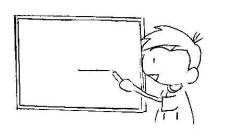
The teacher was very encouraging and drew two points on the blackboard. The teacher said: “Can you draw the
shortest path between these two points?”
Tseung drew a line joining the two points. The teacher said, “Correct. The shortest distance between
two points is a straight line”.
The class applauded and Tseung fell in love with physics from that
instance.
Tseung was red-faced when he stood there not
uttering a word. His mind told him
that the question was easy but he could not find the words. If his classmates jeered him then, he
could have lost all interest in physics.
The simple but important act from the teacher turned the shy, red-faced
boy into a dedicated physicist for life.
The educators often ignore these small acts in school and in life. Budding innovators need such
encouragement.
|
|
Figure
1-1 Tseung drawing a straight
line joining two points in his first Physics lesson. The straight
line represents the shortest distance between the two points. The hint and encouragement from the
teacher made Tseung love Physics for life. Can educators learn something? |
Another very important small act which affected the
development of Tseung was the advice from his Home Room Teacher. The teacher was a graduate from
England. He said, “There is no way
that I can give proper attention to every one of you (The size of the class was
40 then). I propose that you form
yourselves into groups of four or five and help each other”.
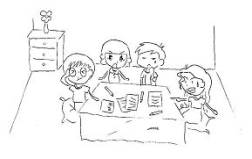
Obediently, Tseung got a group of four. They stayed after school doing homework
or played ball together. They
never let academic questions or difficulties linger on for more than a
day. One of them was likely to
come up with the answer. They
approached the teachers on the rare occasions that all four of them failed to
come up with the answer. School
was fun. They challenged and
helped each other. This
group-learning technique should be promoted where possible. The Tseung group was successful but
many other groups did not turn out so well. They either broke up after quarrels or became ineffective. A good thing might not always work with
different people or in different environments.
|
|
Figure 1-2 Tseung and team doing group study after class. Each student explains the same stuff to others. The lesson is effectively recited four times. No
questions or doubts are left unanswered. Should such a group learning technique
be introduced into the school system? |
|
Comments from the
Editor and reviewers: (a)
I believe
educators should think through the group-learning technique and develop
models for our students.
Innovative ideas may not always work. But if they are not tried, we shall never know. They do not need to be perfect. They do not need to work for
everyone. It is like medicine. Some may not need it. Some may benefit from it. It may not be the cure for
everything. But a good teacher
or school should have a full range of such medicine or educational
techniques. I tried this
technique myself with three other students. We all mastered the very difficult concept of designing
the magneto propulsion unit (MPU) in less than 30 minutes. When there was uncertainty, we
initially asked each other questions.
But after the four rounds of repeated discussions, the design was very
clear. (b)
What can you suggest to improve the educational system in your
area? List five things. Discuss them with your friends or post
them on the Internet. Start on
the path of becoming innovative.
There is no hurry to finish reading the rest of this book. This book is meant to be studied. |
.
1.1
The punch bag at age 12
Boys are boys. In Hong Kong, there were many places
that one could learn Chinese Boxing.
The relative of one of the team members worked in one of these
places. Tseung and his colleagues
went there full of excitement.
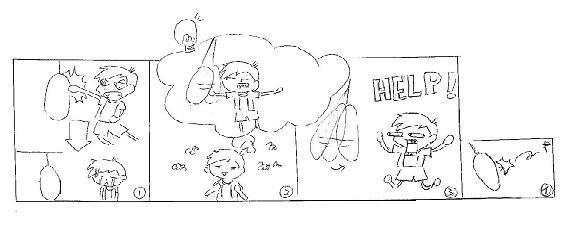
There were various pieces of equipment. One of them was a heavy punch bag hanging from the ceiling. Tseung and his colleagues punched it in
turn. The punch bag hardly
moved. Tseung then pushed the bag
a couple of times. It swung with a
larger and larger angle. Being a
naughty boy, Tseung deliberately stood in the path of the swing and let the
punch bag hit him. The impact
really stung him. He fell on the
floor after a couple of staggering steps.
|
|
|
Figure 1-3
Tseung hitting the punch bag at the age of 12. The bag hardly moved.
Tseung then pushed the bag a few times. He
stood in front of the swinging bag and got knocked down. The correct explanation should be that gravitational energy
was “Led Out” in the approximate ratio of 2 parts of pushing
energy leading out 1 part of Gravitational energy. The resulting 3 parts of energy minus friction and air resistance was responsible
for knocking the 12 year-old Tseung down. |
Tseung’s first impression was that – the force
hitting him could not have come from the few pushes that he gave the punch
bag. The force was too powerful. They discussed this amongst
themselves. They had just started
learning Newton’s Laws. The
concept of force, displacement, momentum, work and energy were fresh in their
memory. Tseung said that there was
something more than his pushes. It
was his gut feel. The other team
members laughed. Some of them
repeated the experience and became half convinced. Others joked: “You just get knocked silly by the punch
bag!” They were deadlocked and so
decided to consult their physics teacher.
The physics teacher said, “It is indeed the energy you supplied added
together. There is nothing
mysterious about it”. Tseung
grudgingly accepted the explanation then.
If Tseung had refused to accept the explanation and worked on the
mathematics, the Lee-Tseung Lead-Out theory could have been discovered forty
years earlier. In hindsight, any
secondary school physics student could have worked out the physics and
mathematics of the Lee-Tseung Lead-Out theory.
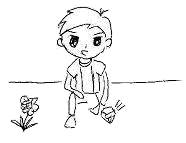
Tseung compared this incident to that of picking
up a piece of diamond without recognizing it. If he had applied the mathematics and physics knowledge
which he had mastered at that time, he might have realized it’s significance. Tseung compared that process with the
polishing of diamonds. We all get
our share of luck in our lifetime.
Most of us just drop the opportunity. Newton was not the first nor the only person who saw things
dropping to the ground. Lee Cheung
Kin was not the first, nor the only person who pushed a swing or a
pendulum. What made Newton develop
the Laws of Motion? What made Lee
develop the Lead-Out energy theory with Tseung?
|
|
Figure 1- 4 We all pick up diamonds from time to time in our lifetime. How many of us would recognize them? Is this book a diamond that will change your
life and the life of billions around the World? Lee Cheung Kin stared at the pendulum
toy and discovered the Lee-Tseung Lead Out
theory. Can you distinguish a diamond
(brilliant idea) from a piece of broken glass? |
|
Comments from the
Editor and reviewers: (a)
The moral of the
story is that we all have opportunities to pick up unpolished diamonds (or
brilliant ideas) in our lifetime.
What kind of training or stimulus should be provided so that we, the average
people, can polish such diamonds (develop such brilliant ideas into useful
things)? (b)
The simple act
of pushing a swing must have been done for thousands of years by millions of
individuals. Associating that to
extracting energy from gravity involves a link not previously noticed even by
the famous scientists. Even
after detailed explanations, many are still doubtful. Some will have to see working
prototypes generating electricity in front of them before they can be
convinced. (c)
We have been
brainwashed into thinking that perpetual-motion machines are not
possible. Lee and Tseung
introduced a new concept of Lead-Out-Energy machines. If we accept it as new like the
average secondary school student, we can accept and understand it
easily. If we lump it or
classify it together with the discredited over unity machines like some
patent examiners or engineers, we shall have problems in accepting it. (d)
There are many
pre-conceptions and beliefs passed on to us from a young age. We accepted them without
questions. Religion and
tradition are obvious examples.
When I saw the lady runner from Bahrain wrapped herself up in her
religious athletic outfit, I knew that established ideas and customs die
hard. Many see Lee and Tseung as
trying to contradict the Sacred Law of Conservation of Energy. I now see that it is a logical
process in re-examining all values when
society progresses. (e)
Which rule or
custom will you re-examine first? |
1.2
Presenting at the Aviation Club of Wah Yan College
The other incident that
has lasting effect on the innovative development of Tseung was his involvement
with the Aviation Club at Wah Yan College.
One of the Jesuit priests, the late Father
Cunningham, was selected by the USA Navy to say Mass at their warships,
including aircraft carriers when these warships stopped over at Hong Kong. Father Cunningham selected some boys to
help him. Two of them happened to
be members of the Tseung team. The
boys were obviously excited about their experience and shared their stories –
including some pictures of the different aircraft.
|
|
|
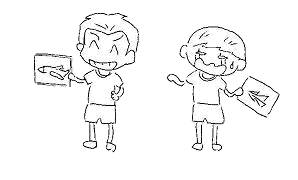
Figure 1-5 Boys showing the pictures of aircraft
they took at the US aircraft carriers. They became the envy of the
class. It was also the start of the
Aviation Club. Tseung believes that the existing
aerodynamic theory is wrong in the treatment of pressure of fluids in motion. Pressure should not be a scalar
quantity. Pressure is not even a vector quantity. Pressure should have six different values
in the Px,
P-x, Py, P-y, Pz, P-z directions. |
At that time, Wah Yan College was promoting
additional activities outside school hours. The school supplied support in terms of use of classrooms,
library books and promotion of such activities. The idea of forming an Aviation Club was accepted.
Tseung was assigned the task of explaining how
aircraft can fly to the Aviation Club members. That subject was not taught in secondary school physics
then. Tseung went to the City
Library and discovered some good information in Encyclopedia Britannica. It was the first time he stepped
outside his school to get information.
Nowadays, we can sit in the comfort of our home and hit a few keys at
the computer. Back then, Tseung
and his friends had to take a bus to the Public Library and wrote down as much
information as possible.
Incidentally, Encyclopedias were not allowed to be taken out from the
Library.
Tseung spent many hours copying. The two most important experiments he
learned from the Encyclopedia were:
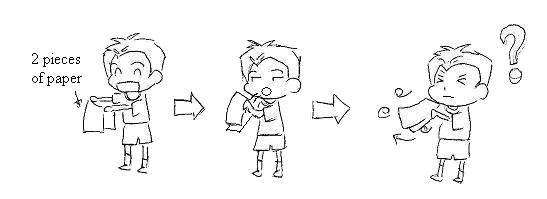
(1)
Blowing air in
between two sheets of paper.
Instead of flying part, the two sheets of paper would come together and
then separate. The action would
repeat - making a loud flapping sound.
The explanation was that when the air was in motion, the pressure it
exerted on the sides would decrease.
The stationary air on top of the top sheet and at the bottom of the
bottom sheet would then press the sheets together. When the sheets were pressed together, the airflow
temporarily stopped. The additional
air blowing in would force the two sheets apart. The airflow would again lower the sideways pressure. The process would repeat and produce
the flapping sound.
|
|
|
Figure 1-6
The two sheets of paper would come together and then separate. The action would repeat and produce a
loud flapping sound. |
(2)
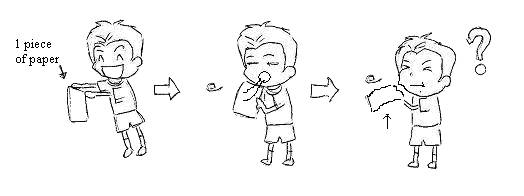
Blowing air over
the top surface of a sheet of paper.
The paper would rise up to the horizontal level. The explanation was that the pressure of
the flowing air would be less than the static pressure of air at the bottom of
the sheet. Thus the static
pressure at the bottom surface would push the paper up. Tseung even quoted that as the
Bernoulli’s equation.
|
|
|
Figure 1-7 The sheet of paper would rise up. The pressure of the
flowing air on top will be less.
The static pressure of stationary air at bottom pushes up. Classic explanation of how planes
fly. |
The presentation was done with some teachers and
higher-level students present.
They gave standing ovation afterwards. Tseung, then in Form 2 became a mini hero. The many hours of hard work were worth
it.
One of the questions raised by a higher-level
student was – pressure was a scalar quantity and had no direction. The explanation by Tseung associating
pressure with direction was faulty.
The physics teacher commented that even though the Tseung explanation
was not perfect, such an effort from a thirteen-year-old was commendable.
That question of pressure as a scalar quantity
remained as a shadow in the mind of Tseung. He took it up at BSc and then at MSc level at
University. He believed he finally
understood it after he completed his Kinetic Theory of Gases in Motion after
his retirement some 40 years later.
This topic of Kinetic Theory of Gases in Motion will be covered in a
later chapter and will have important impact in aerodynamics and Flying
Saucers.
|
Comments from the
Editor and reviewers: (a)
The moral of this
story is that one can pick up knowledge from channels other than
schools. Never make the excuse
of “this has not been taught yet”.
If something is important, learn it. Another important moral is – you must be absolutely clear
on every detail. If one detail
is fuzzy, it may be the diamond waiting to be polished. (b)
I always find
the interchanging of vector and scalar quantities puzzling. Pressure is force divided by
area. Force definitely has
direction. Why would the
division by area take away the direction element? Can scientists be wrong for centuries? Do we have to introduce a new thing
for pressure? Do we need to
consider the pressure of a moving fluid as having six directional
elements? Do we really need to
consider Px. P-x, Py, P-y, Pz
and P-z? Are the
existing textbooks on fluid mechanics wrong? (c)
If someone comes
to me and claims that “pressure as taught in fluid mechanics” is wrong, my
first reaction is to send him away.
If this someone is the now celebrated Tseung, my reaction will be different. The same words presented by different
individuals will have different impact. (d)
Do you think
that pressure should have a directional element? Is this a piece of unpolished diamond for you? |
1.3
The Winning of the Logical Thinking Challenge
The incident that made Tseung think that he was
special was the winning of the Logical Thinking Challenge. During one of those periods after the
school examination and before the teachers finish marking the examination
papers, the teachers and students were allowed “free time” to discuss
non-textbook related topics. One
of the teachers gave the following logical thinking challenge.
In this challenge, there were three very bright
students. There were five
hats. Three hats were red and two
hats were yellow. A student could
see the color of the hats of the other two students but not his own. The students were asked to logically
deduce the color of his hat.
In the challenge, many students said that they
simply guessed. The chance of
guessing right was 50%. The
teacher said that that was not good enough. He mentioned something like the logic of elimination. Most other students did not know what
that means. Tseung had the
inspiration to imagine that he saw two yellow hats. He thought, “If I see two yellow hats, the hat on my head
must be red”. He then paused and
thought, “If I see one yellow hat and one red hat, how should I react?”
The logical answer was to stare at the student
with the red hat. If that student
saw two yellow hats, he would have screamed that he was wearing a red hat. If all the three students were bright
and they all remain silent for some time, the chance of any of the students
seeing one red hat and one yellow hat would be low. Thus the logical deduction is that Tseung was wearing a red
head.
The teacher explained that this was a special
branch of logic. One saw two red
hats. But one should step back and
assumed that one saw two yellow hats!
Sometimes we had to ignore what our eyes saw and to imagine the various
possibilities. For example, if we
saw some hungry children, the obvious solution was to try to find food for
them. We might even blame their
parents or drought etc. We might
easily overlook the deeper reasons of ignorance in agricultural technology or
in resource distribution.
When Tseung met that challenge, his teacher and
his classmates used the term genius on him. He developed the feeling that he was intellectually above
others. He was motivated to meet
challenges. One example was to do
the most difficult problems in the mathematics textbooks and in the previous
public examination papers. That inner confidence remained with him for the rest
of his life.
He was also willing to imagine things that did
not happen or have not happened yet.
Much of the economic views later on in life were from such assumptions
or imaginations. Some people
called him a dreamer but they also accepted that there was always logic in his
dreams.
|
Comments from the
Editor and reviewers: (a)
Achieving something
special is one of the biggest confidence builders. For example, if one wins a gold medal in Olympics, one
will never feel inferior. Can we provide opportunities for our youngsters to
achieve the impossible? Should
we provide mini-obstacles? Should
we provide major hurdles? Should
we provide both? (b)
Should we make a
student feel superior and become an innovator – willing to explore the
unknown? Should we emphasize
teamwork and equality - no one should be above others? We know that China is successful and
wins many gold medals in Olympics because it has special schools for its
athletes. Should we have special
schools for our innovators?
Would summer camps be enough? (c)
I think that
encouragement is like giving a tennis racquet to a youngster and saying: “You
may become a tennis champion someday”.
The act of giving the tennis racquet is a good encouragement. But we must have the follow-up action
of many hours of coaching, playing, competing, etc. The Educators must think through all the steps to train
the innovators. A single
innovator can potentially change the entire world. (d)
Can you dream up
one idea that can change the World?
Can you dream up one idea that can change your family? Can you dream up one idea that can
change your future? |
1.4 The first hint that History taught in different
Countries is different
After Tseung passed the Hong Kong School
Certificate Examination, he went to England to join his brothers for continued
education. Hong Kong was a British
Colony at that time. There was a
general conception or misconception that the educational system in England was
very much superior to that of Hong Kong.
Many wealthy families sent their children aboard to increase their
worth. The Chinese saying at that
time was – one needed to dip in seawater if one wanted to succeed in the high
society. Tseung’s family was no
exception.
At the interview with the Headmaster of the
Sutton Grammar School, Tseung did miserably. He could not present a confident Tseung. He uttered and sweated. When the Headmaster asked him whether he
was confident in continuing his education in the esteemed school, Tseung tried
to be humble and said, “I shall try my best”. Tseung should have learned that in any interview, he ought
to show his absolute best. The
Headmaster then placed Tseung with the Transistors. Transistors were basically Form 5 Students who did well and
might have passed one or two O-level examinations.
In England, a Secondary School Student could
take an O-level examination for one or more subjects before his Fifth Form
graduation, while in Hong Kong at that time, the average student was required
to take examinations in eight or nine subjects at the same time. The O-level examinations in England
were conducted every six months.
Within weeks, Tseung realized that he was
effectively repeating his fifth form studies. He was too timid to approach the headmaster. Instead, he applied to take both
O-level and A-level examinations at the earliest opportunity which was three
months after he joined the school.
He chose five O-level science subjects and A-level Chinese. The result shocked the headmaster. Every subject including A-level Chinese
were awarded Distinction (the top grade).
Tseung then applied to take A-level Pure Mathematics to complete the
minimum University requirement of five O-level and two A-level subjects. The headmaster allowed Tseung to take
A-level Pure Mathematics classes and to skip the O-level Classes totally.
Within weeks, Tseung was the top in the A-Level
Pure Mathematics class. He studied
on his own and learned the topics well before the teacher taught them in
class. He became argumentative and
did not make any friends. The
incident that caused dissension was the discussion of why Hong Kong became a
British Colony.
When Tseung was in Hong Kong, he learned that
Hong Kong was ceded to England as a result of the opium war. England sold opium to China. China wanted to stop that. China seized and burnt the opium. England then sent the navy and defeated
the Ching Army. Hong Kong was
ceded to England as a result.
Tseung got into an argument with the English students. The English students said that their
history textbooks never mentioned opium.
England just needed a port so that their merchants could rest on their
world trade. Tseung then read
their history books. The English
students were right. Opium was
never mentioned. They then went to
see the English teacher.
The English teacher said, “England is a noble
nation. England never traded and
will never trade something evil like opium. It is all communist propaganda”.
It was a big shock to Tseung. He started to lose confidence in
authority. The textbooks meant
nothing. They did not always
contain the truth. The winners
wrote history. They wrote their
point of view. They could omit any
fact or incident. They could
interpret whatever they wanted.
This point of view affected Tseung immensely. He started to doubt the authorities. His doubts spread to Economics
textbooks and then later to Science textbooks. He never believed in politicians and economists. Later in life, when President George
Bush invaded Iraq on the false CIA information that Iraq had weapons of mass destruction,
Tseung publicly objected. He went
back to Hong Kong and China as a protest.
|
Comments from the
Editor and reviewers: (a)
One of the
biggest obstacles to innovation was the blind acceptance of so-called
truth. The most famous story was
Galileo claiming that the Earth was round. The authority at that time was the Church who claimed that
the Earth was flat. The Pope was
supposed to be infallible. His
words were undeniable truths as God guided him. (b)
Tseung faced
similar obstacles when he first presented the Lee-Tseung Lead-Out Theory. Some scientists and patent examiners
dismissed him totally. They
blindly quoted the Law of Conservation of Energy. Some of the juicy discussions can be seen in the
over-unity discussion forum under the Lee-Tseung Lead-Out theory thread (http://www.overunity.com). (c)
Should we always
present history from the two different points of view – that of the winner
and that of the loser? How would
such textbooks be different from the ones used in schools today? (d)
Innovators will
step into uncharted territories for the rest of us. How should we equip them? Should we just send them in empty-handed and just say
‘good luck’? Or should we equip
them with the best tools and the best backup support? What are these tools and what is the
backup support? (e)
Have you ever
viewed the USA history from the point of view of the Red Indians? Have you
ever questioned the doctrine of survival of the fittest? Do you think that it is a natural law
that will be passed to future generations? Is building happiness on the sufferings of others
inevitable? |
1.5
The Road to University
When the A-level results came out, Tseung got a
Credit in his A-Level Pure Mathematics.
In other words, he already fulfilled the University Entrance requirement. He could apply to Universities. He got help from his eldest brother who
got his PhD from Leeds University.
An incident convinced his eldest brother that Tseung was worth helping.
In summer that year, Tseung worked as a student
assistant in the research laboratory of his eldest brother. Tseung was under a different department
to avoid the suspicion of conflict of interest. The manager was hoping to develop an apparatus that could
deliver hydrogen with some pressure on demand. Available to the chemists was the Kipp’s apparatus as shown
in Figure 1-8.
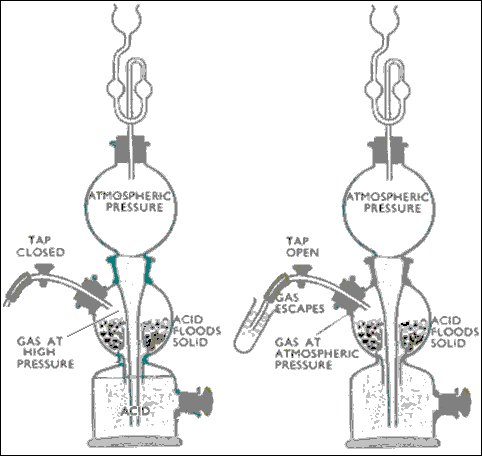
Hydrogen could be produced when an acid such as
sulphuric acid reacts with a suitable metal such as Zinc metal fragments (Zn +
H2SO4 = ZnSO4 +H2)
The standard Kipp’s apparatus has essentially
three chambers. Zinc metal fragments are placed into the middle chamber. Sulphuric acid can be poured in from
the top chamber to the bottom chamber.
If the valve in the middle chamber is open, the acid level will rise
until the acid immerses the solid.
Hydrogen will then be produced.
If the valve in the middle chamber is closed, the generated hydrogen gas
will force the acid into the bottom and top chambers. This effectively separates the sulphuric acid and the
zinc. The chemical reaction will
be stopped. It effectively
generates hydrogen on-demand and has been used in chemistry laboratories for
centuries.
The manager wanted to have hydrogen gas on
demand with a controllable small pressure. He left the task to the young Tseung. Tseung first experimented with the
standard Kipp’s apparatus. Within days, he came up with the following simple
design.
|
|
Figure 1-9 The Tseung modification of the Kipp’s apparatus. In the diagram: A
= valve to let out hydrogen B
= hydrogen gas produced C
= Zinc strips for chemical reaction D
= Sulpheric Acid E
= Air that can be compressed F
= Air pressure control device |
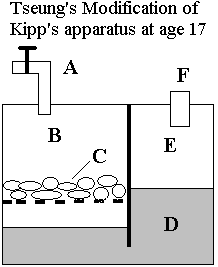
The manager was impressed. He asked: “How can you come with such a
design so quickly?” Tseung said: “It
is essentially the Kipp’s apparatus with a lid. I just played with different arrangements to make it look
nice”. The manger was willing to
write an excellent letter of recommendation. Tseung’s eldest brother took the letter of recommendation
and spoke to his former professors at Leeds University. Tseung was accepted.
|
Comments from the
Editor and reviewers: (a)
Tseung did not
get the normal two years of A-Level education. He developed the attitude that he could learn on his
own. The small Kipp’s apparatus
project gave him much inner confidence.
I believe this inner confidence is the key to training
innovators. Innovators must be
able to search and discover their own solutions. (b)
Learning from
teachers or textbooks is useful.
But teachers or textbooks present known solutions. Innovations involve the domain of the
unknown. Maybe we should have a
collection of unknown or unsolved phenomena to stimulate our budding
innovators. (c)
With the
internet and multimedia readily available, do we have to adhere to the
traditional model of a teacher presenting the material in front of the
students? Can a teacher assign teaching
roles and encourage the students to learn from the internet and present in class? (d)
List five things
that you learned outside regular schools. Are there things that should be taught outside regular
schools? |
1.6
The University Years
This gave Tseung supreme confidence. Tseung was very active at Leeds
University. He became the
secretary of the Chinese Society and helped to organize many functions. There were many overseas Chinese
Students including those from Singapore, Taiwan, Malaysia, Africa and
Macau. During the many long
holidays when the local students went home to their families, these overseas
students gathered together to have fun.
The Chinese Society at Leeds took in many
non-Chinese members. One important
motive in welcoming non-Chinese members was the need for good basketball
players. There were two Chinese basketball
players who were good enough to represent the University. They helped to motivate and train a
team to compete within the University.
The team was runner-up in the competition. The decision was to invite good basketball players to
represent the Chinese Society. One
black American joined. Tseung
could only play reserve. He was
not tall enough and could not move fast enough. The games he enjoyed more were tennis and table tennis. Once the Chinese Society Team had
foreign help, the championship was in the bag.
|
|
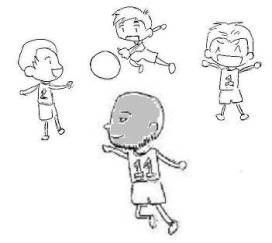
Figure 1-10 The International Spirit When the Chinese
Society at Leeds University opened its membership to other Nationals, it won
the basketball champions. Tseung learned to
appreciate the slogan “One World One Dream”
at an early age. This helped to
mode him to have an International Outlook. |
The other important factor that helped the
Chinese Society to be more International was that Leeds University had a
Chinese Department. The students loved
to find native Chinese speaking students to practice their Chinese language
skills. They sat at the same table
at lunch or dinner. Many became
members. Many smaller societies
such as Thailand, Indonesia and Vietnam also had joint functions with the
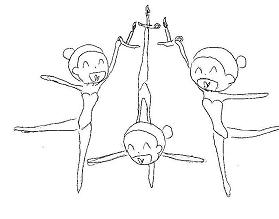
larger Chinese Society. The candle
dance at the International Night was a big hit. It was a combined effort of many Asian Societies.
|
|
Figure 1-11 Candle Dance The Candle Dance was
a combined effort of many Nationals.
They rehearsed for weeks.
They combined the features or traditions from China, Thailand, Vietnam,
Malaysia, Eastern Europe etc. It
was the jewel of the International Night at Leeds University. |
The Chinese Society at Leeds University then
held joint functions with other Chinese Societies from the Universities of
Manchester, Liverpool, etc. There
was both encouragement and support from the various embassies. That helped Tseung to develop an
international outlook of the World.
|
Comments from the
Editor and reviewers: (a)
University
education is not just about book knowledge. It involves the social interaction of many others. Education abroad gives the student a
chance to interact with students from many other nations. I believe that this should be
encouraged. (b)
With unlimited
energy, flying saucers and automation, the world needs fewer farmers, factory
workers and laborers. Can we
provide longer educational years for our citizens? (c)
Have you taken
tours outside your city? Have
you become more tolerant towards the strange food, habits and culture of
other nations? Are there any
habits that ought to be changed?
Can they be changed via mutual credits, model farms, model villages,
etc? |
I asked Tseung the question – How would he improve
the education system in Hong Kong if he were given the chance? Recently, the Hong Kong Educational
system was in turmoil. There was a
loss of confidence in the academic qualification of the teachers. Many claimed that some of the teachers
were not qualified. The blame was
placed on the Teacher Training Colleges.
There was a Government Policy to promote the use of native language in
teaching. That led to a
classification of English and Chinese speaking secondary schools. The Chinese speaking secondary schools
were made to feel inferior. The
English language skills on the whole dropped as measured by the open School
Examination System. This official classification policy would end because of
the violent objection from the students, parents and educators.
Tseung presented the following innovative
answer. He said, “In the old days
before the internet, we relied on the teachers to pass the knowledge to the
students. With the multimedia
technology and internet of today, that particular role can be modified. The Government can promote the teaching
of the standard course material in multiple languages. The recommended textbooks can have CDs
with the same material presented in English, Cantonese and Putonghua. The teachers, students and parents can
decide on which language to use.
They may even use multiple languages”.
Tseung continued: “To be realistic, much of the
material can be learned by the student on an individual bases via the
internet. Some students can move
ahead much faster than the others.
The role of the teacher will start to change from that of presenting the
material to ensuring the digestion of the material. Techniques such as small group learning can be
introduced. It may even be
beneficial to have student groups to teach some topics to the rest of the
class. That will build the
lifelong confidence in the average student that he can learn either by himself
or in a small group. Hong Kong Government
tries to promote lifelong learning.
The best way to develop these skills and habits is when people are
young”.
|
Comments from the
Editor and reviewers: (a)
The cost of
providing excellent course material in multiple languages on CDs is
relatively low compared with the cost of re-educating all teachers. There can be multiple recommended
versions of the course material available on the internet. The Government can easily fund such
material. The Government can
help to produce educational programs or techniques that show improvement or
innovation. Some of the best
teachers can earn extra money by appearing in such programs. (b)
There is no need
to force schools to follow the new path. They will move in that direction automatically if positive
results are demonstrated. |
1.7
The Kinetic Theory of Gases in Motion
In the final year at Leeds University, one of
the assignments set for the students was to write a paper on a subject of their
choice. Tseung chose the topic of
explaining pressure and aerodynamics using the kinetic theory of gases in
motion.
The standard
kinetic theory of gases is taught in both Physics and Chemistry lessons in
connection with the gas laws.
Boyle’s Laws states that for a fixed amount of gas kept at a fixed
temperature, P and V are inversely proportional. Charles’ Law
states that for a fixed amount of gas kept at constant pressure, T and V
are directly proportional to each other. (P=Pressure, V=Volume, T=Temperature).
The kinetic
theory of gases assumes that the molecules of an ideal gas are small and are in
constant motion. They collide
elastically with each other and with the walls of the container. Pressure at the surface of a container
is a result of the rate of change of momentum of these molecular collisions. (P = 1/3 NMV2). Pictorially, the pressure of a
stationary gas can be viewed as:
|
|
Figure 1-12 Stationary
Gas: 1.
Cube contains 60
moving balls 2.
10 balls collide
with each wall. 3.
Pressure is
result of bombardment Only the X and Y co-ordinates are shown |
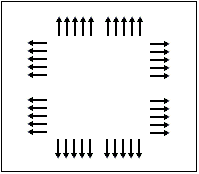
If we can get more balls
moving in the X direction, there will fewer balls moving or colliding in the Y
and Z directions. For example, if
there were 15 balls moving in the +X direction and if the remaining balls are
equally distributed in the other 5 directions, the number of balls moving in
the +Y direction would be:
(60 – 15) / 5 = 9.
If only 9 balls
move or collide with the wall in the +Y direction, the pressure will be less
than that compared with 10 balls.
This mental picture (Figure 1-12) is easy to understand and explains why
pressure in the directions perpendicular to motion can decrease.
|
|
Figure 1-13 Perfect Moving Gas: 1.
Cube contains 60
moving balls 2.
All balls move
with the same molecular velocity 3.
15 balls collide
with wall X1 4.
9 balls collide
with each other wall Fewer balls collide in Y direction and thus pressure Py is lower. |
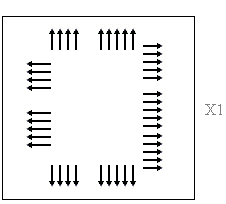
Tseung used the above concept to explain why the
pressure of a moving gas could be lower in the direction perpendicular to the
direction of motion. The Laws of
Physics are not violated. The new
thing which he proposed is that pressure should not be viewed as a simple
scalar quantity. It is also not
the standard vector quantity with 3 directions. It should have 6 directions in general (Px, P-x,
Py, P-y, Pz, P-z).
Tseung also used this simple theory to explain
Bernoulli’s principle and the Coander effect. The Coander effect is the tendency of a moving gas to move
parallel to a surface if the angle is not too great. It can be used to enhance lift.
Tseung achieved the nickname of “Flying Saucer
Tseung” because he started to apply his knowledge of physics to the design of
Flying Saucers. Tseung assumed
that a Flying Saucer could operate in space where there was no air. The normal aerodynamics could not
apply, as there was no air. All
changes in speed or direction needed to come from engine power. At that time, the Harrier jump jet,
which can take off and land vertically, was being developed. However, the jump jet still needs the
oxygen in the air as part of the combustion process. Tseung argued that a sideways thrust could provide the
necessary centripetal force to turn the Flying Saucer sharply including 180
degree turns without lowering its speed.
The only problems at that time were fuel and engine power. The problems were solved some 35 years
later. Tseung talked about this
freely. He had a chance to talk to
a famous child actress Miss Po Po Fung in London (who is still famous in Hong
Kong as a mature actress). Miss
Fung wanted more education and envied those with a good university
education. Tseung was the
opposite. He adored the actresses
in their ability to perform on stage and their confidence in daily
conversations. Miss Fung used the
‘Flying Saucer Tseung’ nickname in her conversation with Tseung and was very
friendly.
|
|
Figure 1-14 A Flying Saucer Tseung assumed that an UFO or a Flying Saucer
could operate in space where there was no air. The normal aerodynamics could not be applied. However, the complete theory was worked out
after his early retirement with the help from a 13 years-old girl. |
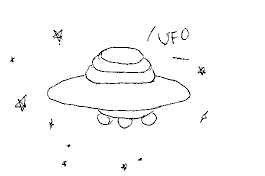
The graduating students circulated the Kinetic
Theory and the Flying Saucer papers and discussed them heatedly amongst
themselves. The models were simple
and obeyed the Laws of Physics.
However the project was just one of the requirements for graduation and
most of the students focused their energies on their own assignments. The professor was impressed and took
Tseung to see the Head of the Physics Department.
The Head of the Department was very
encouraging. He said, “These are
very innovative ideas. However,
they are still in their early infancy.
I strongly urge you to continue this line of research”.
|
Comments from the Editor
and reviewers: (a)
The Kinetic
Theory of Gases in Motion is just a mental picture. In reality, the molecules travel in a much more random
fashion. However, one cannot
visualize and deduce much from random pictures. Tseung used that logical thinking from his Secondary
School days to visualize an ordered picture. Is this genius or is this just innovative thinking? (b)
Did the
subconscious use the Logical Thinking Competition experience? Imagine motion of molecules that we
cannot see. (c)
You cannot see the
molecules. But can you see the
greatly simplified Figures 1-12 and 1-13? Can you follow the logic? With whom can you discuss this? |
1.8
First job as Physics demonstrator at Hong Kong University
Tseung went back to Hong Kong to visit his
family. Tseung’s father said, “I
have done my duty to provide you with a university education. Now you should start looking for a job
and support yourself”. Tseung went
to the Physics Department of Hong Kong University and talked to a professor
about his kinetic theory of gases in motion. He got a job offer as a demonstrator that same day.
Tseung rented a room for graduates and staff at Ricci Hall
of Hong Kong University. He became
good friends with six other graduates.
They called themselves “The Riddi Seven”. They would spend all night discussing all sorts of
topics. The girl friend of one of
them was an editor in the University Magazine (“Spectrum”) and Tseung got his
early paper on kinetic theory of gases in motion published there.
Unfortunately, the Hong Kong University Library
had a fire and the Library was essentially closed. Tseung had to work in a vacuum. The internet was not available at that time. Tseung got himself known by urging
others to help clean the soot off the undamaged library books.
Tseung got frustrated with the lack of progress
of his theory. There was nobody in
the same field with whom he could talk.
He then realized the importance of working in a proper research
environment.
After nine months, Tseung decided to gain more
experience in the industrial world.
He got a job as a Product Engineer at Fairchild Semiconductors in Hong
Kong. The first assignment was
documenting an improved process in Hong Kong after the process was introduced
there from the USA. Tseung was
selected because of his good command of both written and spoken English. The process efficiency was increased 70
times which is 7,000%. In economic
terms, an investor needed to invest US $1,000,000 to do a certain task in the
USA. That same investor needed to
invest only US $14,300 to do the same task in Hong Kong. That huge difference could not be
accounted for by the difference in labour cost alone.
The first important improvement Tseung found was
in the arranging of the diode chips.
The USA process was to have many workers using tiny suction pumps to
pick up each chip and line the chips properly on the testing metal plate. It was very labour intensive and the
tiny suction pumps often got clogged up.
The production line used 20 workers working continuously to line up
these chips for testing. In Hong
Kong, one single worker working part-time achieved the same result. The improvement was actually achieved
by a young female worker who poured a small amount of chips on the testing
plate and used a paper card to arrange the chips and flipped the ones over if
they were not correctly faced. It
required delicate hand movement.
Tseung tried it and realized that considerable practice was required.
The USA engineer who designed the process made
the assumption that the assembly worker would not need any training and could
be productive on the first day at work.
Tseung lost half of the test chips on his first try of the Hong Kong
improved process. A young female
worker developed that process when the Hong Kong management introduced the “pay
by finished pieces” system. That
young female did the work of twenty workers.
|
|
Figure 1-15 Process Improvement The job of 20
laborers was replaced by 1 laborer with an improvement in the production
process. Japan, Hong Kong and
China did not just copy the production process. They examined and improved it. |
|
|
Figure 1-16 Worker Satisfaction The lady-worker did
not have University degree. She
was motivated to invent or improve the process because of money. The management
introduced pay-by-pieces incentive. |
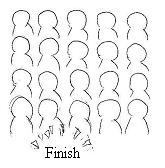
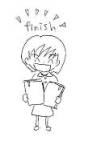
Another big improvement in the production
process was the placing of the diodes on to racks before processing. The US process was to have many workers
picking up a few diodes and place them into the slots in the rack. The US production line used 10 workers
working full time. In Hong Kong,
one single young female worker could achieve the same result. She used a permanent magnet on one side
of a thick glass plate to pick up the diodes. After a quick, skillful shaking,
many diode parts could be slotted into the rack at the same time. The human hand was used to pick up a
few diodes to be placed in the remaining empty slots.
The Hong Kong Engineers also contributed. Diamonds tipped wheels were used to cut
the chips into small pieces. There
were many broken bits. One of the
Engineers suggested that the cutting lines should be etched before
cutting. That greatly reduced the
loss.
Tseung realized that the US engineers who
designed the production process might not be perfect. The hands-on workers and technicians could make many
improvements. He was highly
praised and well regarded by his peers.
However, he found that the working hours were extremely long. There was little time left for
researching his kinetic theory of gases in motion. He then took up a teaching post in a secondary school.
Tseung fell in love with a teacher in the same
school. They got married and had a
son. They saved some money and
planned further education for Tseung. They had a very memorable experience at
their honeymoon. They chose Macau
as the place for their honeymoon.
Macau was and is famous for its casinos. That was the first visit for both of them to casinos.
Tseung, being the scientist, did much research
before going to the casino. He
focused on the three dice game. In
the three dice game, one technique was to bet on a single number. The total number of combinations for 6
numbers on the three dice was 216 (6 x 6 x 6). The probability of a particular number not appearing was 125
(5 x 5 x 5). This means that the
chance of a particular number appearing once or more was 91 (i.e. 216
-125).&nnbsp; The minimum bet was one
dollar. The maximum bet on the
higher minimum bet table was 2,000 dollars. If he used the stupid ‘double on losing’ strategy, he would
have a good chance of winning. The
stupid doubling strategy is to double one’s bet on losing. He could have 10 chances (1, 2, 4, 8,
15, 32, 64, 128, 256, 512, 1024) before he lost his entire betting amount. The odds of his not winning a single
time was 0.004212 (i.e. (125/216)10).
He thought that he could improve his odds more
by carefully observing the history of the results at the table. The dice might not be perfect and a
particular number might appear more often than others. Their goal was to win 100 dollars.
Tseung sat on the betting table cheered on by
his bride after determining a particular table showed a higher appearance of
the number 6. He calmly carried his
stupid strategy of doubling on losing.
He won a couple of dollars and then he had a run of seven consecutive
throws where the 6 did not come up.
The bet was up to 64 dollars.
Tseung began to sweat. He
closed his eyes. Then he heard his
bride screamed. There was a double
6. Tseung collected 128
dollars. The delighted couple went
away from the table to celebrate.
They had drinks and laughed.
|
|
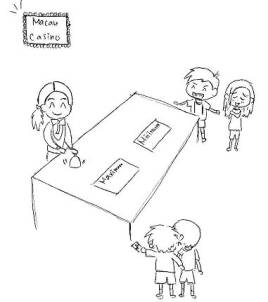
Figure 1-17 Gambling at Casino Tseung and bride did
much calculating and theoretical analysis before going to the Casino. When they stuck to
the plans, they won. However, human
emotion took over. They gambled
instead of following a mathematical plan. The result was total
loss! |
|
|
Figure 1-18 The Short Moment of Joy When Tseung and bride
used their mathematical plans, they won. They were supposed to
leave the gambling table but…. |
|
|
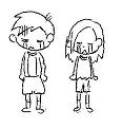
Figure 1-19 Total Loss Like many others, the
couple had to leave after losing everything. Human emotions failed them again. |

The temptation was just too much. They went back to the gambling tables
again. The dice were changed at
the previous table. So Tseung
searched around and found a table with a higher incidence of the number 5. He used the stupid strategy of doubling
again. The number 5 appeared many
times. Each appearance yielded one
dollar to the couple. They were
there for over 3 hours. The bride
became bored. She took all the
winnings that exceeded $100 and said, “Let us have the excitement of one big
bet”. Tseung obliged. They lost and left the table.
The young bride said, “You have to win it back
for me. But don’t take too
long”. Tseung thought that since
the number 5 appeared so often, he could start the minimum bet at $100. Unless there were a successive 5 runs
without 5, he could win back $100 (100, 200, 400, 800, 1600). Predictably, the bad luck
occurred. The couple lost all
their money. The casino operator
gave them back a token $10.
That was a painful experience. The couple cut short their honeymoon. Tseung realized mathematical analysis
was one thing. Human emotion was
another. Many failures in life
would not come from lack of planning or knowledge. They came from emotions. Unfortunately Tseung had to learn this lesson again and
again.
|
Comments from the
Editor and reviewers: (a)
Scientific
reasoning and mathematics often fail when emotions get involved. Humans need to have fun. What is the point of living if there
is no fun? We often do silly and
illogical things because they are fun.
Men laugh at women spending time shopping for unnecessary stuff. Women laugh at men glued to the
Television sports programs. (b)
Innovators also
have emotions. (c)
This is the most
stupid way of gambling. If a
table keeps coming up with 6s, I would have bet heavily on the number 6. Tseung is a stupid gambler. He does not know how to use
opportunity. I am better than he
in this aspect. (d)
This brings up
one important observation in life.
When two persons see the same phenomena (higher occurrence of the
number 6), one uses the stupid doubling on losing technique. The other may use the same bet or
double on winning technique.
They may argue on the relative merits. In reality both may lose because of their greed. Their human emotions will cause their
downfall. (e)
A casino
operator once said, “Most people lose their money before they leave my
casino. If they win, they
stay. I do not really care what
strategy they used. They will
not be able to overcome the human greed”. (f)
List three
situations that your emotion failed you. If you have a chance to re-experience such situations,
what would you do? |
1.9
M.Sc. experience at Southampton University
Tseung applied for a MSc course in Aeronautics at
Southampton University with a draft of his theory of kinetic theory of gases in
motion and was accepted. He had
some financial help from his parents.
He found that he was still short of HK $20,000. He had a good friend, the late Mr.
Edward Lau, who taught him how to play Mahjong at the age of 10. When they became Bridge partners, they
were almost unbeatable. Mr. Lau
got his training as an accountant in England and went into the Stock Trading
business with support from many wealthy business people. Mr. Lau once told Tseung that the Stock
Trading in Hong Kong at that time (1970s) was like a casino controlled by the
wealthy. Those wealthy persons
were often known as crocodiles.
They just devoured the small fish.
However, if one knew how to play the game, one could win large sums of
money.
Tseung called Mr. Lau for his advice to raise HK $20,000
from the Hong Kong Stock Exchange.
Mr. Lau said, “Since you are my good friend and your need for money is
legitimate, I am going to help you this time. I shall help you only once and never again. You must promise not to play in the
Stock Market any more”. Tseung
solemnly promised. Mr. Lau then
instructed Tseung to apply for the new issue of a stock. Sure enough, Tseung got allocated the
shares and promptly got the required HK $20,000 in profits. That was a successful event but it also
caused great pains to Tseung later in life. He broke his promise of never playing in the Stock Market
and lost much of his hard earned savings.
Greed and human emotions were great temptations. Tseung was no Saint and fell prey to
them.
When Tseung started his MSc training, he lost no time in
explaining his kinetic theory of gases in motion to his fellow students. All were intrigued. A few were already going for their PhD
degrees. They discussed the
primitive theory for weeks and realized that if Tseung were right, then many of
the accepted theories such as Bernoulli’s equation, and the Von Karman Vortex
theory might have to be re-examined.
They then started approaching the professors one by one. Many of the young professors started to
question the validity of the established theories also.
Tseung became bold and started to outline the possible
experiments that could validate his theory. He reasoned that the weight of a solid could not change if
one gave it a horizontal velocity.
If the solid acquired a velocity v, every molecule would acquire that
velocity component. However, when
a gas acquired a velocity v, there was no requirement that every gas molecule
acquires that velocity component.
More gas molecules could move in the direction of velocity v.
He proposed to do the experiment to check the total weight
of a toy helicopter and its container.
Assume that the total weight was W1 when stationary. Would the weight change when the toy
helicopter was hovering in the middle of the container? In the early 1970s, such an experiment
was not easy. Tseung applied for
funding through university channels and approached many professors for
support. That caused a minor
turbulence.
The Head of the Aeronautics Department called Tseung to his
office and said, “I understand that you have been approaching many different
professors and discussed your primitive theory. You even implied that the established Bernoulli’s equation,
and the Von Karman Vortex theory might be wrong. You even doubted the definition of pressure. Pressure is a scalar quantity. It has no directions. You better spend your time learning
what we are going to teach you. Or
you go on with your own ideas elsewhere.
Your application for funding has been rejected”.
It was a very painful blow to Tseung. He could end up with no MSc degree;
wasted years of family savings and go back to Hong Kong as a failure. He surrendered. He focused on the MSc material,
especially the computer programs to apply the Vortex theory to airfoils in
proximity. He never believed in
the vortex theory but he got his MSc degree. His wife and son joined him in Southampton. His wife wanted him to get a PhD. But Tseung decided otherwise.
|
Comments from the Editor and reviewers: (a)
What would have
happened if Tseung had insisted on his kinetic theory of gases in motion and
did not get his MSc? Could he
have gotten support from elsewhere?
In the modern society of Hong Kong or China, will such innovative
ideas be supported? (b)
Tseung will get
support now that he is famous.
Are there other unknown innovators with same or better innovativeness
waiting to be discovered? How
can we identify them? (c)
Have you read
any innovative invention that deserves your support? Spend time at the library, the
bookstores or on the internet.
Can you come up with a win-win solution? |
1.10
IQ tests and how to secure perfect scores
Tseung applied for jobs in the open market. He learned computer programming in
Fortran in his MSc course. The first company he applied to was IBM. When he went for his interview, many of
the applicants had already started on an IQ test. The interviewer asked Tseung to join them. Tseung did not know what was going on
and spent much time reading through the whole examination material without
writing anything. Before he knew
what he was supposed to do, time was up.
The interviewer then said to Tseung, “According to this IQ test, you
could not even have passed primary school. Please go away and do not come back again”.
Tseung was mad.
He always had a high opinion of his intellect. That was too much of an insult to bear. He spent the next few weeks at the
University Library reading up on IQ tests. He read the theory behind the IQ tests and the design of
such tests. He then did hundreds
of such IQ tests. He checked and
analyzed every answer. He walked,
ate and dreamt IQ tests. He then
approached an employment agency.
The agency asked him to apply for a programmer job. Sure enough, there was the IQ
test.
The next day, the agency called Tseung and said, “You
scored full marks. I shall refer you to a much higher paying job with some
relevance to your training in aeronautics”. The Company was a defence contractor. Sure enough, there was the inevitable
IQ test.
The next day, the agency called Tseung again and said, “The
Company wants to interview you.
You must be a genius.
Nobody scores full marks at two successive IQ tests”. Tseung never told the agency his hard
work at the University Library.
The interview was very successful. The interviewer asked some question on
control theory and simulation.
Tseung spent months working on computer simulations of the airflow
around airfoils. He could reply
with ease and confidence. Then the
interviewer asked what Tseung wanted to do. Tseung explained his Kinetic Theory of Gases in Motion and
his concept of the Flying Saucer.
The supposed one-hour interview lasted over three hours. The interviewer asked additional
managers to come and listen to Tseung.
The Company offered Tseung a job related to missiles research but there
was the requirement of security clearance. The security clearance would take at least nine months and
Tseung could not leave England during that period.
Tseung talked to the agency. The agency said, “I shall recommend you to a new start-up
Company manufacturing mini-computers.
The name is Digital Equipment Corporation. I have talked to them about you. They are interested in having you even for a couple of
months”.
|
Comments from the Editor and reviewers: (a)
Can the IQ test
identify a genius? My gut feel
is to compare that with the development of a basketball player. One must be tall and strong to have a
natural advantage. The rest is
proper training and environment.
Developing an innovator may be similar. (b)
Tseung is no
genius. Any one of us could have
conceived his theories. His
achievement was due to rejection and perspiration. He used jeers and rejection as his motivation force. (c)
When we see the
Gold Medal winners at Olympics, we admire their achievement. When we read their stories, we learn
about their training, the hardship, the ups and downs and the frustrations. What can you do to win a gold medal
in your life? What can you do to
win admiration within your circle or outside your circle? |