 |
|
|
|
|
|
|
|
|
|
|
|
|
|
|
|
|
|
|
|
|
|
|
Fabric, Buttons, & Grommets |
|
|
|
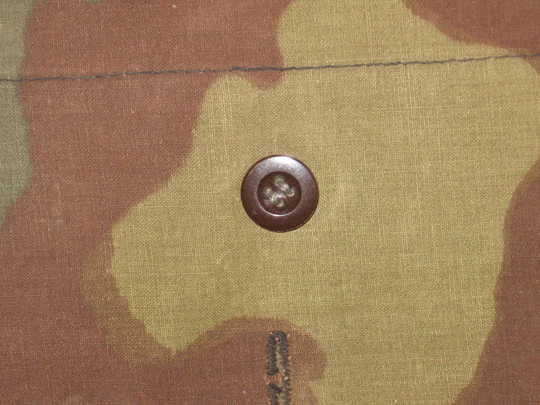
The softer plastic button on PW #1 can be seen here as well as the course weave. As stated numerous times elwhere on this website, PW #1 is made out of a very course weave material that is very similar to the Original example in my collection. The flash on my camera makes the button look light in color. It is actually a dark brown. Many mistake these sewn on plastic buttons as Bakelite . |
|
|
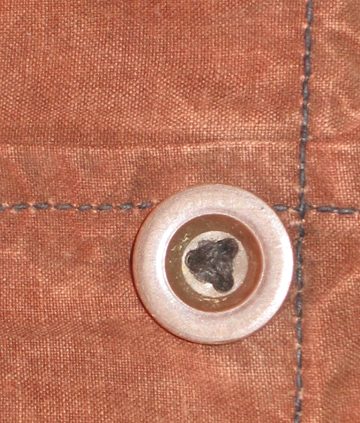
Orig. #2 shows the hard plastic button sewn to the material. In this close up the courseness of the original fabric can be seen |
|
|
|
|
 |
|
|
|
|
 |
|
|
|
|
 |
|
|
|
|
|
|
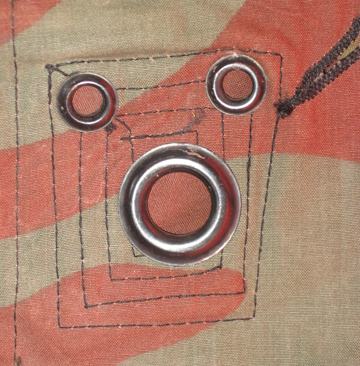
These are the typical metal grommets found on post war Italian camo shelter quarter/ponchos and shelter halves. Note the corded but not bartacked button hole and reenforcement stiching around the grommets. This close up also shows the tight fine weave of the fabric. Both this photo and the photo above were taken from approximately the same distance. |
|
|
|
|
|
 |
|
|
|
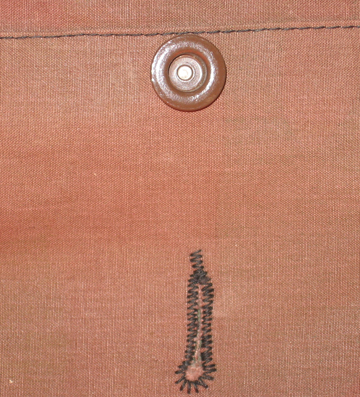
This is a typical rivitted metal button found on a post war example. |
|
|
|
|
|
 |
|
|
|
|
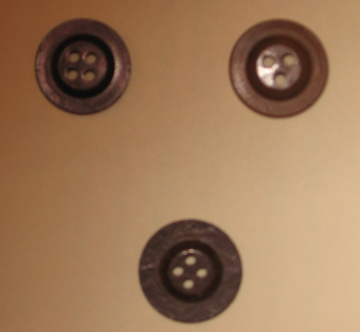
The top left button is a 4 hole plastic button found on both original and post war examples. The light colored plactic button on the top right is also found on both types. the button on the bottom is made of bakelite and is found only on original German used Italian camo items. Note the streaks in the material. These are wood fibers. Since bakelite is a wood-based product you can see the grain and wood fiber. A perfect example is the German WW2 field phone cases. Huge chunks of wood fiber can be seen in the moulded material. |
|
|
|
|