 |
|
|
|
|
|
|
|
|
|
|
|
|
|
|
|
|
|
|
|
|
|
|
|
|
|
|
|
|
|
|
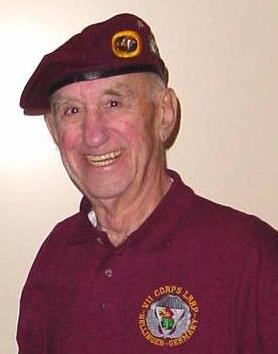
| The following are excerpts from an interview on 25 May 2002 with Col. Edward V. Maltese (Ret), "Father of the LRRPS". |
|
|
|
 |
|
|
|
 |
|
|
|
WHEN THE LRRPS WERE ONE |
|
|
|
|
|
|
|
Or, HOW THE LRRPS WERE WON |
|
|
|
|
|
|
|
|
| "In 1960-61, I was in Fort Monroe, VA, working for Gen. Watters as head of the airborne test sections and so forth, and I was asked to extend there for another year - and it was sent back disapproved. General Walters said he didn't understand why they disapproved my extension, so I went up there (to the placement office) and they said there are two places they wanted me to send me, one was Hawaii, so I said, 'Yeah, I wouldn't mind that,' and the guy said, 'You can't go there, because I'm going there', and the other was back to Korea. So I called General Watters and told him I was being assigned to Korea, and he said, 'I've just been assigned to Corps over in Germany. Why don't you come there with me?' I didn't end up there with him, but I was sent to 7th Army instead, under General Mel Zais, a tremendous airborne soldier. He was somehow related to Gavin, a brother-in-law or some such - a good man. He was G-3 of 7th Army. He wanted me to go to work for him at 7th Army HQ, but I ended up instead as 7th Army operations officer with the G-2 division. |
|
|
| THE VISION |
|
|
| "I had never been a G-2 in my doggoned life. I had these two captains in there, and I'm Operations officer. We got to talking one day and one of them said, 'You were in the Special Forces, what did you think of them?' 'Well,' I said, 'the trouble with Special Forces is that they were reactive to the Army, they were more of the theater concept.' And he said, 'That's what I've been thinking. We need some sort of means to find targets in the Army's sphere of influence', and I agreed. And they are the ones that really put the idea into my mind. |
|
|
| "I said 'OK, let's get to working on it.' So they got to working on what we should do and shouldn't do, and I was up there fighting the battle with 7th Army headquarters - in my own way - and the G-2 wanted no part of it, of course, but Mel Zais was the one I had to convince. |
|
|
| "He finally agreed with me, said, 'I'll support you. Now, Ed, what we have to do is find the spaces.' To this day I'll never understand where he got the spaces. And I never asked. |
|
|
| "But we finally got through 7th Army, approved for the two companies (V Corps and VII corps) at the same time. Then Zais said, 'Now you need to get USAREUR approval.' It was just the two captains and myself - I wish I could remember their names - so we worked on that. One day I got a call from USAREUR Headquarters. They had some concerns from some special planner up there, and they said 'Ed, we notice you've got a major as commander there,' and I said, 'Yeah, what of it?' They asked why, and I said, 'It's because I'm going to command one of them, that's why! And I'm a major, that's why I've got a major commanding them, and that's the only reason I've got a major there.' Well, they said, 'That's reason enough for us,' and that's how they approved it. |
|
|
| "I got a call from the G-2 at VII Corps the day they approved it, and they asked, 'Will the G-2 at 7th Army release you?' I said, Probably not,' and with that the Corps Commander, Colonel Oaks, got me on the phone and he said, 'How about you come in and I'll do it?' and I said, 'OK.' And that's how I got there. |
|
|
| THE MEN |
|
|
| "The one that helped us most was the assignments NCO at VII Corps, who would call me every month and say, 'I've got a list of people you might be interested in.' So, every month I would go over that list, and pick out the ones I wanted, and out they'd come. As far as qualifications, what mattered to me was what they had done, that's the only thing I ever cared about, if it looked like they had been in the Army. |
|
|
| "We had a full company - it really filled up well. We got permission to recruit - most of them came from the 505. I remember old Herb something from B Co 505, he tried to discourage them, called us a bunch of candy-asses, so I went up there - hell, I'm about forty-one years old, but in pretty good shape, and I said, 'I'll take you out and we'll see who comes back.' That was the end of that discussion. |
|
|
| "The company was heavy with NCOs, by design. One day, McNeeley was out there cleaning with another NCO who was complaining, and McNeeley said, 'Well, would you rather clean it as a Sergeant or as a private?' And that was the end of that. 'Respect your NCOs,' I always told my men, 'If you don't, we don't want you.' |
|
|
| TRAINING |
|
|
| "The training schedule was written by me, Captain Frank Garbers, LT Jack Conlon, Sgt McNeeley and Sgt Darrell Daugherty. Daugherty did almost all the work. And I've got to give 7th Army credit. They let us alone, and we could do whatever we wanted. No one ever came out and said, 'Don't do this, don't do that.' For instance, we wanted to take ski training at Garmisch, we went to Garmisch, and the Army paid for all the facilities and we did whatever we wanted to do, even swimming at Garmisch in the summer. |
|
|
| "They worked hard, they played hard. I always believed in training, for others and myself. Every one we sent to jump school when I was there came out as number one in his class. Had to be, they were in the best shape of anybody. There's no doubt about that. Hell, I was forty-two years old, and I'll bet you for a forty-two year old man I was in the best physical shape anybody's ever been in. I ran every morning, did rifle PT in the afternoon. |
|
|
| SUPPORT |
|
|
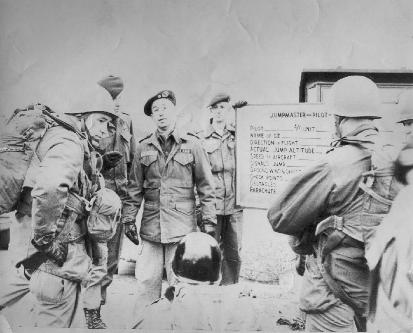
| "Our biggest problem was with helicopter support. Some of them didn?t want to fly, but I'd have them out there flying in all kinds of weather and they'd say, 'You're trying to kill us. But in general, we had good support. Initially we had some problems with VII Corps Aviation until the Corps Commander came out one day and had a few words with the Garrison Commander. The Corps Commander turned to me and said that he understood from the Garrison Commander that I really didn't cooperate with him. What the Garrison Commander was talking about, was KP! I said, 'I told him NCOs don't pull KP, and we're not going to send any troops to pull KP.' And the Corps Commander said, 'I agree.' Then he said, 'Are there any other problems?' I said, 'Yeah, come on in the office,' and I showed him pictures on the wall of all sorts of aircraft. He asked, 'Have you jumped all those planes?' I said, 'Every plane on that wall - I was a parachute test officer, every one on that wall, every helicopter, Otters, I worked on the Caribou, etc. I jumped every one of them - but not in this Corps.' He asked what I meant, and I said, 'Your Operations Officer won't let us use them.' 'He will when I get back,' he said, and when he got back, the first call I got was from the Aviation Officer. We never had trouble getting aircraft. |
|
|
| BERETS |
|
|
| "(My wife) Jane and I were in our quarters at Nellingen, and there was a rap at the door. It was Sgt Joiner. He says, 'Hate to bother you, but we had a meeting. We'd like to have a beret.' I replied, 'Well Joiner, I'll tell you something. I was with the Special Forces when they first got the beret, and it was a pain. It was 'take them off, put them on, take them off, put 'em on,' but I said, 'OK if you want berets, well get the berets.' So he says, 'What color?' My wife says, 'The British Commandos have maroon,' so I said, 'maroon.' And that's how we got the beret. I gave him my Special Forces beret and told him to get a copy made. I don't know where the hell Joiner got them made, somewhere locally, though. |
|
|
| "I don't know if they ever were authorized, honestly, but we just wore them. One day I got a call from the IG at Corps. He was wondering what my authority was for the berets. I said 'CO Maltese.' He said, 'What do you mean?' I said, 'Look, you send me your authority for wearing those DeGaulle hats, and I'll show you the authority for these berets.' There wasn't any authority for those damned silly hard-sided hats, and I knew it. Then I got a call from the CG, General Oaks, who said the IG said I wouldn't give him an answer. 'Why don't you just tell him I authorized it?' he said. I said, No, I'm not going to get you in trouble. After all, what can they do to me? I'm not going to make the Army my career!' I never heard much about it after that. |
|
|
| "A man from V Corps got killed on a parachute jump, and I was appointed the investigating officer. So I was up there, and they said that the Corps Commander, General Michaelis, wanted to see me. The general said, 'What happened?' and I told him, 'His parachute didn't open. I don't know why it didn?t open, the goddamed parachute just didn't open.' I said, 'It's unusual, but that's the way it is. It wasn't due to anybody's negligence.' He says, 'OK, but that's not why I got you in here. How come VII Corps wears berets?' 'Because I said they could,' I answered. 'Well, if a goddamed major can authorize them, I can authorize them, I'm a three star general.' That's exactly what he said, and that's how they got their berets." |
|
|
| Edward V. Maltese was born in Northfield, VT and graduated from Norwich (VT) University in 1942. He is a straight talking man, with an unmistakable Yankee accent. He concedes that he was not the easiest man to get along with at times, but most of those who served under him remember his actions and style with both respect for the leader and amusement at the character. |
|
|
|
Colonel (Ret) Edward V. Maltese retired in 1972, after a distinguished career that included Officer Basic in 1942, jump school and WWII airborne action with the 505 PIR of the 82nd. He also served and jumped with the 187th in Korea, was in the OSS with COL Aaron Bank (who started the SF), and went to Vietnam for 18 months as Director of Target Acquisition. He talks about the war openly, but not in heroic terms. "I just took it for granted that I was paid to do a job, but never expected the Army to be a career, I just wanted to be a company commander." He activated at least 5 companies as their first commander, from Special Forces to Armor, "but it was the LRRPS that I really enjoyed. It was the NCOs, they were all outstanding. They never caused me any major problems I couldn't resolve. I'm proud that I never had to reduce any one of them. Not that we didn't have problems, but we handled them." |
|
|
|
It is clear that Col. Maltese loved the Lurps, even more than he loved engaging and overcoming the obstacles he encountered during their creation. He formed the company with the best people he could find or steal, and trained them to be even better. "The VII Corps got most of the recognition," he says. "Maybe it was because I was so obnoxious, but we got pretty much what we wanted." |
|
|
|
"I Really enjoyed the Lurps. They were a great bunch." |
|
|
|
We who served in the V Corps and VII Corps LRRP Cos. (ABN), and their successor companies, owe much to the vision and character of Colonel Edward Maltese. While most of us never knew him personally, the spirit of his leadership lived on in the companies, and through it we all became better men. |
|
|
|
 |
|
|
"SEE YOU ON THE DROPZONE," SIR! |
|
|
|
|
|
AIRBORNE |
|
|
|
|
|
KHG 8/20/02 |
|
|
|
|