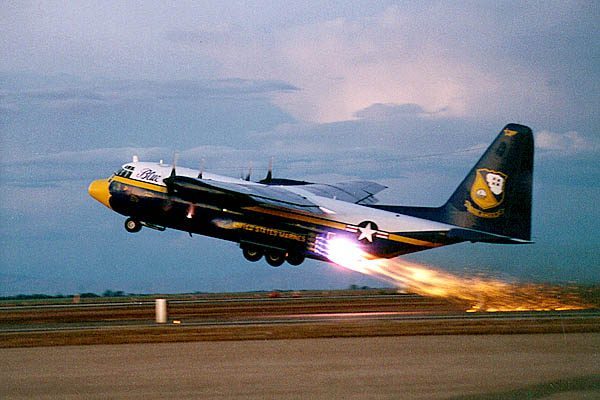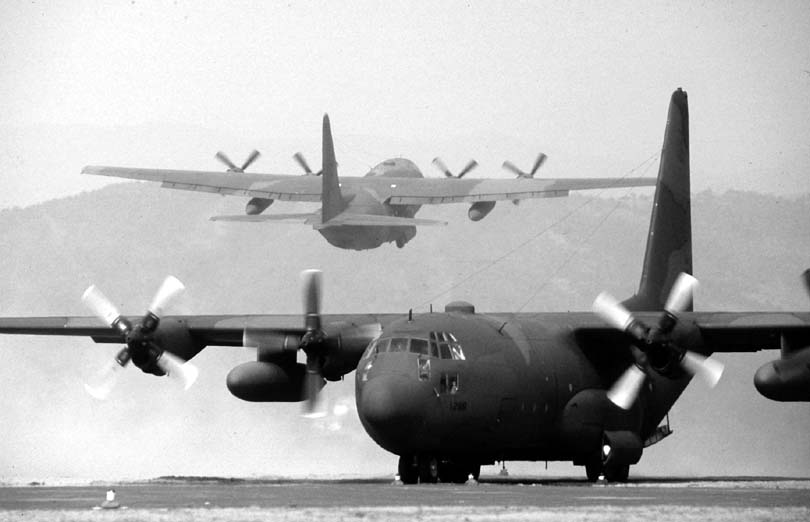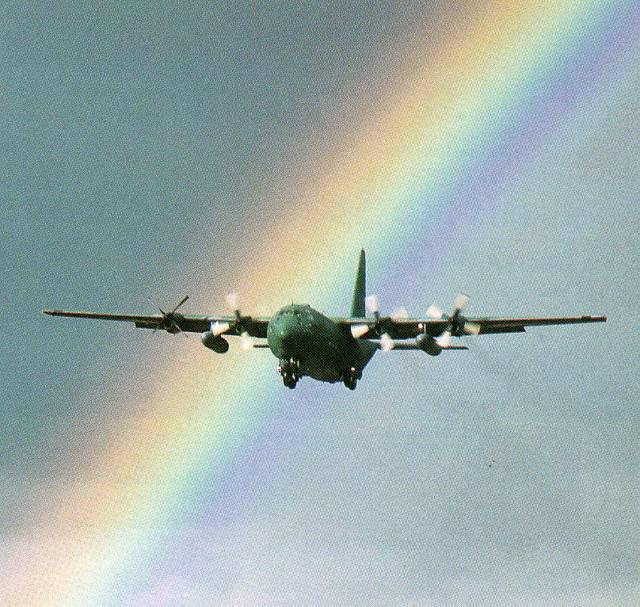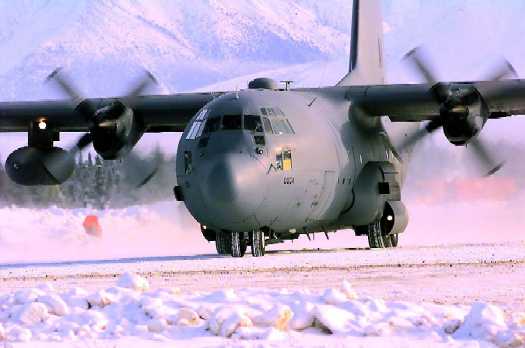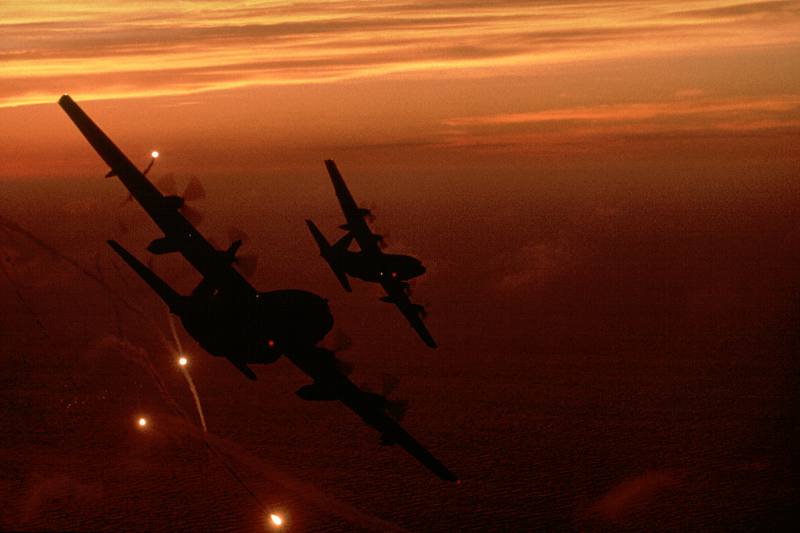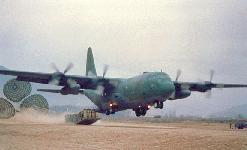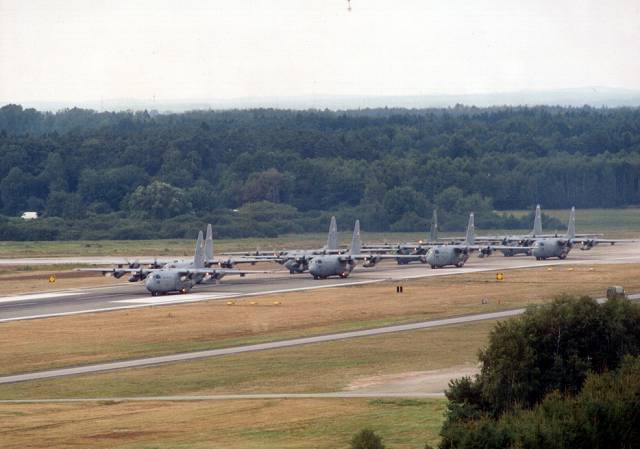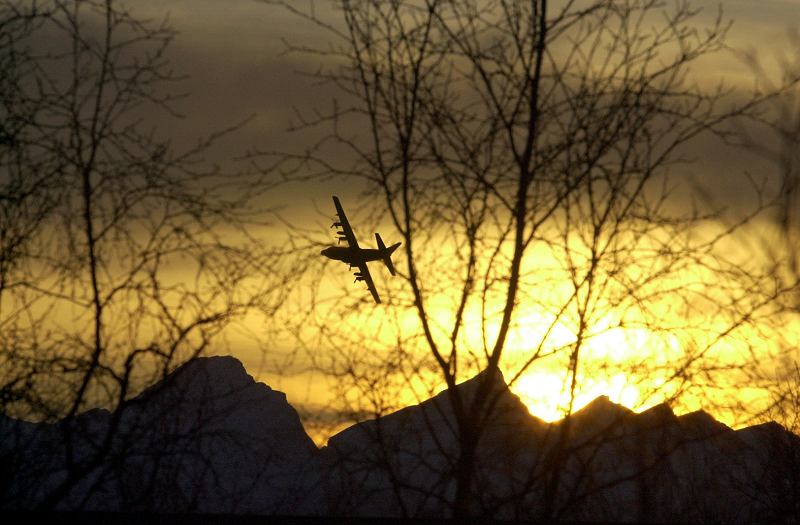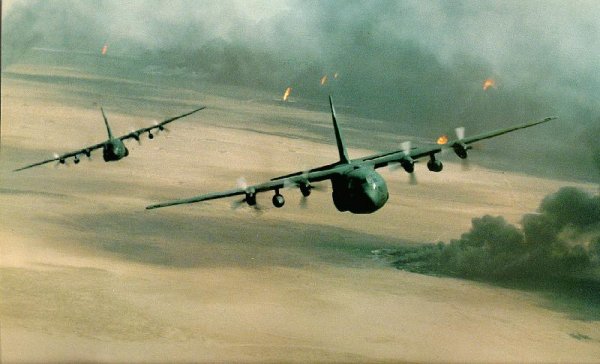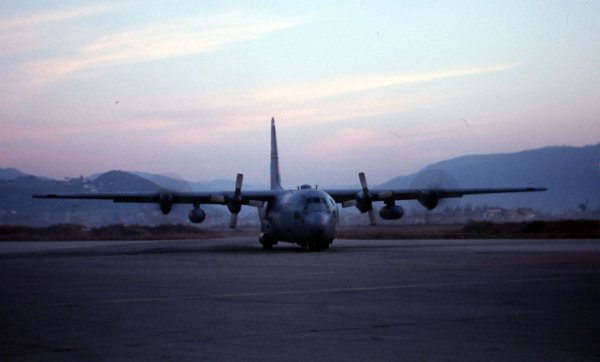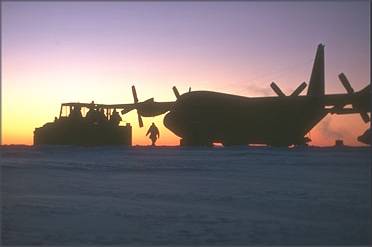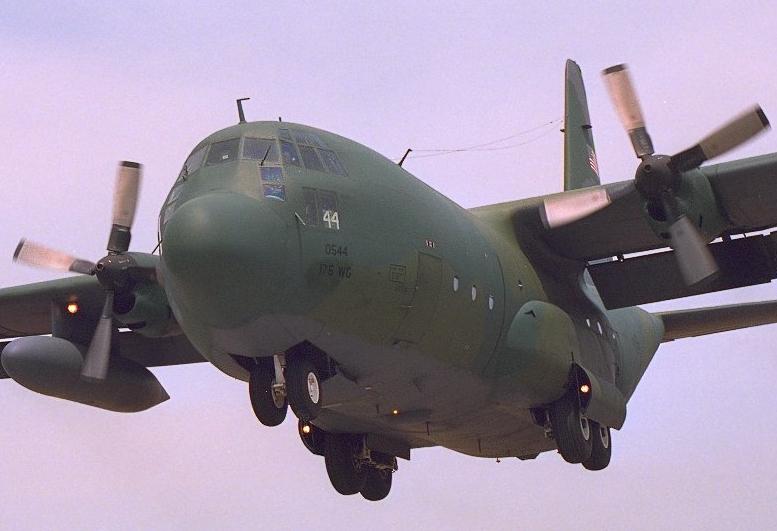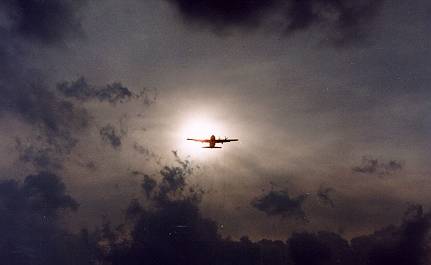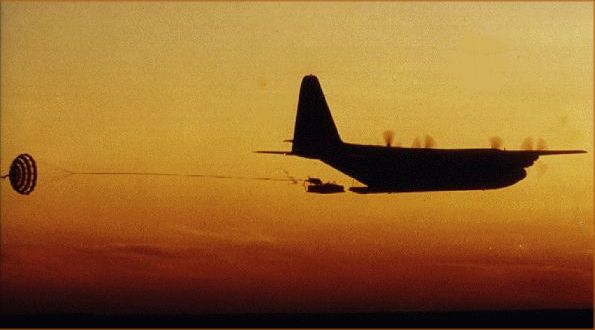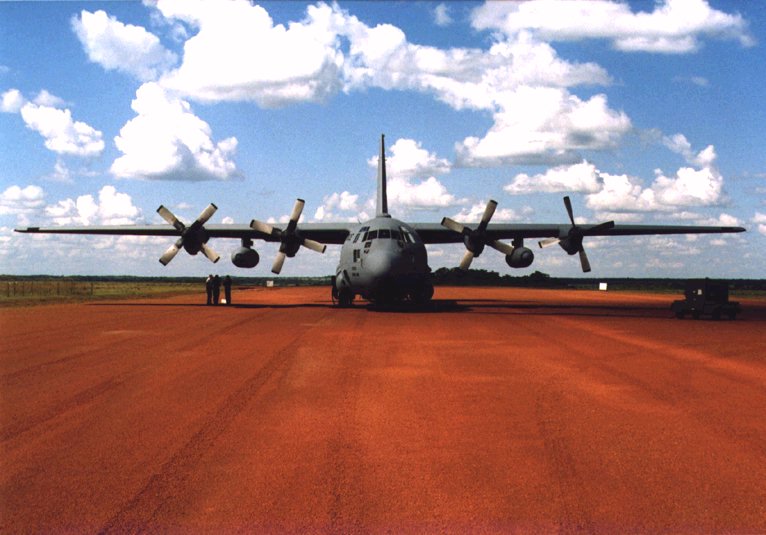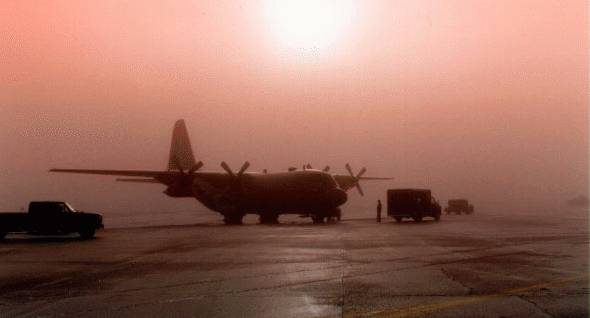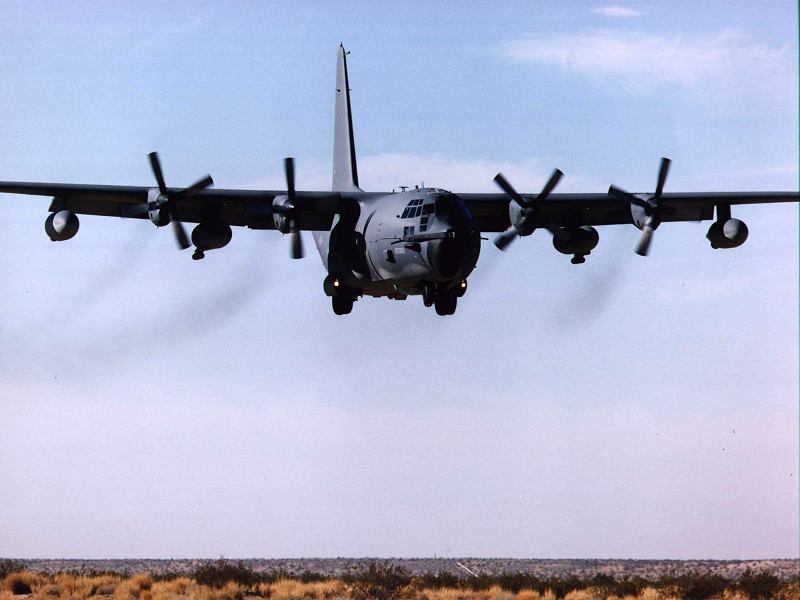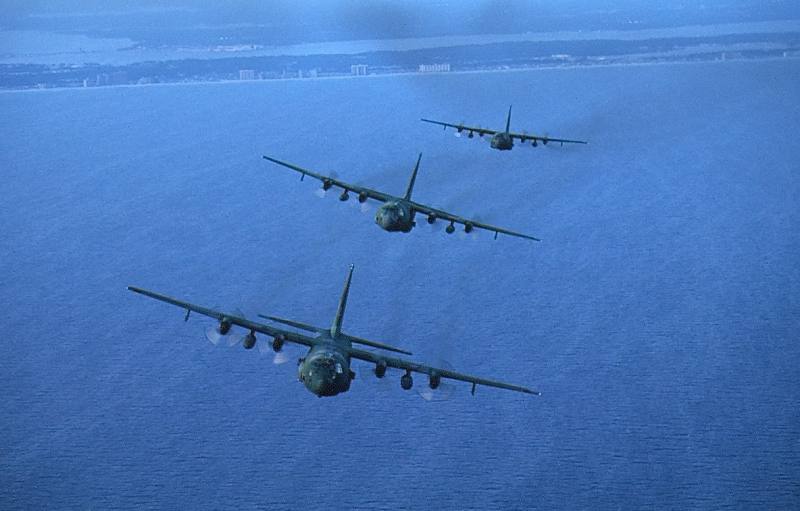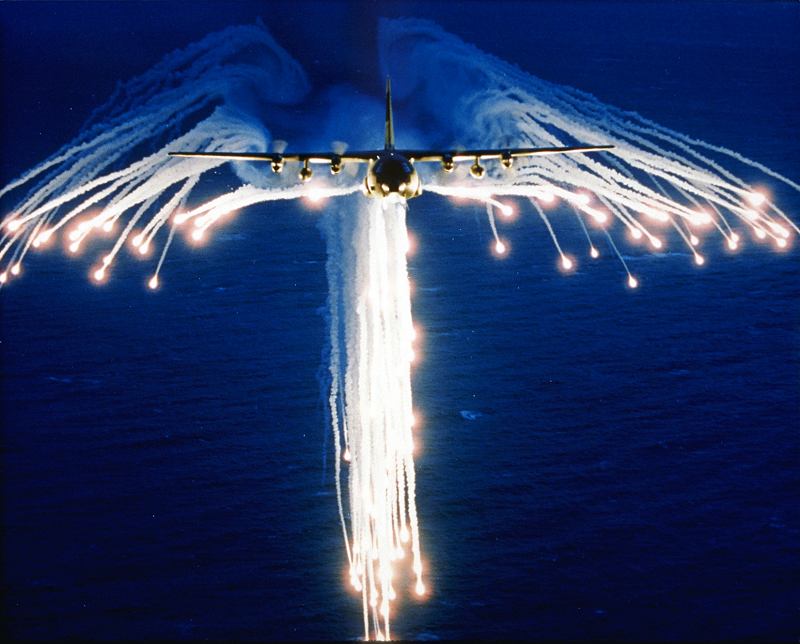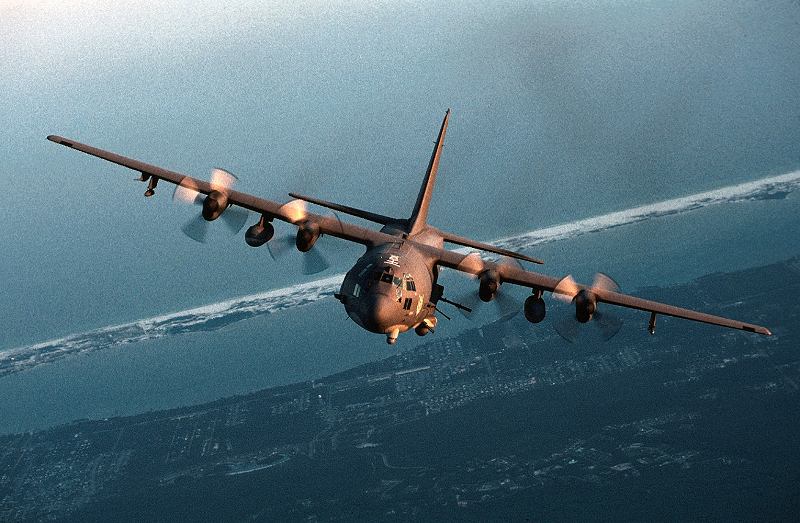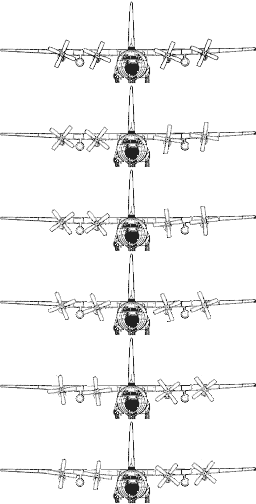
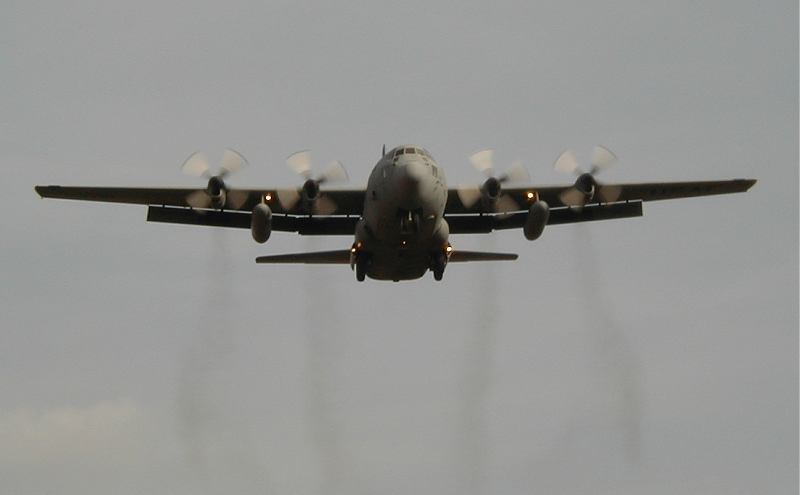
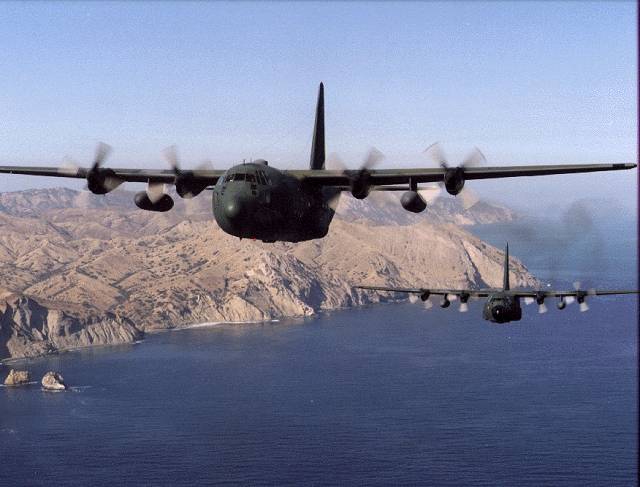
The C-130s assigned to Little Rock AFB are grouped into 5 squadrons. The 53rd Airlift Squadron and the 62nd Airlift Squadron are training squadrons under the 314th Operations Group. The 50th Airlift Squadron and the 61st Airlift Squadron are operational squadrons under the 463rd Airlift Group. The 189th Airlift Wing supports the Air National Guard.
HISTORY
Four decades have elapsed since the Air Force issued its original design specification, yet the C-130 remains in production. The initial production model was the C-130A, which began delivery in December1956. Lockheed's Hercules has had the longest production run of any airplane in history, but that is only part of what makes the Hercules stand out in aviation. The C-130 is amazingly versatile and has played a large contribution to history. The creation of the C-130 Hercules is the direct result of the outbreak of the Korean War, and the discovery that the U.S. Air Force lacked a truly military transport capable of airlifting combat troops over medium distances and delivering them to short, austere airports. At the Pentagon, one week after the war broke out, an Air Force Colonel suggested that an appropriation just made by Congress be used to develop just such an airplane. An R&D team was set up to determine the requirements and Lockheed was awarded the contract to build the YC-130.
The C-130 was designed for the Tactical Air Command to replace the Twin Boom C-119, Flying Boxcar. The first C-130s were delivered to the 463rd Troop Carrier Wing at Ardmore AFB, Oklahoma. The 314th Tactical Airlift Wing, at Seward AFB, Tennessee, was next to get the airplane.
In the early 1960s the C-130E was developed to incorporate all the features of the B model and include the new extra large pylon fuel tanks on each wing between the engines. The C-130E became the most widely used of all the variations of the airplane.
MISSION
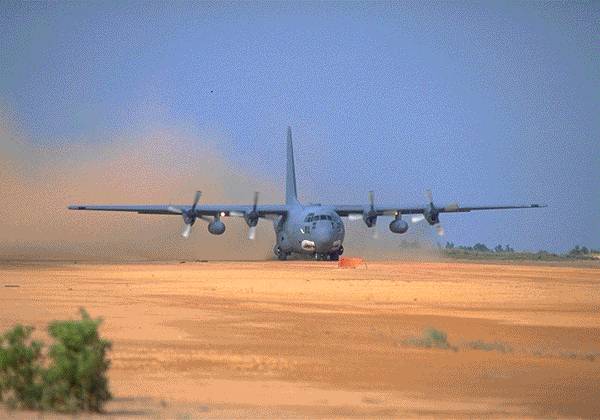
The C-130 Hercules primarily performs the tactical portion of the airlift mission. The aircraft is capable of operating from short, rough dirt strips and is the prime transport for airdropping troops and equipment into hostile areas. C-130s operate throughout the USAF serving with Air Mobility Command, theatre commands, the Air National Guard, and the Air Force Reserve Command, fulfilling a wide range of operations in both peace and war time. Basic and specialized versions of the aircraft perform a diverse number of roles, including airlift support, arctic ice re-supply, aeromedical missions, aerial spray missions, fire-fighting duties for the U.S. Forest Service and natural disaster relief missions.
FEATURES
In its personnel carrier role, the C-130 can accomodate 92 combat troops or 64 fully equipped paratroops on side facing seats. For medical evacuations it can carry 74 litter patients and 2 medical attendants.
The C-130 has served many missions throughout the world, bringing in food, clothing, shelter, doctors, nurses, and medical supplies, and moving victims to safety. Hercules aircraft have also served other nations, airlifting heavy equipment into remote areas to build airports and roads, search for oil, and transport local goods.
GENERAL SPECIFICATIONS
Contractor: Lockheed Martin
Powerplant: 4 Allison T-56A-15 turboprops, 4,300 horsepower each
Length: 97 feet, 9 inches
Height: 38 feet, 3 inches
Wingspan: 132 feet, 7 inches
Speed: 374 mph (mach 0.57) at FL200
Ceiling: FL 330
Max Takeoff Weight: 155,000 lbs.
Range: 2,356 miles - max payload
2,500 miles - 25,000 lbs.
5,200 miles - no cargo
Crew: 2 pilots, navigator, flight engineer & loadmaster
Unit Cost: 14.1 million dollars (1996)