|
|
||||||||||||||||||||||||||||||||||||||
|
History
Catanduanes was known as an early center of shipbuilding during the early Spanish and it is believed that its name is derived from the Catandungan River, along whose banks tando trees used extensively for shipbuilding were found. Being largely isolated from the rest of Bicol, Catanduanes was particularly vulnerable to Moro attacks. In 1755, Catanduanes was overran by the raiders who pillaged and burned the towns of Virac and Calolbon. Loyang Cave, in San Antonio, is the mass grave of islanders who were massacred in that raid. The island continued to be vulnerable to raiding until the mid-19th century. Catanduanes was
placed under the jurisdiction of Albay after Bicol was divided into two in the
17th
People, Culture and the Arts The people of Catanduanes are Bicolanos whose dialect indicates a strong Visayan influence. The early Spanish chroniclers noted that the people on Catanduanes, not unlike the Visayans, also adorned their bodies with tattoos. Oral traditions also reveal folk legends that trace the earliest Catanduanons to the same group of settlers who allegedly peopled the Visayas. As a result of geographical seclusion and vulnerability to storms, the Catanduanons have remained isolated from the rest of the Bicol region and the Philippines. This isolation in part accounts for the strength of religious institutions in the island. Nearly all the people belong to the Roman Catholic Church and religious fervor remains high. However, despite their isolation, the people of Catanduanes are also noted for their genial mien and hospitality. Among the most notable religious observances in Catanduanes is the Kaghorong. This is a reenactment of the Saint Joseph’s and the Virgin Mary’s search for a place to stay in Bethlehem held from the 16th to the 25th of December. A troupe goes from house to house and sings before the door asking for shelter. When they are refused, they move to another house. The owner of the house then shakes the hands of the leader and hands over some donation in form of money.
Trade and Investments Catanduanes's approach to development is focused on making full use of its natural resources. The rich waters of the Pacific Ocean surround the island province. Its fishing grounds teem with herring, tuna, blue marlin, grouper, squid, lobster and mackerel. The province also provides large quantities forest products, specifically tropical hardwoods like almon, apitong, narra, tanguile, and red and white lauan. Although the island is mostly forested, it also produces coconuts, abaca, palay and root crops and livestock makes up a big portion of its exports to the mainland. Significant quantities of copper, gold, iron, manganese, clay, coal, guano, phosphate, limestone, magnetite, shale and marble can be found in the island. The province is accessible from the Luzon mainland by air and by land-sea combination. The Virac airport serves as air link from Manila and Legaspi, while the ports of Virac and San Andres provide the sea link with Tabaco, Albay. A system of concrete, asphalt and gravel roads encircles the main island and connects all the municipalities. Postal service and telegraph stations are the main communications links with the rest of the country. The Balongbong Mini-Hydroelectric plant and power barges in the town of Bato provide sufficient power to the province. Potable water is readily available from wells, public faucets and local water systems. Resource based agro-industrial development is the focus of the province. The Catanduanes Provincial Industrial Center is currently being developed to attract investors interested in abaca production and processing, marble extraction and processing, ceramics manufacture and fish and food processing. The province also holds a great potential as a tourist destination. It is readily accessed from Manila and provides an unhurried and welcoming atmosphere. The province is still thickly forested and the coast is lined with magnificent cliffs interspersed with pockets of white sand beaches. The eastern coast is a growing destination for surfers. There are cool springs and waterfalls even in the vicinity of major population areas. Tourism is still in its infancy and tourist based ventures are still rather few. This sector can absorb more investments in establishing accommodations, resorts, diving and other recreational facilities as well as restaurants and tourist souvenir shops.
Development Initiative Highlights:
|
||||||||||||||||||||||||||||||||||||||
 the Pacific Ocean. It is separated from Luzon by Maqueda
Channel, across which lie the Caramoan Peninsula of Camarines Sur.
Catanduanes is chiefly mountainous with few coastal plains. There is
rain throughout most of the year which fall heaviest from November to
January. There are no pronounced seasons but it is regularly visited by
typhoons during the months between June and October.
the Pacific Ocean. It is separated from Luzon by Maqueda
Channel, across which lie the Caramoan Peninsula of Camarines Sur.
Catanduanes is chiefly mountainous with few coastal plains. There is
rain throughout most of the year which fall heaviest from November to
January. There are no pronounced seasons but it is regularly visited by
typhoons during the months between June and October.
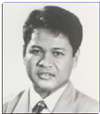
 century. It remained part of the province until 1945. On October
26 through Commonwealth Act No. 687, Catanduanes was separated from Albay and
became an independent province.
century. It remained part of the province until 1945. On October
26 through Commonwealth Act No. 687, Catanduanes was separated from Albay and
became an independent province.