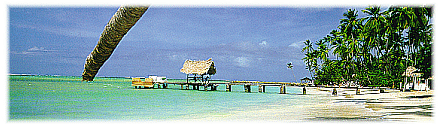
 Trinidad and Tobago are only just off
the coast of Venezuela, yet they share little of the
culture of South America. The people are a
cosmopolitan mix of African, East Indian,
Chinese, white and Syrian and their music,
cuisine, culture, society and politics reflect
the amalgamation of those races through conflict
and harmony. Trinidad�s carnival is world famous and attracts
thousands of visitors but its wealth comes from oil, gas and
manufacturing rather than tourism and so its beaches remain
empty and unspoilt. Beach tourism has been developed on
the smaller, sister island of Tobago, where hotels are spreading
around the coastline, but there are still glorious bays and coves
and resorts are low key. Both islands have a large area of
protected rainforest, home to a huge array of flora and fauna,
and birdwatching is a major attraction. Together the islands have
more species of birds than any other Caribbean Island, the
variety being South American rather than West Indian.
Trinidad and Tobago are only just off
the coast of Venezuela, yet they share little of the
culture of South America. The people are a
cosmopolitan mix of African, East Indian,
Chinese, white and Syrian and their music,
cuisine, culture, society and politics reflect
the amalgamation of those races through conflict
and harmony. Trinidad�s carnival is world famous and attracts
thousands of visitors but its wealth comes from oil, gas and
manufacturing rather than tourism and so its beaches remain
empty and unspoilt. Beach tourism has been developed on
the smaller, sister island of Tobago, where hotels are spreading
around the coastline, but there are still glorious bays and coves
and resorts are low key. Both islands have a large area of
protected rainforest, home to a huge array of flora and fauna,
and birdwatching is a major attraction. Together the islands have
more species of birds than any other Caribbean Island, the
variety being South American rather than West Indian.
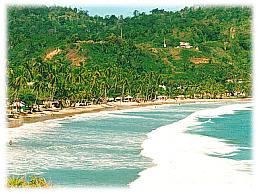
Next to Maracas Bay is Tyrico Bay (surfing, lifeguard, another horseshoe-shaped beach with a dangerous undertow and sandflies). Las Cuevas, also on the north coast (like Maracas Bay there are changing rooms, showers, lifeguards, surfing is good here but beware of the sandflies in the wet season), is a picturesque bay with fishing boats moored at one end. It can get crowded at weekends but is empty during the week. Blanchisseuse beach has a sweet water lagoon where the river runs into the sea and the place is kept clean by the owners of Cocos Hut restaurant who are establishing a 28-acre nature reserve on the banks of the river. There are lots of birds but also mosquitoes and sandflies. Leatherback turtles come on to Blanchisseuse beach in the nesting season but most of the eggs are eaten by dogs. At the northeast end, near Toco, are a number of bays, including Balandra for good bathing. For Toco, get an express bus or highway maxi to Arima, then route taxi to Sangre Grande, then taxi to Toco.
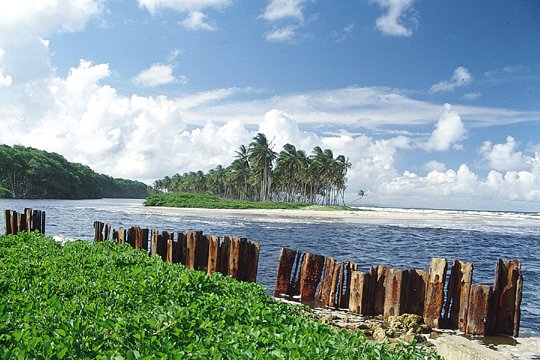
Further down, the Atlantic coast from Matura to Mayaro is divided into three huge sweeping bays, with palm trees growing as high as 200ft in some places. Of these bays Mayaro and Manzanilla both have beautiful sandy beaches, but be careful of the Atlantic currents, swimming can be dangerous. There are several beach houses to rent at Mayaro, heavily booked in peak holiday periods, some are poor, check beforehand. Manzanilla has new public facilities and one hotel. From nearby Brigand Hill Lighthouse, a TSTT signal station, you can get a wonderful view of the east coast, the Nariva Swamp and much of Trinidad. Light patches of green are rice fields encroaching on the swamp. In the southwest, near La Brea and the Pitch Lake is the resort of Vessigny. The southwest, or Cedros, peninsula is a three-hour car trip from Port of Spain to the unspoilt beaches and miles of coconut palm plantations. Generally, the beaches are difficult to get to except by taxi or car.
Tobago is noted for its beaches, two of the best being only minutes from the airport: Store Bay, popular with locals, lots of vendors, food stalls and glass bottom boats; and Pigeon Point, a picture postcard beach fringed with palms with calm, shallow water protected by Buccoo Reef. You have to pay to use the beach (TT$10), but you get changing facilities, umbrellas and beach bars. Here also there are lots of glass bottom boats going out to Buccoo Reef and a catamaran for coastal tours and swimming in the Nylon Pool, a shallow area offshore. Other good beaches on the leeward side of the island are Stone Haven Bay, Mount Irvine Bay and Courland Bay, one of the longest. All have resort hotels and watersports. Englishman's Bay is another lovely bay, with the forest coming down to the beach and a river running into the sea. The east-coast is more rugged and windswept, with cliffs and coves carved out by the Atlantic Ocean. Hillsborough Bay, just outside Scarborough, has a glorious long beach with overhanging palms, but the sea is dangerous because of rip tides. Do not swim there. Big Bacolet Bay, also known as Minister Bay, is great for surfing, body surfing and boogie boarding, but watch out for the currents. In the northeast, King's Bay has a beach bar, toilets and huts for shade. There is a signpost to the beach, almost opposite the track to King's Bay Waterfall. Speyside and Charlotteville both have protected bays, from the former you can take glass bottom boat trips to Little Tobago with bird-watching, walking and snorkelling included (about US$12.50) and from the latter you can walk to Pirate�s Bay through the forest. Snorkelling is good on the reef here.
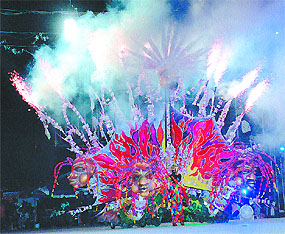
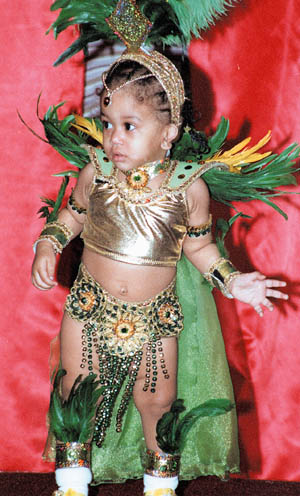
Panorama steel band finals are held a few nights before Dimanche Gras. Parties on Sunday start early. The Dimanche Gras show at the Savannah that night is unmissable. There are two main carnival shows for children: the Red Cross Kiddies Carnival one week before carnival proper, and the school-based children�s carnival the following Saturday. On Carnival Monday, the festivities start with �J�Ouverte?at 0200, which involves dressing up in the cheapest and most outlandish disguises available (�old mas?, including mud, which will inevitably be transferred to the spectators. In the afternoon is the Parade of Bands at the Savannah, featuring the very large and colourful bands, portraying a wide sweep of historical and cultural events. Though the Savannah is the main venue, on both Carnival Monday and Tuesday the bands are required to appear before the judges at other locations, including Independence Square and Victoria Square.
Tickets for all National Carnival Commission shows (about US$10 for most events) are sold at the Queen's Park Savannah, where the shows are held. You can join one of the Mas?camps by looking in the newspaper for the times and locations of the camps. If you are early enough you can get a costume which will allow you to participate in one of the �tramps?through town. The Tourist Office (see Essentials) has a list of names and addresses of the bands to whom you can write in advance to organize a costume. Fair-skinned visitors should avoid the skimpy costumes. You will be 2 full days in the hot sun and sun block lasts about 5 mins. There is a lot of alcohol consumed during the road marches but there are no drunken brawls. Police are much in evidence on the streets. Note that it is illegal to sell tapes of carnival artists but �bootleg?tapes are inevitably sold on the streets. If you have the strength, don�t forget Last Lap, which means jumping up with a steel band around Port of Spain to squeeze the last ounce out of the festival, prior to its official end at midnight on Tuesday.
The Hosay, or Hosein Festival, commemorating the murder of two Moslem princes, starts 10 days after the first appearance of the new moon in the Moharrun month of the Moslem calendar. Colourful processions, hauling 10-to 30ft-high miniature temples of wood, paper and tinsel, start the next day, heralded by moon dancers and accompanied by drum-beating. The main celebrations are in St James, west of Port of Spain. There is also a Hosay celebration in Cedros in South Trinidad. Many strict Muslims disapprove; lots of beer and rum is consumed. Also celebrated is the Moslem festival of Eid-ul-Fitr, to mark the end of Ramadan. Two principal Hindu festivals are Puagwa, or Holi, the colour, or spring, festival on the day of the full moon in the month of Phagun (Feb/Mar), and Divali, the festival of lights, usually in the last quarter of the year. At Puagwa everyone gets squirted with brightly coloured dyes (abeer); strict Hindus have their doubts about some of the dancing styles. Divali is more of a family affair and involves a lot of rather good food in Indian homes. On 29 August in Arima the feast of St Rose of Lima is celebrated; the parish church is dedicated to her. Descendants of the original Amerindians come from all over the island to walk in solemn procession round the church.
Tobago: There is a carnival but it is very quiet compared with Trinidad�s. On Easter Monday and Tuesday, there are crab, goat and donkey races at Buccoo Village. The Tobago Heritage Festival lasts for the second fortnight of July, with historical re-enactments, variety shows and parades.
Special Events: All Souls?Day (2 November) is not a holiday, but is celebrated. The Hindu festival of Divali is a holiday, but Puagwa (February/March) is not. Similarly, of the Moslem festivals, Eid ul-Fitr is a public holiday, but Eid ul-Azha and Yaum um-Nabi are not (all fall 10 to 11 days earlier each year).
Public Holidays: New Years Day, Carnival Monday and Tuesday, before Ash Wednesday (not officially holidays but everyone regards them as such), Spiritual Shouter Baptist Liberation Day (30 March), Good Friday, Easter Monday, Indian Arrival Day (30 May) celebrating the arrival of Indian labourers in 1845, Corpus Christi, Eid ul-Fitr (changes according to religious calendar), Labour or Butler�s Day (19 June), Emancipation Day (1 August), Independence Day (31 August), Divali (depends on religious calendar), Christmas Day, Boxing Day.

Chaguaramas: Pier One, T6344472, F6344556. Like country club, restaurant, conference facilities, family club, marina, seafood, live entertainment at weekends, open 1100-2300, popular at weekends, pool, kayaks, dinghies, fishing area. Anchorage, Point Gourde Rd, T6344334. For seafood, open 1100-2400 Mon-Sat, dancing, live entertainment some evenings, popular with yachties. Pisces, TTYC. Moderately priced local food and special nights, call for reservations. Windjammers, TTYA. Fast food and inexpensive local dishes after sailing with TTYA members. The Bight, Peake�s, bar and restaurant with outdoor dining overlooking the Chaguaramas anchorage.