
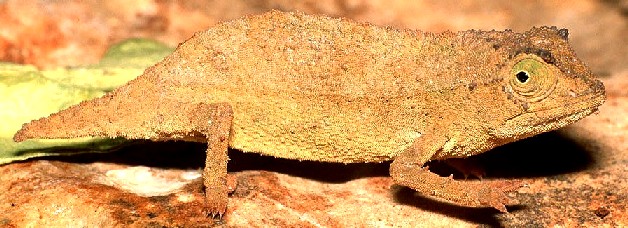
 Family: Chamaeleonidae
Common Name: Tanzania Pygmy Chameleon
Scientific Name: Rhampholeon brevicaudatus
Food:
Distribution: E Tanzania
Habitat: grass and leaf litter of of the evergreen rainforest floor
Color Discription:
Physical Discription:
Size: 4"
Temperatures/Humidity: 62º F - 87º F. This may be higher than most recommend but 1 month with high temperatures of 77º F - 85º F will not harm them. With higher temperatures, however, higher humidity is crucial.
Breeding/Reproduction: Breeding occurs throughout the year. Reproduction does not shut down for winter although there may be a slight slow down. 2 - 4 clutches are possible in a year, with eggs 1 - 4 eggs in a clutch. Eggs have been successfully incubated by leaving them in situ and also by removing them from the tanks and incubating them at room temperatures that varied between 67º F - 87º F. Both methods yielded 100% hatching rates. Incubation times were from 60 - 75 days. Fertilization from retained sperm has been reliably reported
Cage Setup: A 20-gallon long aquarium is good for a pair or trio but males should not be housed together as inter-male aggression is well developed. Aggression between siblings and juveniles is quite possible as well so a close eye must be kept on them to watch for signs stress or aggression. A 3 to 5" soil layer is required, along with a variety of plants and ground cover such as dead leaves, mosses and cork bark to hold humidity up and provide hiding places.
Water: Misting heavily twice a day with a fine mist works well in supplying water needs. A dripper tends to over-soak the soil and should not be used. The mist should drip from the plant leaves but the surface of the soil should be allowed to dry out between mistings.
Special Needs: Only a single cool, white fluorescent bulb is required over the length of the tank. Basking and UVB bulbs is not necessary.
Special Note: This is one of a growing list of chameleons known to "buzz" or vibrate when threatened.
The forest stay extremely humid despite periods, of up to several months without rain.
However, heavy dew is common and this dew can appear as rain.
The dew collects and falls from foliage high up in the forest, which can form quite large drops and fall for extended periods of time.
It should also be noted that the clouds commonly appear very low as they sweep through the forests, making everything damp and raising the ambient humidity.