 |
 |
 |
 |
 |
 |
 |
 |
 |
 |
 |
 |
 |
 |
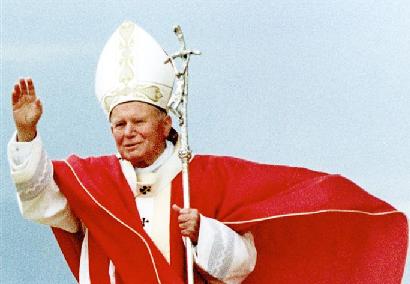
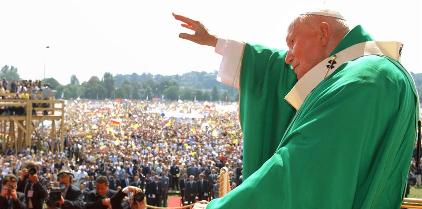
| Pope John Paul II waves to the crowd during a visit to his Polish homeland in 1997. During his 28 years as pope, he nominated 483 saints, held more than 1,100 general audiences at the Vatican, issued 14 encyclicals on moral, religious and social issues, and traveled the world. |
| Pope John Paul II |
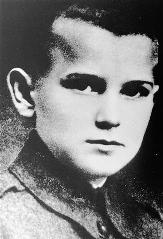
| Karol Wojtyla, seen here at age 12, was born on May 18, 1920, in the small southern polish town of Wadowice, near Krakow. His father was a non-commissioned officer in the Polish army. His mother died when he was eight years old. |
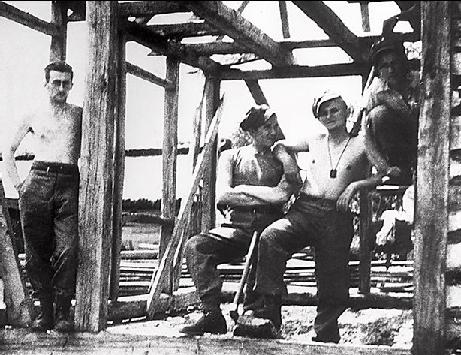
| With talk of the war in the air, Karol Wojtyla, second from right, works with unidentified colleagues to build a military camp in western Ukraine that summer. |
| 1939 |
| 1932 |
 |
| After the Nazi invasion, Wojtyla decided to become a priest, but the Nazis had closed the seminaries so he studied secretly at the residence of the Krakow cardinal and worked in a quarry by day. |
| 1942 |
| Wojtyla was ordained at the age of 26 and went to Rome for advanced studies. |
| 1946 |
| Wojtyla returned to Poland to find his country in the grip of Stalinism. |
| 1948 |
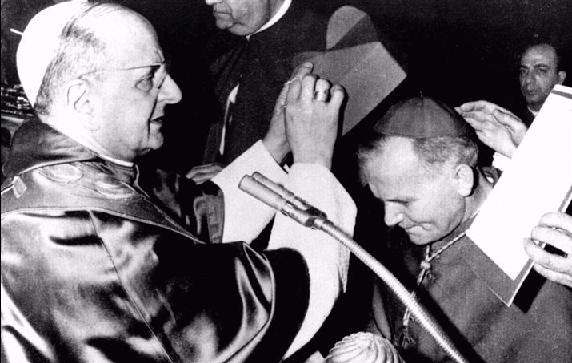
| The late Pope Paul VI places the cardinal's hat on the head of Karol Wojtyla, declaring him a cardinal. |
| 1967 |
| Wojtyla was promoted to archbishop of Krakow. |
| 1964 |
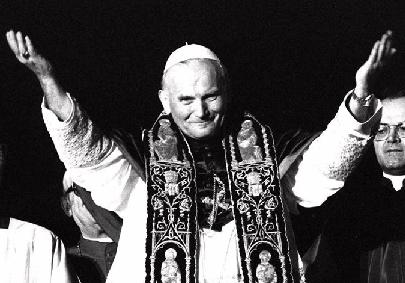
| Karol Wojtyla, now newly elected Pope John Paul II, acknowledges cheers from pilgrims crowding Saint Peter's Square in his first appearance as pope on October 16. He was the first non-Italian pope in 455 years, the 264th successor of St. Peter, and at 58, the youngest pope for more than a century. |
| 1978 |
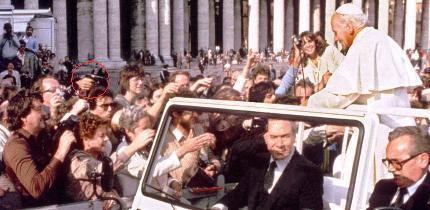 |
| The hand of Mehmed Ali Agca, holding a pistol, left, aims from the crowd at Pope John Paul II in St. Peter's Square on May 13. Moments later the pontiff is shot and seriously wounded. |
| 1981 |
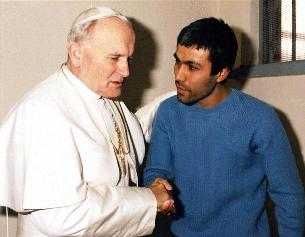
| Pope John Paul II talks to his would-be assassin, Mehmed Ali Agca, in his prison cell in Rome on December 27. Agca is serving a life sentence for shooting the pontiff. |
| 1983 |
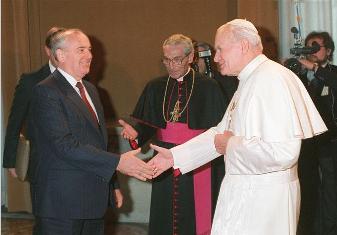
| Pope John Paul II welcomes Soviet President Mikhail Gorbachev to the first-ever meeting between a Kremlin chief and a pope at the Vatican December 1. After the visit the pope steps up the reestablishment of the Catholic Church throughout the East bloc, a move that parallels the crumbling of communist regimes across the region. |
| 1989 |
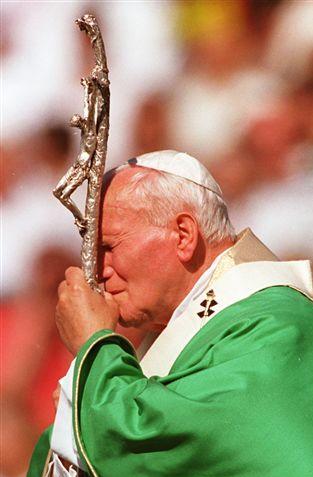
| Pope John Paul II prays during Mass at Camden Yards in Baltimore on October 8. During his palpacy, the pope traveled the equivalent of 30 times the circumference of the earth, made more than 100 foreign trips and spent more than three years away from the Vatican. |
| 1995 |
| Symptoms of Parkinson's disease began to appear and the pontiff appeared increasingly frail, but maintained a rigorous travel schedule. The pope's left hand would tremble and his facial muscles appeared stiff during appearances. In later years, he became unable to walk and was carried in a special transporter from planes to his Popemobile. |
| 1993 |
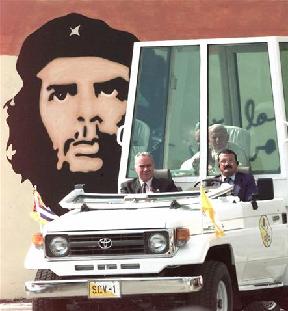
| Pope John Paul II, riding in the Popemobile, passes a painting of revolutionary hero Ernesto "Che" Guevara during a landmark visit to Cuba. He mixed criticism of communism with criticism of the U.S. embargo on Cuba. Cuban leader Fidel Castro said during the trip that he believes in God. |
| 1998 |
| The pope visited the Rome Synagogue in the first visit ever by a pontiff to a Jewish house of worship. |
| 1986 |
| The pope granted an audience to Austrian President Kurt Waldheim, which angered Jews who accused Waldheim of Nazi war crimes. |
| 1987 |
| The Vatican and Israel forged full diplomatic ties, aimed at ending 2,000 years of distrust and hostility between Christians and Jews. |
| 1993 |
| The Vatican apologized for Catholics who failed to help Jews persecuted by the Nazis. |
| 1998 |
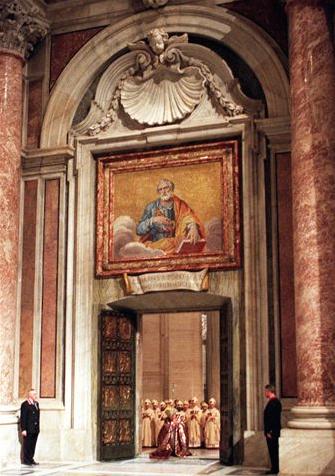
| Pope John Paul II is seen near the bronze Holy Door of St. Peter's Basilica at the Vatican on Christmas Eve. Faltering at times, the frail pontiff walks through the door in a symbolic ceremony to mark the start of the church's third millennium. |
| 1999 |
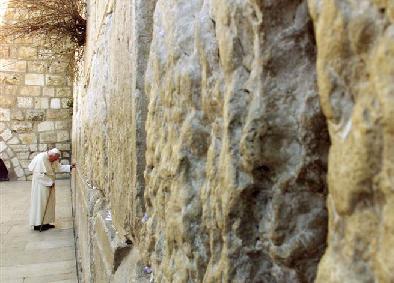
| Pope John Paul II rests his hand on the Western Wall in the Old City of Jerusalem on March 26. The trip was the culmination of one of the pontiff's lifetime ambitions and followed a historic, and sometimes tumultuous, dialogue with Jews. |
| 2000 |
| In an unprecedented public act of repentance on March 12, the pope delivered the most sweeping papal apology ever, repenting for the errors of the Roman Catholic Church over the previous 2,000 years. |
| 2000 |
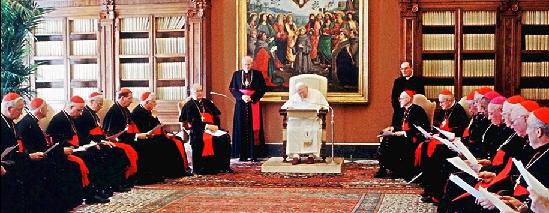
| After a series of sex scandals involving priests and minors rocks the church in the United States, the pope summons a dozen American cardinals and two high-ranking bishops to the Vatican on April 23. Over two days the Americans, joined by the heads of the eight most senior Vatican departments, attempted to hammer out a process for defrocking any priest involved in the "predatory sexual abuse of minors." |
| 2002 |
| Pope John Paul II waves to an estimated 2.7 million people during a Mass in Krakow's Blonie meadow on August 18. The pontiff used his ninth trip home, which many feared would be his last, to address the plight of the poor and jobless in Poland as well as to discuss his own mortality. |
| 2002 |
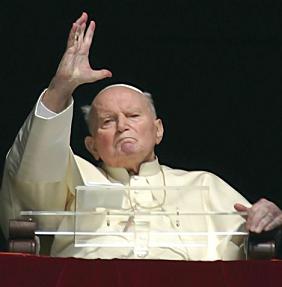
| Pope John Paul II gives a silent blessing from his studio window overlooking St. Peter's Square on March 30. A day later, the pontiff, after being hospitalized twice during the previous two months, developed a high fever. On April 1, a papal spokesman described the pope's condition as "very grave." On April 2, the pope died. |
| 2005 |
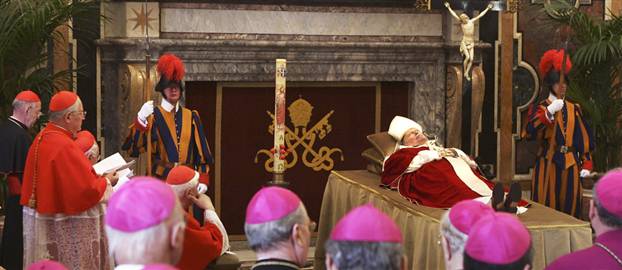
| Cardinals and bishops pray by the body of Pope John Paul II in Clementine Hall on Sunday. |
| 2005 |
| Pope John Paul II publicly states that the teachings of Christ instructed him to forgive Agca, who attempted to assassinate the pope in 1981. |
| 1999 |
 |
 |