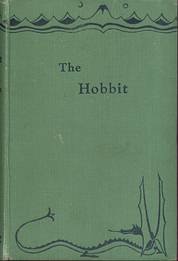
The Author - JRR Tolkien:
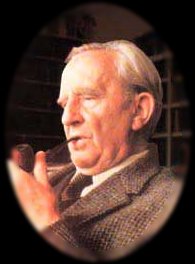
Tolkien's Childhood: John Ronald Reuel Tolkien was born on the 3rd January, 1892, in South Africa to English parents (Mabel Suffiel and Arthur Reuel Tolkien) who had emigrated to seek a better life in South Africa. At the time, they were living in Bloemfontein, where Arthur Tolkien had accepted a position as a manager of an English Bank. Whilst visiting his grandparents in England when he was just 4 years old, his father died of rheumatic fever on February 15th, 1896. The devastated family settles at Sarehole, on the southeastern edge of Birmingham. Ronald spent many happy months there with his younger brother, Hilary, and his mother.
Tolkien's Education:
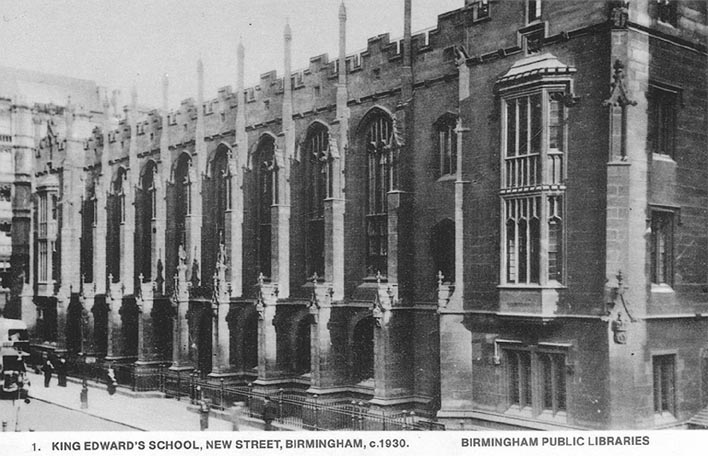
John had always been encouraged by his mother to take an interest in language, and once his mother died, he found that school provided a stable refuge away from his disrupted and distressing home-life. He soon showed a lot of interest in languages, and encountered Anglo-Saxon and Middle English. To develop his linguistic abilities, he started to invent languages which he related to 'elvish' people. In addition, with 3 close friends, he formed the TeaClubBarrovianSociety, a small club based on their love for legends and sagas. In 1911, he gained entry to the University of Oxford to study both English Language and Literature. However, his love for ancient languages continued. He graduated with a First in English Language and Literature at Exeter College in 1915.
Tolkien's Family:
He served his country at the Battle of the Somme serving as Second Lieutenant, and returned to England suffering from shell shock. Although he survived, two of his three closest friends were killed in action. He spent the remainder of the war in England, with his wife. In 1917, his first son, John Francis Reuel Tolkien was born. Despite his work commitments, Edith and John managed to have three other children, Michael Hilary Reuel (1920), Christopher Reuel (1924), and Priscilla Anne Reuel (1929).
Tolkien's Working Life: Following his discharge from the army after the war, he got a job as a staff member working on the New English Dictionary, which lasted from 1918 to 1920. In 1920, Tolkien was appointed as Reader in the English Language at the University of Leeds, a post that was converted to a Professorship a few years later. He distinguished himself through lively lessons, and in 1925 was appointed as Professor of Anglo-Saxon at Oxford.
Tolkien's Work: John had begun to write the mythological and legendary cycle called The Book of Lost Tales from the short, scribbled tales that he had written during the First World War. Later, this became known as The Silmarillion.
Edith Tolkien, who had been ill for some time, died in 1971. Tolkien felt this loss greatly Tolkien returned to Oxford. Shortly after receiving an OBE from the Queen, he died following a brief illness, on 2nd September 1973. His last words to his daughter were "I feel on top of the world!" The Silmarillion, the forefather of Lord of the Rings was yet to be published, and the huge task of editing it was left to his son Christopher.
Tolkien's Inspiration: The manner in which Tolkien wrote could be better compared to the way in which a textbook would be written. He spent many hours ensuring that the languages, topography, etc was realistic. He produced many maps of Middle Earth, but where would be have got the inspiration for the landscapes? Click here to read more about this. |