RECTANGLES AND RIEMANN SUMS
click here to enjoy the Rectangles and Riemann Sums word search
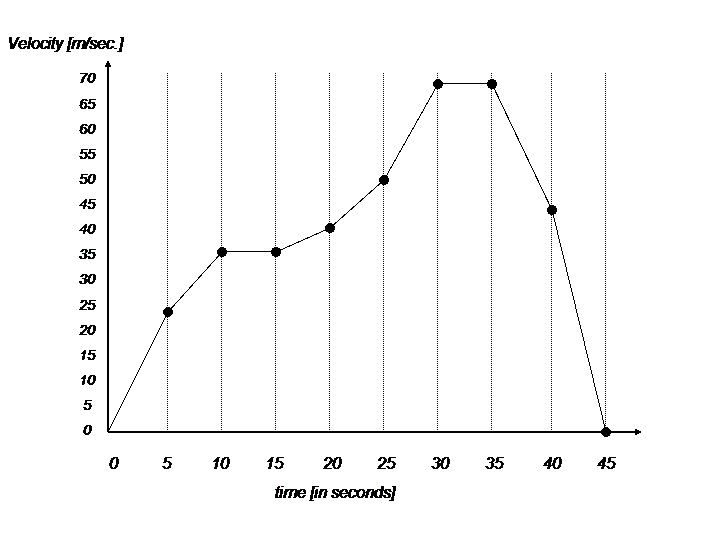
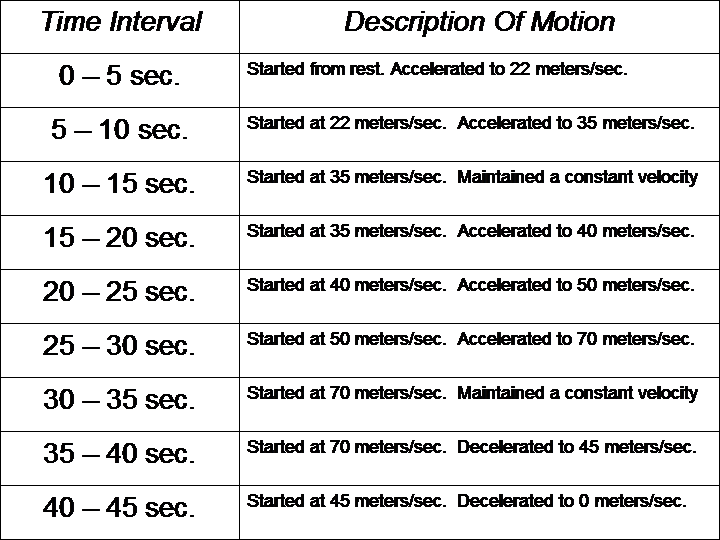
The velocity of an object during a 45 second interval is shown below:
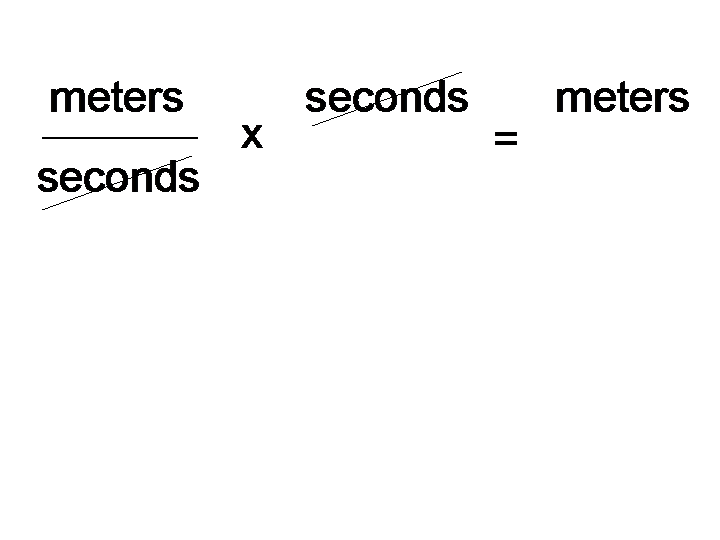
DISTANCE = RATE x TIME
The distance an object travels is the product of the rate of change of position [velocity] and the time span over which this rate was observed.
Our graph shows us this information!!
Along the y-axis is the velocity and along the x-axis is the number of seconds. If we multiplied the two quantities, the units indicate to us that we will arrive at the distance traveled.
Looking at the graph shows us by multiplying the y-axis [velocity] by the x-axis [time] we're really just multiplying BASE times HEIGHT, which gives us the AREA.
The AREA under the graph represents the DISTANCE traveled by the object.

What do we do to calculate the area?
We can divide up the area into regions and add the areas of the separate regions to get the total. Dividing the region into rectangles allows us to simply multiply each base times each height - then add all the rectangles for the cumulative area.
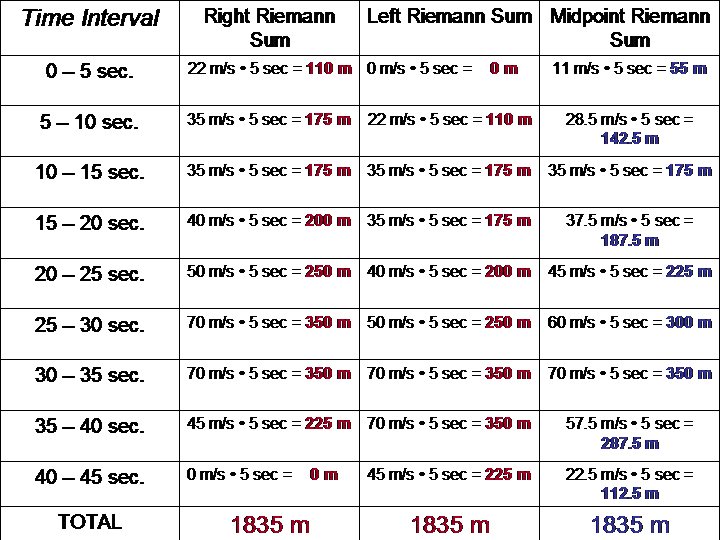
This is called a RIEMANN SUM, and it can be calculated three different ways as shown below:

This is called a RIGHT RIEMANN SUM. The point to the right indicates the height of each rectangle. This sum OVERAPPROXIMATES increasing regions and UNDERAPPROXIMATES decreasing regions.

This is a LEFT RIEMANN SUM. The point to the left indicates the height of each rectangle. This sum UNDERAPPROXIMATES increasing regions and OVERAPPROXIMATES deceasing regions.
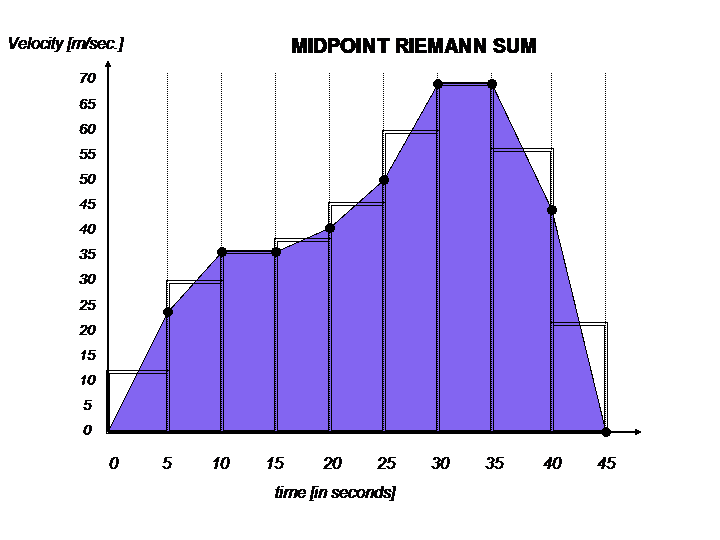
This is a MIDPOINT RIEMANN SUM. The midpoint of each interval serves as the height of the rectangle.
RIGHT AND LEFT RIEMANN SUMS ON SMOOTH CURVES
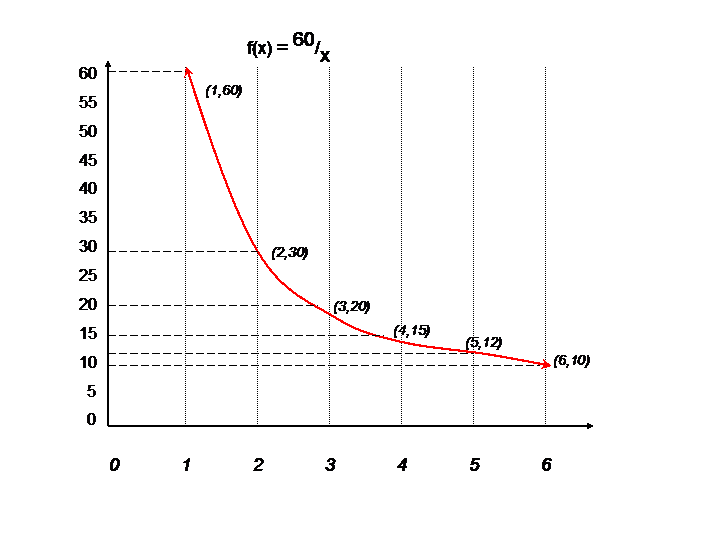
Let's look at the graph of the function f(x) = 60/x

QUESTIONS TO CONSIDER
- How do you explain the discrepency between the two totals?
- Why were the Right and Left Riemann sums equal in the previous example?
- Why are they NOT equal in this example?
- Will a midpoint Riemann Sum average the two results? Why or why not?
RIEMANN SUMS AND CALCULUS
What could we do to make our calculation of area as accurate as possible?
The study of Calculus is the study of INFINITY or, probably a more accurate statement, GETTING REALLY CLOSE TO INFINITY.
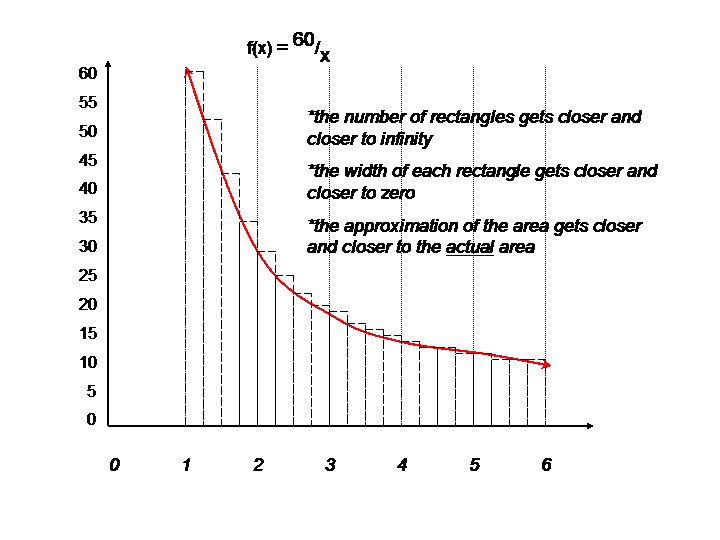
The more rectangles used to approximate the area, the better the approximation. So what happens as we divide our region into more and more rectangles?
**the number of rectangles gets closer and closer to infinity
**the width of each rectangle gets closer and closer to zero
**the approximation gets closer and closer to the actual area
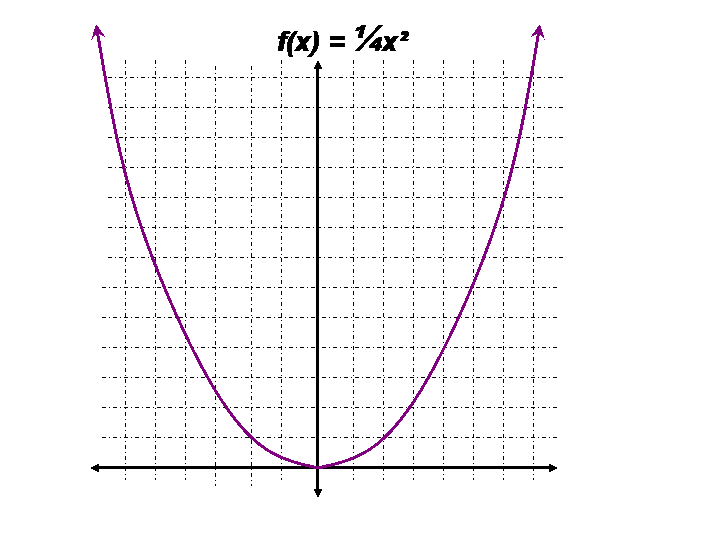
Consider the quadratic function below:
QUESTIONS TO CONSIDER
- Using a Right Riemann Sum, approximate the area bounded by the function between x = -2 and x = 4
- Would your approximation be the same if you used a Left Riemann Sum?
- Use a Midpoint Riemann Sum to determine the area bounded by the curve between x = -6 and x = 6
- What if the area bounded by the curve was below the x-axis? How could that area affect the sum of the areas?
let's move on to Trapezoidal Approximations
go back to the main page