THE AVERAGE VALUE OF A FUNCTION
Let's go back to the velocity versus time graph as shown below. Since this graph is made up of line segments, a trapezoidal approximation will actually give us the area under the "curve".
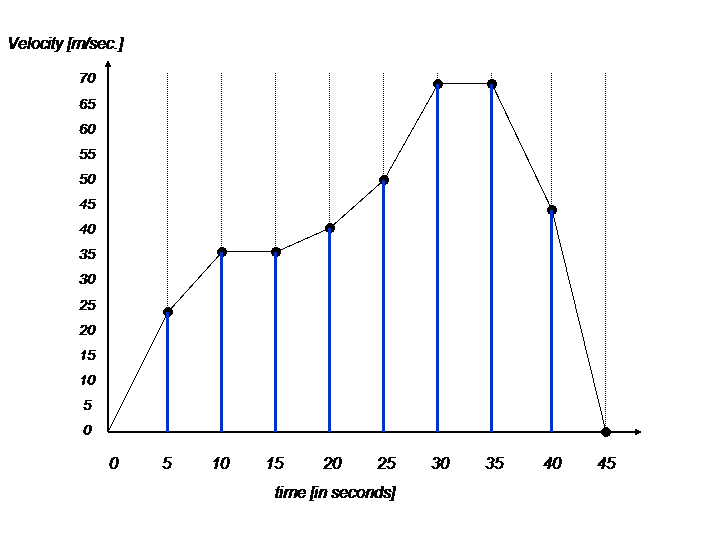
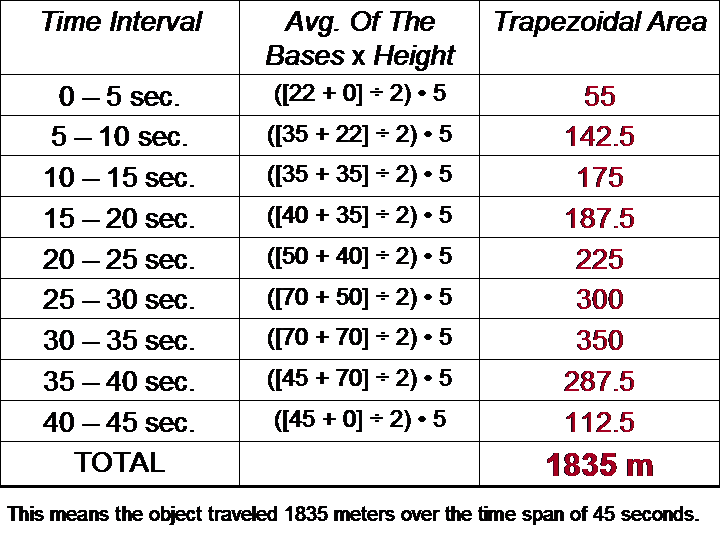
Let's add the areas of the nine trapezoids that define within our function's domain:
GETTING A GRAPHICAL PICTURE OF AVERAGE VALUE
Not suprisingly, we calculate the average velocity by dividing the distance traveled by the time. Here we divide the 1835 meters traveled by 45 seconds to arrive at an average velocity of 40.8 meters per second.
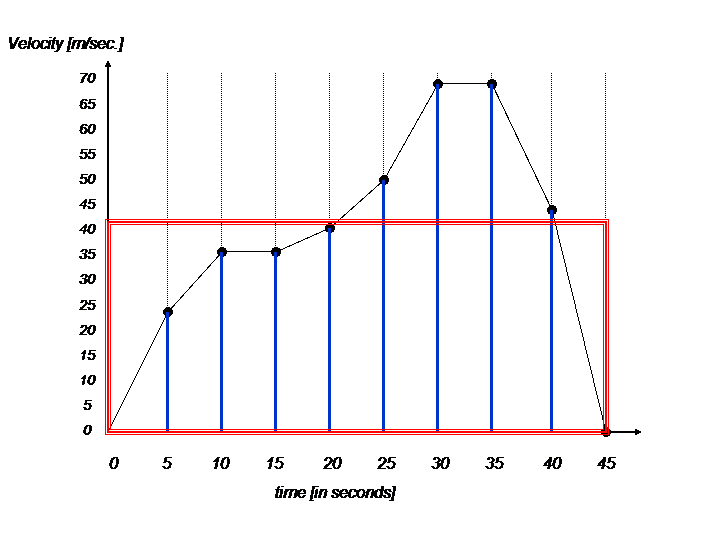
The average value of a function shows that the AREA of the rectangle equals the sum of the trapezoidal regions. All of the area outside the rectangle will exactly fit inside the rectangle.
SUMMATION NOTATION
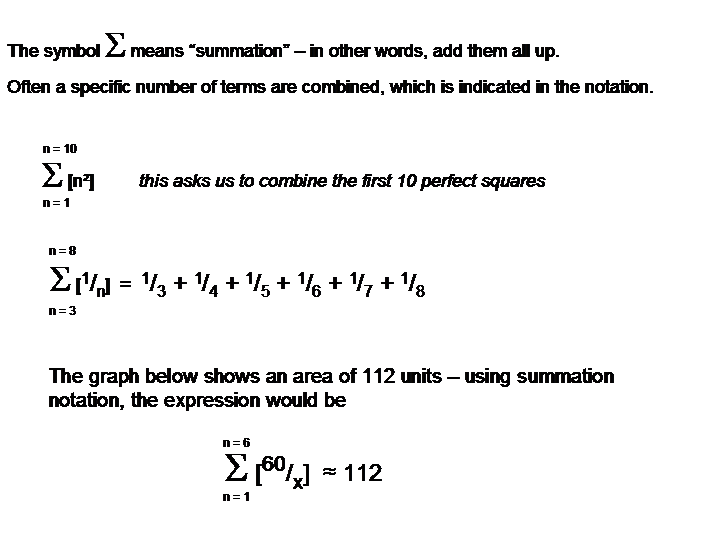
To calculate the average value of the function, we simply multiply the summation expression by [1/(b-a)] where b and a represent the start and end points.
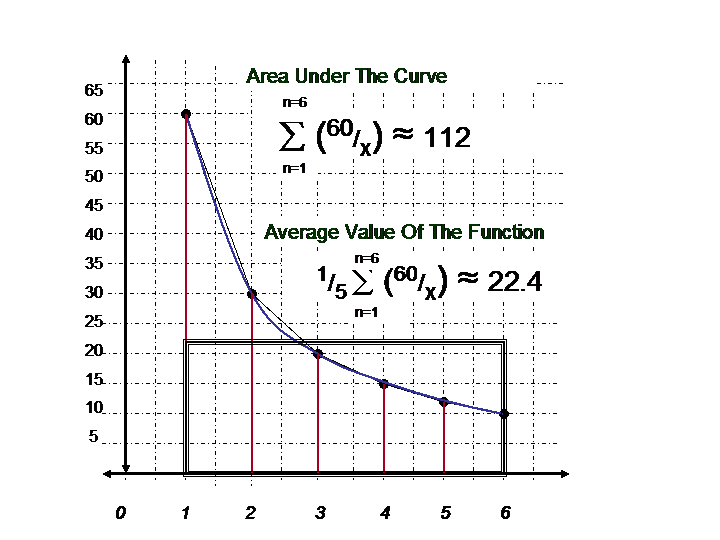
In other words, the area of the rectangle is exactly that of the area under the curve from x = 1 to x = 6.
QUESTIONS TO CONSIDER
- Use summation notation to write the expression for and to add up the first 8 positive odd integers.
- Determine the average value of the quadratic function y = x^2 + 4 from x = 2 to x = 7.
- Determine the average value of f(x) = [100/x] from x = 5 to x = 10
- Why does multiplying by [1/(b-a)] give us the average value?
let's go on to Area Between Curves
go back to the main page