TECHNIQUES OF GRAPHING
click here to enjoy the Techniques Of Graphing word search
Graphing functions is tremendously easy - just enter the function into a graphing calculator, set an appropriate window and press "GRAPH". Doing this bypasses a very important notion, however - graphing a function is one thing, interpreting the behavior of that function is another.
The behavior of a function is defined by certain parameters; specific characteristics based on attributes of the function itself. A function's behavior can be interpreted (and then graphically represented) by examining these specific parameters:
A..............R..............D................A................M
................................Asymptotes[Vertical]................Roots..............Domain/Range.......Asymptotes [Horizontal].............Middle...............................
USING ARDAM CHECKLIST
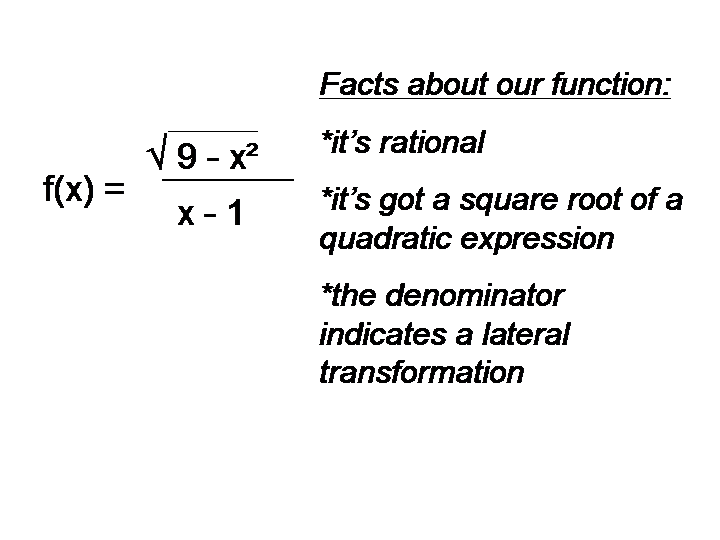
Let's see how this works. We will interpret the behavior of the function below:
Asymptotes [Vertical]
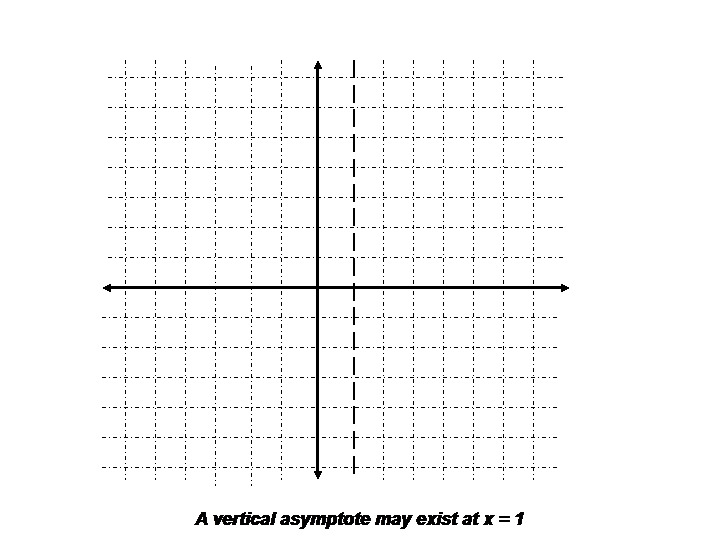
An asymptote represents a limit. It represents a boundary the function is not permitted to cross. That boundary can be a line or a curve - in this case, it's a line. Vertical asymptotes are most likely to occur at values when the denominator equals zero. If the denominator equals zero at some value of x, is there always a vertical asymptote? No.
Looking at our function, a vertical asymptote may occur at x = 1. We start our graph by drawing in this vertical boundary:
Roots
One of the most important ways to look at the behavior of a function is to determine its roots - points at which the function crosses the x-axis. This is particularly important with polynomial functions, classifying roots as either real or complex.
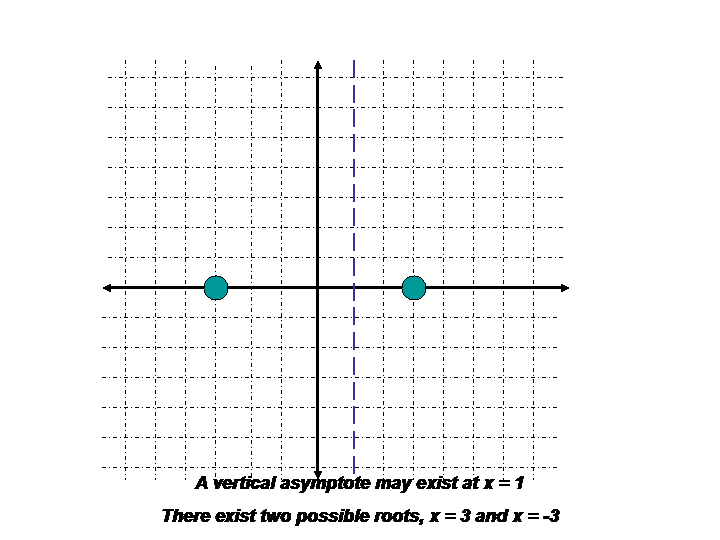
To determine the roots, we set the function equal to zero and solve. In the case of a rational function such as this, setting the numerator equal to zero will work, just as long as the denominator isn't zero at the same set of values.
The function has two possible roots, x = 3 and x = -3
 >
>
Domain and Range
A function, in a sense, converts values put into the function into values that come out of the function. The set of values that can be put into a function is called its domain. The set of values that come out of a function is called its range.
There exist certain situations that keep numbers from being put into a function, such as:
**producing a value of 0 in the denominator
**taking an even-numbered root of a negative number
**taking the common or natural logarithm of a number less than or equal to 0
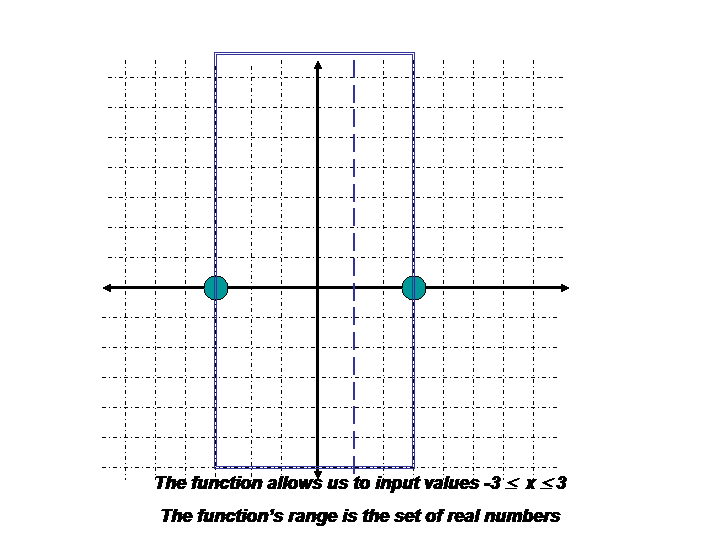
The domain and range of a function can be determined by looking at the graph. The graphs of two functions are shown below:
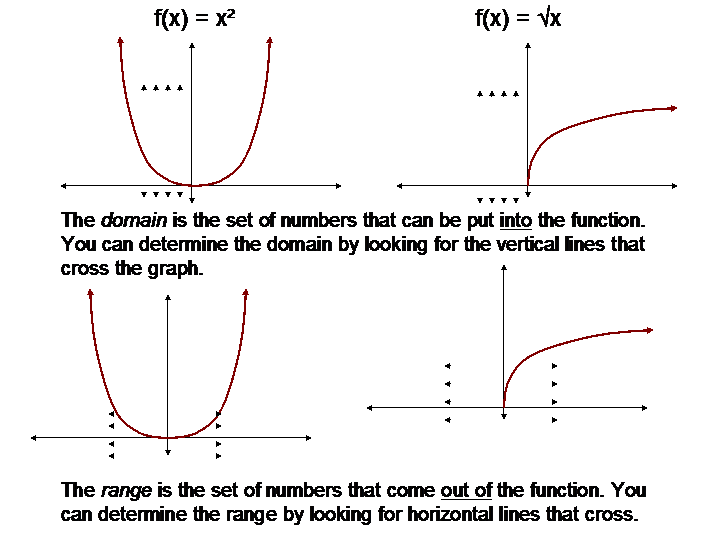
The numerator of our function prevents us from putting in numbers that would result in a negative number under the square root sign. We cannot input a value such that the denominator equals zero, so the domain of our function is all values -3 < x < -3 excluding the value of 1. The denominator can take on positive and negative values, so our range looks like it may be the set of real numbers.
I recommend to students to draw a "domain and range box" on their axes.
Asymptotes [Horizontal]
Remember, an asymptote represents a boundary that a function cannot cross. Horizontal asymptotes can be determined by asking the question, "What happens when I put in larger and larger values for x?". Many times horizontal asymptotes are determined by finding the limit of the function as x approaches positive or negative infinity. In the hyperbolic function 1 divided by x, BOTH vertical and horizontal asymptotes will exist.
Our domain in this function means that no horizontal asymptotes exist.
Middle
We have established a framework, or template, for the graph of the function. Let's input some values to get "the rest of the story"
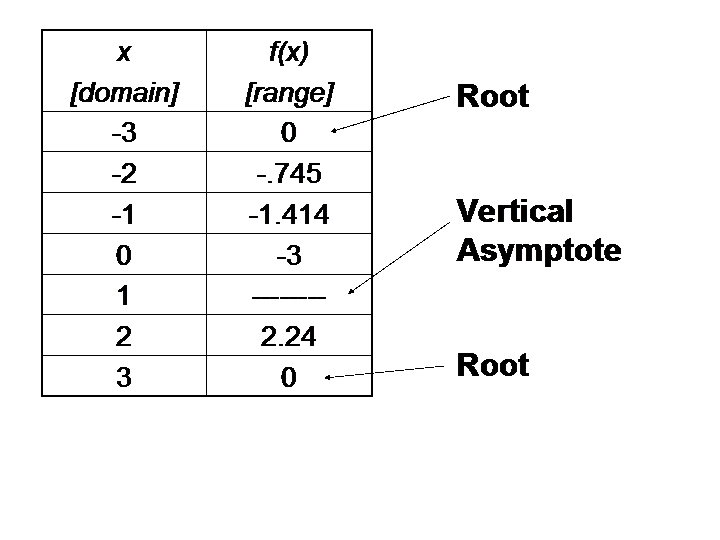
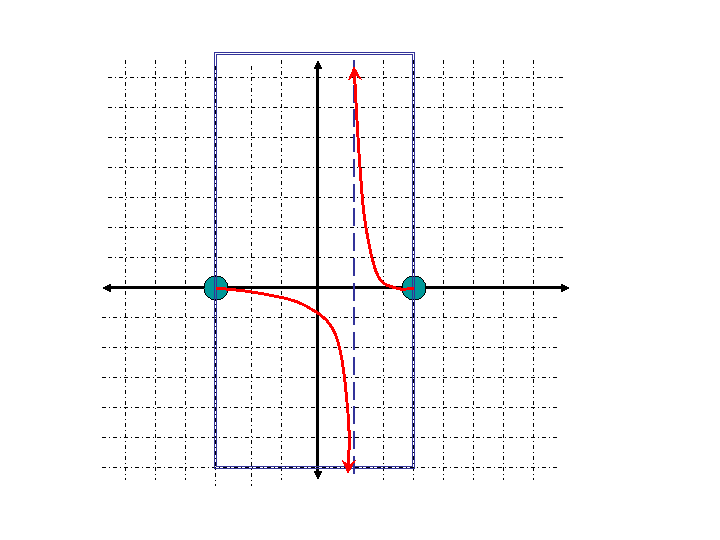
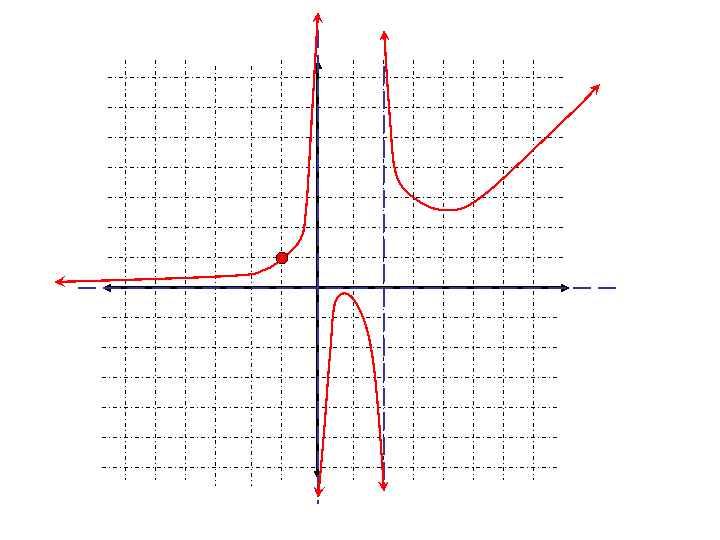
If all we did was input these values, the graph probably wouldn't make sense. From all we've looked at, we can get an accurate view of this function's behavior:
Let's graph another rational function using ARDAM checklist:
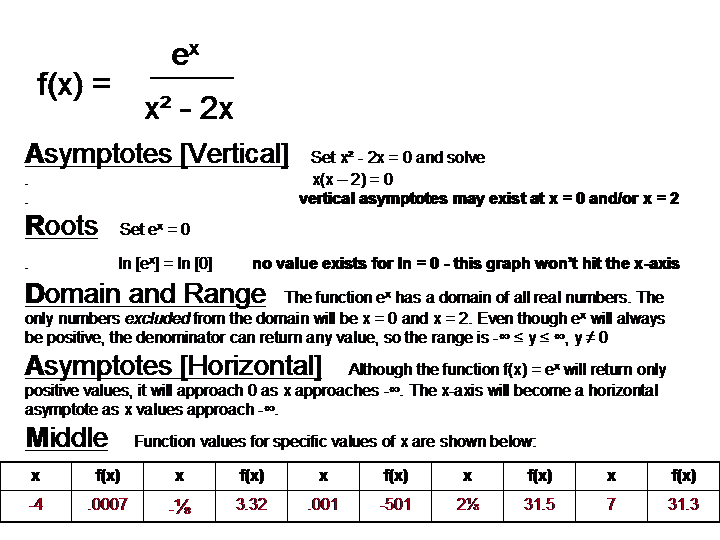
So, after all that, we determine the behavior of this function:
QUESTIONS TO CONSIDER
- Can the value y = 0 truly be excluded from the range of this function? Why or why not?
- How does Rolle's Theorem explain why a local minimum is reached between the values of 2.125 and 7?
- Using the rational function f(x) = [ln 10x] / [5 - x] determine the roots and classify any asymptotes that may exist.
- What is the domain for the above function? The range?
you've finished the first section - now take the "Check Up From The Neck Up" to see how much you've learned
go back to the main page